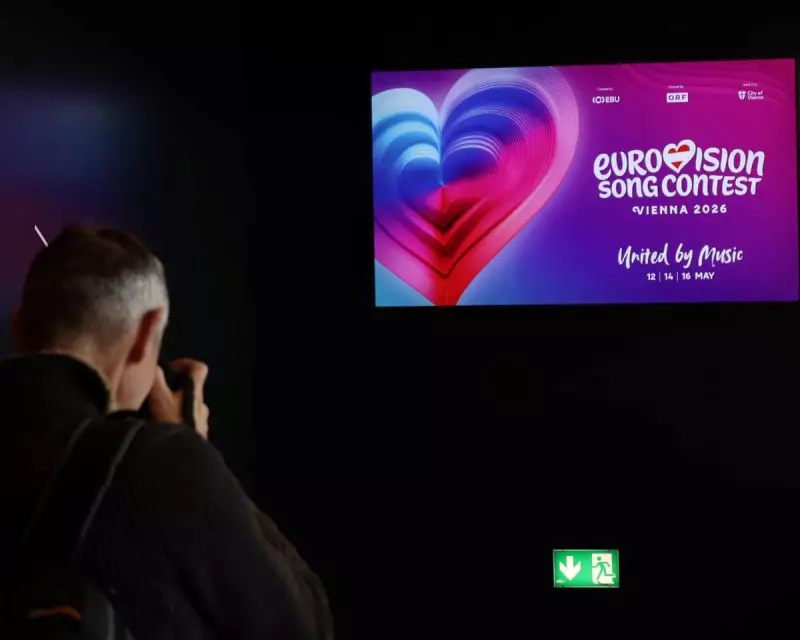
Austria has firmly committed to hosting next year's Eurovision Song Contest, even as the event's budget faces pressure from a significant boycott. Four national broadcasters have withdrawn from the 2026 competition in protest at Israel's participation amid the ongoing conflict in Gaza.
Broadcasters Withdraw in Protest
At a European Broadcasting Union (EBU) general assembly in Geneva, a majority of members approved Israel's place in the contest's 70th-anniversary edition, scheduled for Vienna's Wiener Stadthalle in May 2026. In direct response, public service broadcasters from Spain, Ireland, Slovenia, and the Netherlands announced they would boycott the event.
This means they will not broadcast the semi-finals or final and will not enter national acts. Roland Weissmann, director general of Austrian host broadcaster ORF, stated the show would proceed undiminished. "The show will not suffer in any way," he said, noting that the boycotting nations have until mid-December to reconsider.
Financial Impact and Political Stances
Weissmann acknowledged the financial burden of multiple withdrawals but indicated preparations were in place. "This mainly affects the EBU, which has already factored this into its budget," he explained, adding that ORF could compensate for any shortfall. Spain's departure is particularly notable as it is one of the "big five" nations that make larger financial contributions to the contest.
Austria and Germany were among the strongest supporters of Israel's continued inclusion. Germany's foreign minister, Johann Wadephul, welcomed the EBU's decision, stating Israel "traditionally" belonged in Eurovision and urging boycotting countries to rethink, arguing culture should connect people, not highlight political divisions.
New Voting Rules and Broader Reactions
No specific vote on Israel's participation was held. Instead, delegates focused on implementing new rules to prevent governments or third parties from unduly promoting songs to influence the public vote. These changes were approved by 65% of delegates, with 23% voting against and 10% abstaining.
The Irish broadcaster RTÉ called participation "unconscionable" given the crisis in Gaza, while Slovenia's RTV SLO said it boycotted "on behalf of the 20,000 children who died in Gaza". Irish Taoiseach Micheál Martin expressed full understanding for the withdrawal, calling it an "act of solidarity".
Despite speculation, Sweden's SVT confirmed it would take part in 2026, citing the new rules and "broad European support" for an apolitical contest. Other Nordic broadcasters supported the voting reforms, with Iceland's RUV set to make its final decision at a board meeting.