Ukraine Condemns Venice Biennale's Decision to Include Russia
Ukraine has issued a forceful appeal to the organizers of the Venice Biennale, urging them to reconsider allowing Russia to participate in the prestigious international art exhibition. Ukrainian officials argue that the event must not become "a stage for whitewashing war crimes" committed by Russia against Ukraine.
A Controversial Reversal of Position
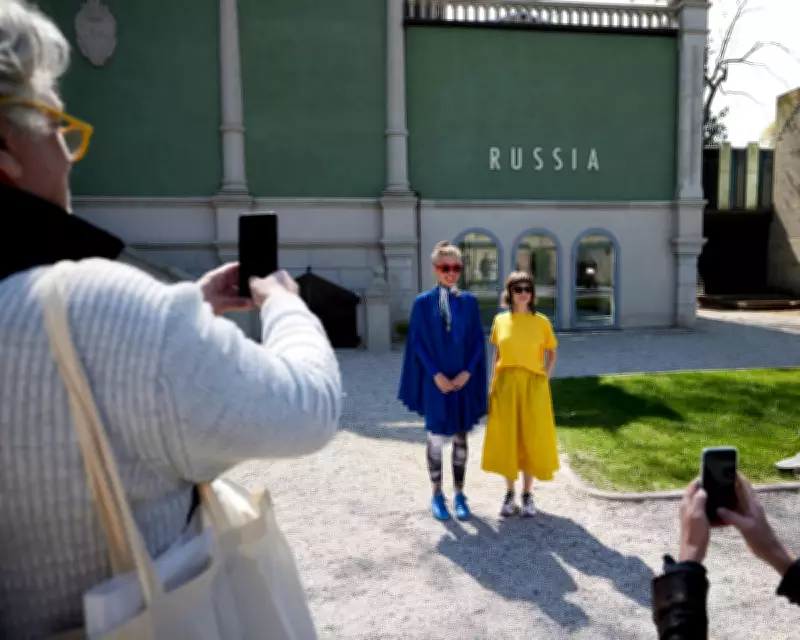
The Biennale Foundation announced last week that Russia would be permitted to take part in this year's event, scheduled from May 9 to November 22. This decision marks a significant shift from the institution's stance following Russia's full-scale invasion of Ukraine in February 2022. At that time, the Biennale condemned the aggression and banned access to the 2022 exhibition for anyone linked to the Kremlin, though it never formally barred the country from participating. Russia was notably absent from both the 2022 and 2024 editions.
In a joint statement released on Sunday, Ukraine's Foreign Minister Andriy Sybiha and Culture Minister Tetyana Berezhna expressed their dismay at what they called an "incomprehensible" change of position. "The Venice Biennale is one of the world's most authoritative art platforms, and it must not become a stage for whitewashing the war crimes that Russia commits daily against the Ukrainian people and our cultural heritage," they declared.
Cultural Destruction and Human Cost
The Ukrainian ministers detailed the devastating impact of Russia's war on Ukrainian culture, stating that Russia "has waged a systematic war against Ukrainian culture, identity, and historical memory." According to their statement, this conflict has resulted in the deaths of 346 artists and 132 Ukrainian and foreign journalists. Furthermore, more than 1,700 cultural heritage sites have been destroyed or damaged, and over 35,000 museum relics have been stolen.
"We call on the organizers of the Venice Biennale to reconsider their decision to allow the Russian Federation to return and to maintain the principled position demonstrated in 2022-2024," the ministers emphasized.
Organizational Defense and Political Backlash
In response to the controversy, the Biennale Foundation defended its decision, stating that the exhibition is "an open institution" that "rejects any form of exclusion or censorship of art." This position has drawn criticism from various quarters, including Italy's own culture ministry, which has publicly opposed the decision.
The political dimensions of this controversy extend to the leadership of the Biennale Foundation itself. Pietrangelo Buttafuoco, a right-wing journalist and public intellectual, was appointed president in March 2024 by Gennaro Sangiuliano, a former culture minister in Giorgia Meloni's far-right government. Buttafuoco's appointment was celebrated by Meloni's Brothers of Italy party but criticized by left-wing opponents who viewed it as part of the government's infiltration of key cultural institutions.
Buttafuoco addressed the controversy in an interview with La Repubblica on Friday, explaining, "We have invited people from all areas of conflict to share their points of view. We believe that where there is art, there is dialogue."
International Criticism and Government Stances
The decision has sparked international condemnation. On Friday, a group of cross-party Members of the European Parliament published a letter denouncing Russia's inclusion as "unacceptable." They warned that "such a choice risks lending legitimacy to a regime responsible for ongoing violence and will inevitably damage the reputation and moral standing of the Biennale itself."
Despite the Biennale Foundation's independent decision-making, the Italian culture ministry, now headed by Alessandro Giuli, clarified that the move was made "entirely independently by the Biennale Foundation, despite the Italian government's opposition." This statement highlights the complex relationship between cultural institutions and political authorities in Italy.
Interestingly, while Meloni's government has made friendly overtures toward Russia in the past, she has maintained staunch support for Ukraine since becoming prime minister in October 2022. This adds another layer of complexity to the political backdrop of the Biennale controversy.
Broader Participation Context
Alongside Russia, the Venice Biennale will feature artists from several other nations embroiled in geopolitical conflicts, including Ukraine, Belarus (a Russian ally that provided territory for the invasion), Iran, Israel, and the United States. This diverse participation underscores the exhibition's role as a global platform where art and politics inevitably intersect.
The ongoing debate raises fundamental questions about the role of cultural institutions in times of war, the boundaries between artistic freedom and moral responsibility, and the potential for international platforms to either challenge or normalize geopolitical conflicts through artistic representation.