Spooky Shores and Folkloric Visions: The Week in Art Unveiled
This week in the art world, eerie modernist seascapes, folkloric British visions, and mysterious Irish landscapes take center stage, revealing secrets and challenging perceptions. From Georges Seurat's unsettling shores to Renée Gailhoustet's beloved eco-brutalist architecture, the art scene is buzzing with exhibitions that captivate and provoke thought.
Exhibition of the Week: Seurat and the Sea
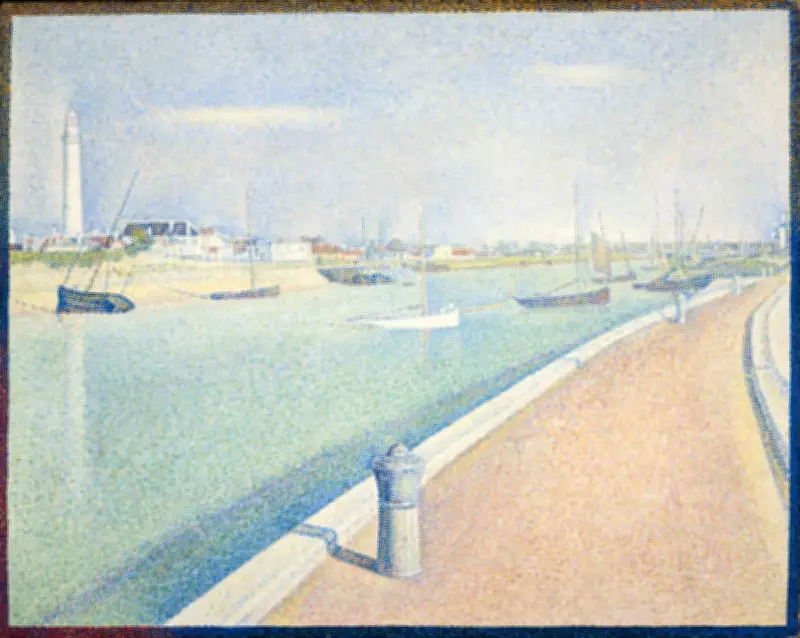
If you believed French 19th-century seaside paintings were solely about joyful impressionism, prepare to be disconcerted and utterly absorbed by Georges Seurat's eerie modernist shores. His work, The Channel at Gravelines, Petit-Fort Philippe, 1890, on loan from the Indianapolis Museum of Art at Newfields, offers a haunting departure from traditional seaside scenes. This exhibition at the Courtauld Gallery in London, running until 17 May, invites viewers to explore the darker, more atmospheric side of coastal art, where Seurat's pointillist technique creates a sense of unease and mystery.
Also Showing: A Diverse Array of Artistic Voices
Delaine Le Bas: Un-Fair-Ground presents a folkloric vision of contemporary Britain, centered around a mural originally created for Glastonbury. At the Whitworth Art Gallery in Manchester until 31 May, this exhibition delves into themes of community and myth.
Yinka Shonibare uses irony and wit to span global history and critically examine empire. His work will be on display at The Arc in Winchester from 14 February to 3 June, offering a provocative look at colonial legacies.
Sean Scully reveals the secret sources of his abstract art through photographs of Ireland's enigmatic landscapes. Visit the Lisson Gallery in London from 18 February to 9 May to see how these scenes inspire his bold compositions.
Jamie Mills: A Firework for Vincent features sculptures that evoke both Robert Rauschenberg and the Cornish landscape. This exhibition at Anima Mundi in St Ives runs until 22 March, blending modernist influences with local natural beauty.
Image of the Week: Renée Gailhoustet's Eco-Brutalist Legacy
The French architect Renée Gailhoustet, known for her resilience after an altercation with Jean-Marie Le Pen, designed eco-brutalist apartment blocks with cascading terraces that appear to surrender to nature. Her social housing block, Le Liégat, completed in 1982 in Ivry-sur-Seine, remains beloved by residents. Upon her death in 2023, they displayed a large handmade sign reading: "Merci Renée." An exhibition in London now celebrates her innovative work, highlighting how her designs blend brutalist aesthetics with environmental sensitivity.
What We Learned: Art World Insights and Intrigues
- A court battle over a Picasso painting exposed the offshore finances of a billionaire linked to Nigel Farage.
- Ai Weiwei fearlessly returned to China for a poignant visit to see his mother.
- Cherie Blair's brief modeling stint for artist Euan Uglow was reportedly exhausting.
- A debate sparked over whether only women can paint great female nudes.
- AI analysis cast doubt on the attribution of two works to Jan van Eyck.
- Plans for a grandiose "Arc de Trump" in Washington were described as going "full Roman."
- London's Southbank Centre received a Grade II listing, vindicating its brutalist architecture.
- Lucian Freud's paintings are celebrated, while his drawings are considered less impressive.
- A Rembrandt lion drawing raised $18 million for big cat conservation efforts.
- The "Lowry effect" is credited with rejuvenating areas in Salford and Manchester.
Masterpiece of the Week: A Caprice With a Ruined Arch by Francesco Guardi
Why do ruins fascinate us? Everything and everyone eventually becomes a ruin, reflecting entropy—the natural decay of order into chaos. In the past, new constructions often overshadowed the old, but in the 18th century, this attitude shifted. Francesco Guardi's painting, A Caprice With a Ruined Arch from around 1775, exemplifies this change by cherishing broken buildings as atmospheric and picturesque wonders. Guardi invents a crumbled medieval abbey or palace, inviting viewers to imagine its glorious past while savoring the melancholy beauty of its present. This masterpiece is on display at the National Gallery in London, offering a timeless meditation on decay and beauty.
To stay updated on art and design news, consider signing up for relevant newsletters. For questions or comments, reach out to art publications directly. This week's art highlights showcase a rich tapestry of historical and contemporary works, from Seurat's eerie shores to Gailhoustet's sustainable architecture, proving that art continues to evolve and inspire across genres and eras.