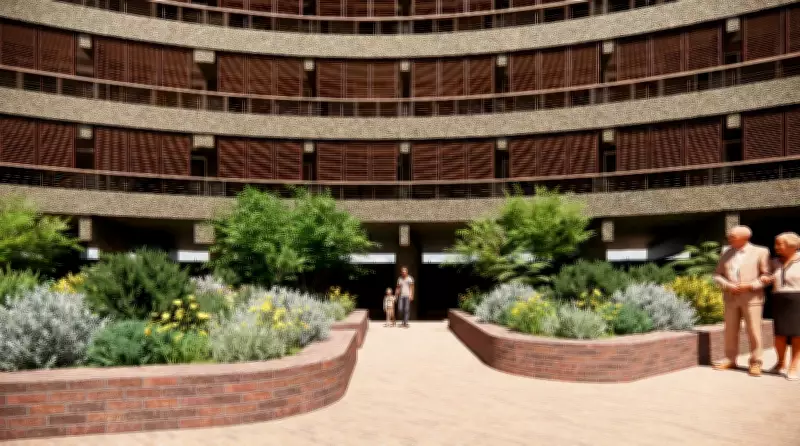
The Barbican Centre, a celebrated brutalist landmark in London, has unveiled ambitious plans to revitalise its long-neglected Sculpture Court, a one-acre courtyard that has lain largely dormant for nearly four decades. This hidden gem, situated above the Concert Hall and framed by the iconic curve of Frobisher Crescent, was originally designed as a multifunctional area for experiencing art and architecture but has suffered from limited accessibility, deteriorating infrastructure, and inadequate seating, rendering it underused by the public.
Restoring a Civic Space to Its Former Glory
In an effort to bring the Sculpture Court back into civic life, the Barbican has initiated a public consultation to gather feedback on proposals aimed at creating a flexible and accessible public meeting area. The plans include urgent repairs and conservation work to address issues impacting the hall below, ensuring the space is restored to its intended purpose as a dynamic hub for community engagement.
Enhancing Accessibility and Greenery
A key focus of the revamp is improving accessibility, with step-free access being introduced for the first time through new ramps that will connect directly to the Level 3 foyer. Integrated seating will be added to provide resting and gathering points, making the court more inviting for visitors. Additionally, over 2,000 new plants, including evergreen shrubs, small trees, and seasonal flowering species, will be introduced via large brick planters, enhancing the aesthetic appeal and biodiversity of the area.

Future Developments and Public Art
The Sculpture Court currently hosts the Barbican's outdoor cinema programme and will feature a major public art commission by Delcy Morelos in the spring. Looking ahead, subject to consultation feedback, planning permission, and funding, construction works are scheduled to take place between summer 2028 and summer 2029. These works will coincide with major refurbishments to other parts of the Barbican, including the conservatory, theatre, lakeside terrace, and foyers. From 2030, the Conservatory is set to be open to the public daily and fully accessible.
Community Input and Long-Term Vision
Philippa Simpson, director for Buildings and Renewal at the Barbican, emphasised the centre's original vision as a site of encounter where art sits at the heart of public life. She stated that these proposals aim to return the Sculpture Court to that intention, creating a generous civic space for all visitors. The consultation offers audiences, visitors, and local communities an opportunity to help shape a space that remains true to the spirit of the Barbican while ensuring it can be enjoyed for the next 50 years.
This revamp represents a significant step in enhancing London's cultural infrastructure, aligning with broader efforts to make public spaces more inclusive and engaging. As the Barbican continues to evolve, this project underscores its commitment to blending brutalist architecture with modern accessibility and community-focused design.