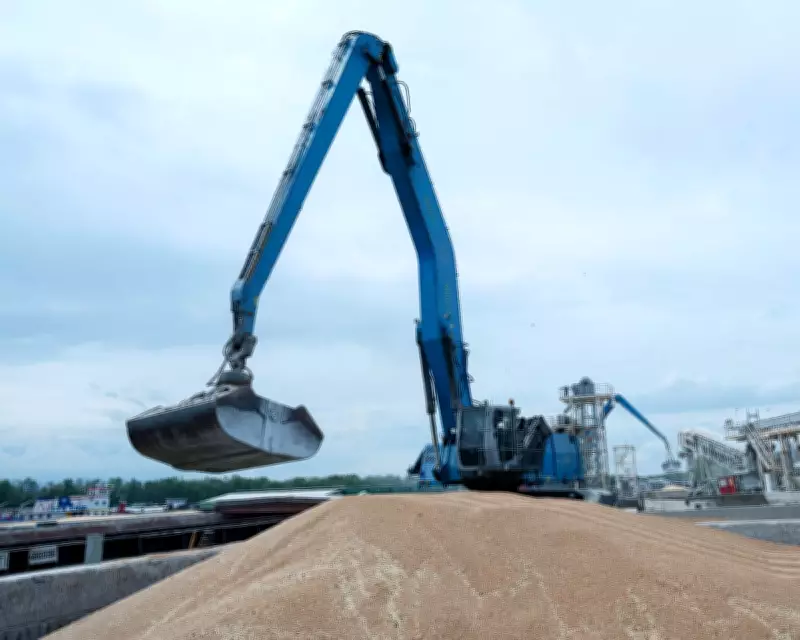
Ukraine has claimed a victory against Russia's so-called 'shadow grain fleet' after a vessel carrying what Kyiv says is stolen Ukrainian grain was forced to turn away from Israel without unloading. The Panama-flagged ship, Panormitis, left Israeli territorial waters following a week of heavy condemnation from Ukrainian officials.
Zelenskyy Vows Systematic Campaign
Ukrainian President Volodymyr Zelenskyy signaled a more systematic approach against vessels carrying grain illegally exported by Russia from occupied areas of Ukraine. 'We will systematically act against the shadow grain fleet, in the same way we act against the shadow oil fleet,' he said.
Ukraine's Prosecutor General Ruslan Kravchenko stated that the vessel departed Israel's territorial waters for neutral seas after 'a range of procedural measures taken by Ukraine.' Foreign Minister Andrii Sybiha warned that Ukraine would continue to track the vessel and cautioned other ships, operators, insurers, and governments against involvement with such cargo. 'Do not buy stolen Ukrainian grain. Do not become part of this crime,' he added.

Reactions and Further Developments
The manager of the Panormitis was not immediately available for comment. Reports from the Jerusalem Post cited Israel's grain importers association, stating that the importing company, Zenziper, was forced to turn away the vessel. Zenziper did not respond to requests for comment.
Meanwhile, Radio Sweden reported that Swedish authorities seized another bulk carrier, the Caffa, in connection with the illegal export of Ukrainian grain. Ukraine's SBU security service also confirmed a second drone attack on oil facilities in Perm, Russia, hitting an oil refinery owned by Lukoil. The refinery, located over 1,500 km from Ukraine, has a capacity of nearly 13 million metric tonnes per year. Additionally, Ukraine struck a refinery in Orsk, Orenburg region, triggering a fire. The general staff said the facility supplies the Russian occupation army.
Attempt on 'Butcher of Bucha'
An explosion killed an army officer in a closed military town in Russia's far east, believed to be an attempt to target Major General Azatbek Omurbekov, known as the 'Butcher of Bucha.' Sources said the bomb detonated in the wrong place, killing a subordinate while Omurbekov was unharmed. Neither Russia nor Ukraine commented. The EU has sanctioned Omurbekov over the Bucha massacre, where Russian troops allegedly killed over 400 civilians.
Japan's Potential Role
Japan's relaxation of weapons-export rules may allow Tokyo to supply military equipment to Ukraine, according to Kyiv's ambassador to Japan, Yurii Lutovinov. Japanese drone firm Terra Drone plans to increase investment in Ukrainian defense tech by partnering with WinnyLab. However, Ukraine is not among 17 countries with defense agreements with Japan, meaning any arms deal could be distant. Japan's energy ties with Russia, including LNG imports from the Sakhalin-2 project, complicate matters. Discussions are ongoing about Japan contributing to Europe's Purl program, which buys US-made equipment for Kyiv. The Japanese government plans to unveil a defense strategy this year, but no direct arming of Ukraine has been announced.