UK Engages in Critical Talks with US to Protect Businesses from Tariff Hikes
High-level discussions between the UK government and the US administration are actively underway, focusing on mitigating the threat of increased tariffs and securing the most advantageous terms for British companies. This development follows a recent US Supreme Court ruling that cast doubt on existing trade agreements, prompting urgent diplomatic efforts.
Supreme Court Ruling Sparks Global Trade Uncertainty
On Friday, the US Supreme Court declared President Donald Trump's reciprocal tariffs illegal, throwing into question deals with approximately 20 nations, including the UK, the EU, Switzerland, Japan, and Lesotho. In response, Trump announced a sweeping 15% global tariff on all foreign imports under the 1974 Trade Act, a move that could raise existing tariffs for UK exporters from 10% to 15%, with similar impacts anticipated for EU partners.
UK Education Secretary Bridget Phillipson acknowledged the resulting uncertainty for businesses during a Sky News interview on Sunday, but emphasized the government's commitment to maintaining preferential trade arrangements with the US. She stated, "We want to get the best possible deal for British businesses. I understand the uncertainty it causes, but they can be assured we will always be working to make sure they get everything they need."

Business Leaders Advocate for Strengthening Existing Deal
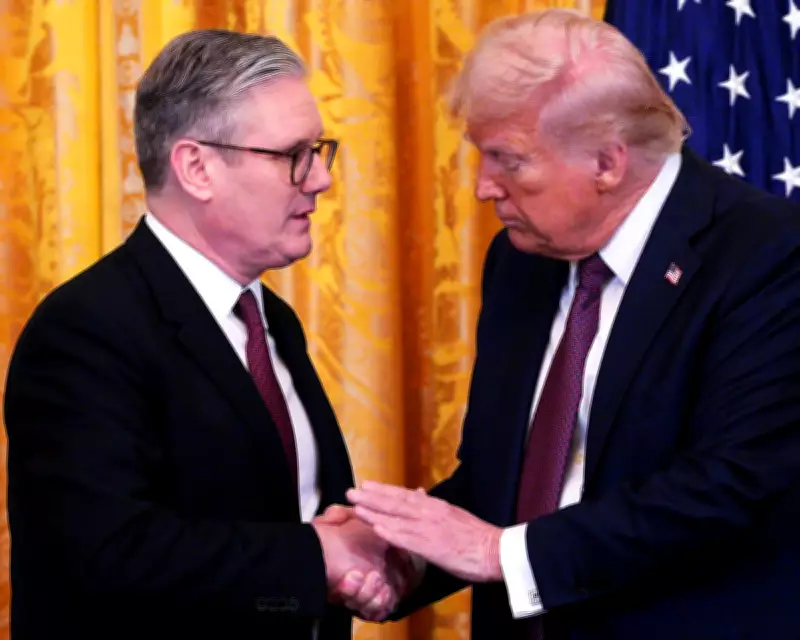
Industry experts anticipate that the UK will intensify efforts to reinforce the Economic Prosperity Deal (EPD), originally announced by Donald Trump and Keir Starmer in May 2025, rather than abandon it. William Bain, head of trade policy at the British Chambers of Commerce, highlighted that the EPD's value lies not in the base tariff but in key exemptions, such as a 10% tariff on cars—lower than for other countries—a maintained 0% tariff for the UK pharmaceutical sector, and a pledged reduction in steel tariffs, which has yet to be realized.
Bain explained, "The government sees value in keeping the deal, and this will give them the perfect opportunity to try to nail the EPD down with legal text. My sense is their strategy will be to double down on the EPD." He noted that the deal established a framework for negotiations in sectors like automotive, steel, and aluminum, offering a pathway for more favorable long-term terms.
European Response and Legislative Hurdles
Across the Atlantic, the EU faces similar challenges. Bernd Lange, chair of the European Parliament's international trade committee, described the situation as "pure tariff chaos," leading to postponed votes on the EU-US deal. The agreement, already implemented in the US, awaits parliamentary approval in the EU, with uncertainty now delaying planned votes in February and March.
David Henig, director of the UK trade policy project at the European Centre for International Political Economy, cautioned that "no deal can be expected to last" with the current US administration, urging governments to strategize their next moves. The new 15% tariffs, authorized under the Trade Act, are limited to 150 days, expiring on August 23, after which Congressional approval will be required for an extension.
Future Implications and Strategic Considerations
This timeline introduces Congress as a new player in trade dynamics, opening avenues for business lobbying. Bain speculated on potential scenarios, such as Trump imposing tariffs under Section 301 of the Trade Act if Congress rejects the extension, citing foreign "discriminatory" practices. The evolving landscape underscores the need for agile diplomacy and robust negotiation to safeguard economic interests amid shifting US policies.
As talks continue, the UK remains focused on leveraging the EPD framework to secure stable and beneficial terms, ensuring British firms can navigate the turbulent global trade environment with confidence and support.