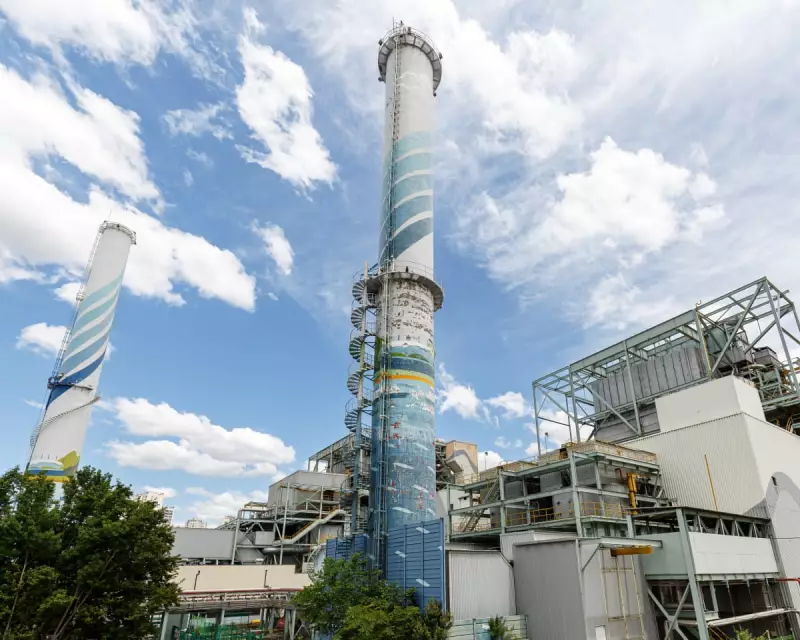
The Australian government faces mounting pressure to accelerate its transition away from thermal coal exports after South Korea, one of its largest customers, committed to shutting down all coal-fired power plants by 2040.
Major Market Shift Announced at Climate Summit
At the Cop30 climate conference in Brazil, South Korean officials confirmed the nation would join the Powering Past Coal Alliance, a coalition of approximately 60 countries and 120 sub-national governments dedicated to eliminating coal power. South Korea represents Australia's third-largest market for electricity-generating coal, with Australian exports valued at an estimated A$2.3 billion this year alone.
Kim Sung-hwan, South Korea's Minister of Climate, Energy and Environment, stated the move demonstrated the country's commitment to "accelerating a just and clean energy transition." The north Asian nation currently operates the world's seventh-largest coal power fleet and ranks as the fourth-biggest thermal coal importer globally, accounting for approximately 8% of international trade.

Economic Warnings for Australian Export Strategy
Energy analysts immediately sounded alarms about the implications for Australia's export-dependent economy. James Bowen, director of consultancy ReMap Research, warned that South Korea's decision sends a powerful signal across the Asia-Pacific region about the declining future of fossil fuels.
"For Australia to continue to rely on fossil fuel exports in the medium to long term is a risky strategy," Bowen emphasised. He referenced Australian Treasury modelling suggesting the country's fossil fuel exports would decrease in value by about 50% over the next five years, regardless of emissions reduction targets.
Tim Buckley, director of Climate Energy Finance, described the Korean announcement as "brilliant" news, indicating that Australia's trading partners are "responding to climate science and their treaty obligations." He urged Australia to pivot toward low-emissions industries of the future, including green iron and aluminium, critical minerals, and lithium hydroxide exports.
Political Context and International Pressure
Australia remains outside the Powering Past Coal Alliance, though the government aims to increase renewable energy's share of electricity generation from approximately 42% to 82% by 2030. The timing coincides with domestic political controversy, as the federal opposition has withdrawn support for the bipartisan net-zero by 2050 target and indicated potential subsidies for coal power if elected.
Despite its new commitment, South Korea has faced criticism for abandoning a 100% renewable energy target and not acting more aggressively on climate. The Climate Action Tracker suggests the country should phase out coal power by 2030 to align with Paris Agreement goals.
Australia stands as the world's second-largest thermal coal exporter behind Indonesia and dominates metallurgical coal exports. The nation also competes with the United States and Qatar as the top exporter of liquefied natural gas, positioning fossil fuel exports as a central component of its economy now facing unprecedented transition pressures.