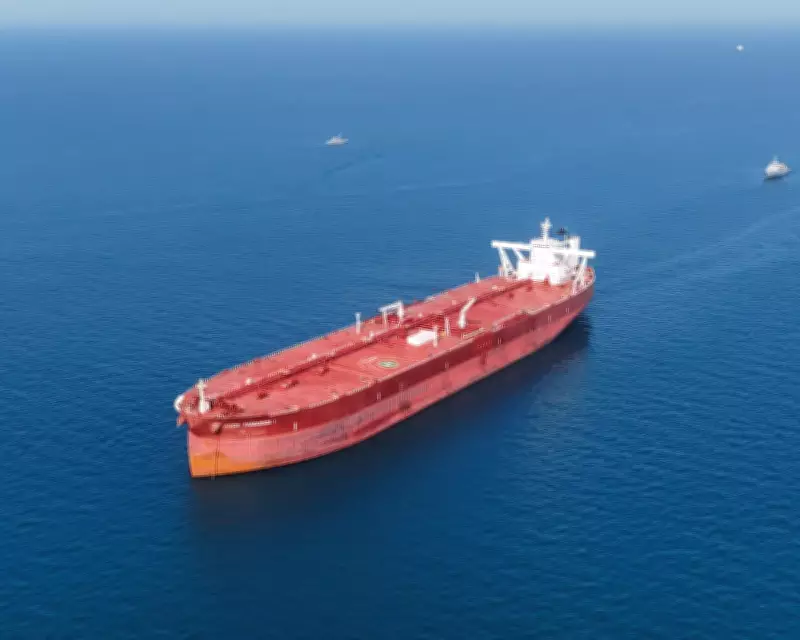
Iran's plan to impose a $2 million toll on each tanker passing through the Strait of Hormuz has sparked concerns that this 'Tehran's tollbooth' could permanently raise oil costs. The strait, a crucial waterway for global oil shipments, is at the center of renewed US-Iran peace talks amid attacks on tankers and a US blockade on Iranian vessels.
Tehran's Demands
Iran's 10-point peace plan includes a fee of up to $2 million per vessel, payable in Chinese yuan or cryptocurrency, for safe passage under Iranian military escort. This system, trialed earlier this month, requires tankers to provide cargo details and pay at least $1 per barrel. Ships from Malaysia, China, Egypt, South Korea, and India have been allowed through, though it's unclear if tolls were paid.
Legal Challenges
The toll violates the UN Convention on the Law of the Sea (UNCLOS), which guarantees unimpeded transit through straits. While Iran and the US have not ratified UNCLOS, the US disputes Iran's right to control the strait. Additionally, sanctions prevent Western companies from paying Iran's Islamic Revolutionary Guard Corps.

Economic Impact
A $1-per-barrel toll could add $20 million daily or $7 billion annually to oil costs, based on pre-crisis flows. However, shipping companies may charge higher rates due to increased risk, and insurers may raise premiums. Seafarers in the hazardous zone are entitled to double pay.
Global Oil Prices
The strait's de facto closure cut exports by 10 million barrels daily, pushing Brent crude from $70 to $119 per barrel. Analysts predict sustained prices around $100 per barrel through 2027 due to damaged infrastructure and redirected pipelines. Traders may avoid Gulf crude even if transit resumes under Iranian control.
Implications for Iran
Toll revenues could help Iran rebuild its military and economy, which has lost 2 million jobs and faces daily internet blackout costs of $35 million. Controlling the strait would also resume Iranian oil exports, halted by the US blockade.
Global Consequences
Bruegel estimates the world economy would 'barely notice' the toll, with Gulf producers bearing 80-95% of costs, raising oil prices by only $0.05-$0.40 per barrel. However, the precedent could legitimize Iran's seizure of an international waterway, preventing a return to pre-crisis oil flows. The International Energy Agency calls this the worst energy supply crisis in history, and the IMF warns of a potential global recession, with the UK most affected among G7 nations.