Australia and Singapore Forge Energy Security Pact Amid Middle East Crisis
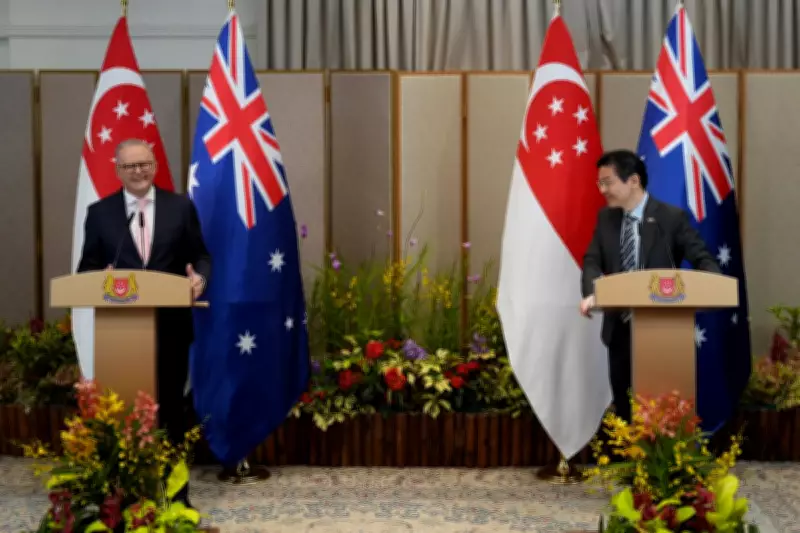
In a significant diplomatic development, Australian Prime Minister Anthony Albanese and Singaporean Prime Minister Lawrence Wong have solidified a crucial energy security agreement during their recent high-level meeting. The pact ensures both nations will maintain reciprocal fuel and liquefied natural gas (LNG) exchanges despite escalating global energy disruptions caused by the ongoing Middle East conflict.
Unwavering Fuel Commitments
Singapore's Prime Minister Lawrence Wong delivered unequivocal assurances regarding fuel exports to Australia, stating emphatically that supply restrictions "won't happen" even under worst-case scenarios. This pledge comes as Singapore serves as Australia's largest petroleum source, providing more than a quarter of the nation's total refined fuel imports. Specifically, Singapore supplies 55% of Australia's petrol, 22% of jet fuel, and 15% of diesel, representing over $10 billion in annual trade value.
"We do not plan to restrict exports. We didn't have to do so even in the darkest days of Covid, and we will not do so during this energy crisis," Wong declared when questioned about potential production cuts affecting Australian supplies.

Strategic Energy Interdependence
The bilateral relationship represents a textbook example of strategic energy interdependence. Australia stands as Singapore's second-largest LNG supplier, providing 32% of the city-state's LNG needs worth approximately $5 billion annually. This mutual dependency formed the foundation for the new agreement, which both leaders described as essential for navigating current global uncertainties.
The joint statement explicitly commits both nations to "make maximum efforts to meet each other's energy security needs" regarding refined fuels and LNG. Furthermore, the agreement includes plans for a legally binding addendum to the existing free trade agreement, specifically covering essential supplies like energy resources.
Navigating Global Supply Challenges
Prime Minister Albanese's whirlwind visit to Singapore, though brief with just one full day on the ground, occurred against a backdrop of mounting global energy concerns. The Middle East conflict has created significant supply shocks, exacerbated by shipping disruptions through the Strait of Hormuz and complications from Israel's military actions in Lebanon. These factors have raised legitimate concerns about potential interruptions to major fuel exporters' supply chains.
"These are difficult times, not just for Australia and Singapore, but for countries everywhere," Wong acknowledged during the discussions. "That is why in times like these, we must work closely, move faster, and stand together. Not just to manage the risk, but to protect the wellbeing of our people."
Future-Oriented Energy Cooperation
While the immediate visit didn't secure additional fuel quantities for Australia—a point quickly highlighted by political opponents—both leaders emphasized the agreement's long-term strategic importance. Wong characterized the pact as "building trusted supply lines for a more uncertain future" rather than merely addressing current shortages.
Singapore's newly established government body, which centralizes gas imports, will reportedly "look to Australia to assess more gas on a commercial basis, and hopefully more long term gas as well." This suggests potential for expanded Australian LNG exports to Singapore in coming years.
Political Context and Domestic Considerations
During discussions, Prime Minister Albanese notably downplayed prospects of implementing new taxes on gas exports, despite pressure from progressive campaigners, Labor backbenchers, and even opposition figures. When questioned about potential budget measures, Albanese emphasized supply priorities above all else: "We have three priorities when it comes to energy, both now and certainly in the immediate period, they are supply, supply and supply ... if there's a fourth, below supply is price."
The Australian government has mounted a comprehensive diplomatic campaign to safeguard fuel imports, leveraging the nation's own gas and coal exports as strategic bargaining chips in international negotiations.

Regional Strategic Partnership
Beyond energy considerations, the meeting reinforced the broader strategic partnership between Australia and Singapore. As Australia's largest trade partner in Southeast Asia, Singapore represents one of Canberra's closest economic and strategic allies in the region. The energy agreement builds upon this foundation, creating additional resilience against global market volatility.
Both nations committed to enhanced coordination through efficient border processes, transparent communication, and early consultation mechanisms to facilitate uninterrupted movement of essential goods. The agreement explicitly recognizes "the importance of the role of our countries in each other's energy security" as a cornerstone of bilateral relations.