Astronomers Detect Most Distant Natural 'Space Laser' Ever Recorded
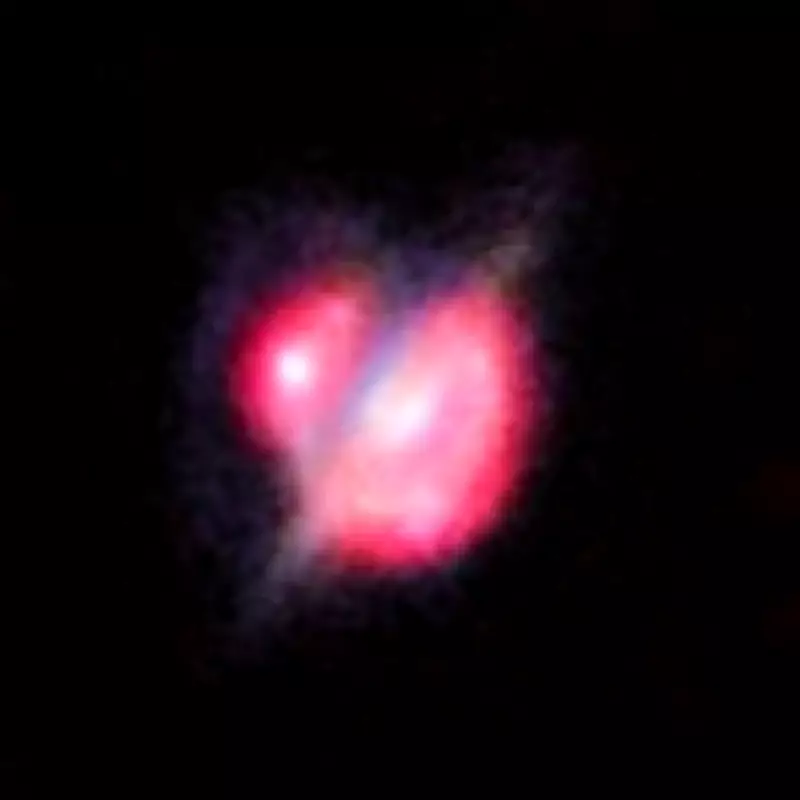
Astrophysicists have made an extraordinary discovery, identifying the brightest and most distant natural 'space laser' ever observed in the universe. This powerful emission, known as a gigamaser, originates from a violent collision between two galaxies approximately eight billion light-years from Earth.
Unprecedented Detection Through Advanced Technology
The groundbreaking discovery was made using the MeerKAT radio telescope located in South Africa. Scientists detected the signal from the galactic merger designated HATLAS J142935.3–002836, which represents a rare type of cosmic laser that can be billions of times brighter than typical cosmic masers.
Dr Thato Manamela, lead author of the study from the University of Pretoria, described the finding as truly extraordinary. "We are seeing the radio equivalent of a laser halfway across the universe," Dr Manamela stated. "This system is remarkable not only for its distance but for the cosmic alignment that makes it visible to us."
The Cosmic Amplification Phenomenon
The signal's remarkable strength results from gravitational lensing, a cosmic phenomenon where the gravity of a foreground galaxy bends and magnifies light from objects behind it. Dr Manamela explained this amplification process: "During its journey to Earth, the radio waves are further amplified by a perfectly aligned, yet unrelated foreground galaxy. This galaxy acts as a lens, the way a water droplet on a window pane would, because its mass curves the local space-time."
This cosmic alignment effectively creates a natural telescope that enhances the signal, making the distant gigamaser detectable from Earth. "We have a radio laser passing through a cosmic telescope before being detected by the powerful MeerKAT radio telescope," Dr Manamela added, calling it "a wonderfully serendipitous discovery."
The Science Behind Cosmic Lasers
Natural masers occur when gas compressed during galactic collisions stimulates hydroxyl molecules to emit intense microwave radiation at specific wavelengths. While often associated with science fiction, these emissions represent real astrophysical phenomena related to the same fundamental processes behind artificial lasers.
The newly identified gigamaser formed as two galaxies merged into one, compressing vast clouds of gas and triggering intense bursts of star formation. Radiation from these newborn stars then stimulates nearby hydroxyl molecules, amplifying their microwave emissions to create the powerful signal detected by astronomers.
Breaking Distance Records
The light from this cosmic laser traveled approximately 7.8 billion light-years to reach Earth, surpassing the previous distance record of roughly five billion light-years for such objects. This discovery provides scientists with unprecedented insights into extreme astrophysical events occurring in the distant universe.
Natural masers can arise in various astrophysical environments, including:
- Star-forming regions
- Cometary atmospheres
- Remnants of exploding stars
Stronger emissions known as megamasers typically associate with extreme events like galaxy mergers or activity around supermassive black holes. The newly discovered gigamaser represents an even more powerful category of these cosmic phenomena.
This discovery not only breaks distance records but also demonstrates how cosmic alignments can reveal otherwise invisible phenomena in the distant universe, opening new possibilities for understanding galaxy evolution and cosmic collisions billions of light-years from Earth.