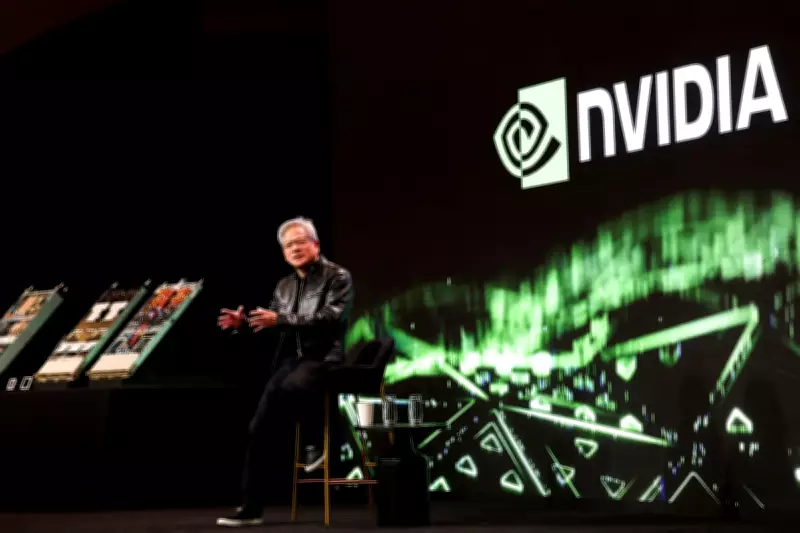
Nvidia, the world's most valuable publicly traded company, released its quarterly earnings on Wednesday, revealing revenues that exceeded Wall Street's high expectations and boosted its stock in after-hours trading. This extends a multi-year streak where the chipmaker has consistently outperformed analyst predictions, showcasing resilience amid growing concerns about an AI investment bubble.
Data Center Revenue Soars
The company reported a staggering 75% year-over-year growth in its data center business, with revenue reaching $62.3 billion. This segment accounts for the vast majority of Nvidia's income, buoyed by massive tech industry investments in AI infrastructure. CEO Jensen Huang emphasized in a statement that customers are aggressively investing in AI compute, which he described as the factories powering the AI industrial revolution.
Financial Performance Details
Nvidia's earnings per share stood at $1.62, surpassing the estimated $1.53, while overall quarterly revenue hit $68.13 billion, above the predicted $66.2 billion. Following the report, shares rose approximately 3% in after-hours trading, continuing a rally that began earlier in the day as investors sought reassurance from Nvidia's growth.
Market Context and Investor Sentiment
Despite Nvidia's strong performance, investors have grown increasingly skeptical in recent months about the enormous spending by big tech firms on AI development. Most of the so-called Magnificent Seven tech companies saw share prices decline at the start of the year. However, Nvidia's consistent ability to beat expectations throughout the 2024 and 2025 fiscal years has provided a stabilizing force in the market.
Scrutiny of AI Deals
Nvidia faces heightened scrutiny over its multibillion-dollar deals with AI firms like OpenAI. Analysts have raised concerns about the circular nature of these agreements, where Nvidia invests in companies that then purchase chips from it, potentially indicating riskier footing in the AI industry than acknowledged. Notably, a proposed $100 billion investment in OpenAI fell through earlier this month, with reports suggesting a revised $30 billion investment as OpenAI aims for a public valuation around $730 billion.
CEO's Perspective on AI Impact
Jensen Huang has repeatedly downplayed fears that AI will disrupt or replace workers across various sectors. At the World Economic Forum in Davos, he framed AI as a job creator that enhances productivity and becomes integral to global infrastructure. Last month, he also addressed concerns about AI replacing software technologies amid a sell-off in software stocks.
Broader Economic Concerns
After years of market enthusiasm for generative AI, some investors have become more cautious, wary of volatility and potential negative economic effects. This week, speculative fiction from a research firm triggered a market downturn and panic on Wall Street by depicting a future with surging unemployment due to AI, highlighting underlying anxieties in the sector.
Nvidia's latest earnings report underscores its pivotal role in the AI boom, even as debates over the sustainability and risks of AI investments intensify. The company's performance continues to shape market confidence, balancing optimism with growing scrutiny.