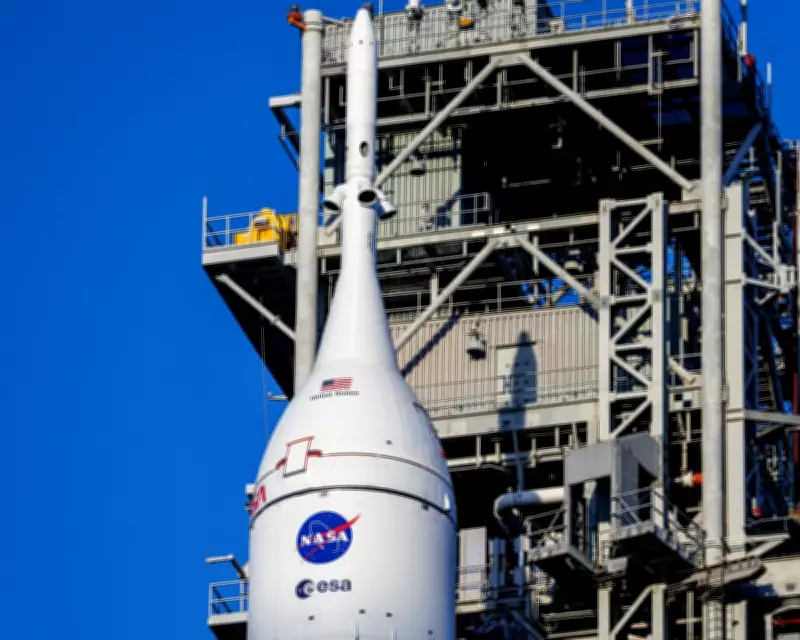
NASA has confirmed that the highly anticipated Artemis II mission, the first crewed lunar flyby in more than five decades, could launch as soon as April 1, following earlier technical setbacks. Senior NASA official Lori Glaze stated during a press conference that the agency is actively working toward this new target date after delays originally pushed the launch from February.
Revised Launch Timeline and Mission Details
"We are on track for a launch as early as April 1, and we are working toward that date," Glaze emphasized. She acknowledged the inherent risks of the test flight but expressed confidence in the team and hardware readiness, noting that preparations are ongoing. The first launch window is set for Wednesday, April 1, at 6:24 PM local time (22:24 GMT), with several additional opportunities available over a six-day period, providing flexibility for optimal conditions.
Crew and Flight Path
The Artemis II mission will be crewed by four astronauts: three Americans—mission commander Reid Wiseman, Victor Glover, and Christina Koch—alongside Canadian astronaut Jeremy Hansen. After launch, the spacecraft will orbit Earth before embarking on its journey to the moon. Unlike a landing mission, Artemis II will perform a lunar flyby, passing within 4,000 to 6,000 miles of the lunar surface, depending on the exact launch date, due to the moon's varying position.
NASA diagrams illustrate that the mission will culminate in a return to Earth, with a splashdown in the ocean. While the first Artemis mission flew closer to the moon at 80 miles above the surface, Artemis II will still bring humans tens of thousands of miles closer than any mission in over 50 years. From this distance, the moon will appear to the crew roughly the size of a basketball held at arm's length, offering a unique perspective.
Broader Artemis Program Context
This announcement follows a sudden revamp of the Artemis program in February, which included the addition of a test mission prior to an eventual lunar landing. Artemis II serves as a critical precursor to Artemis III, aimed at achieving a rendezvous in low-Earth orbit with at least one lunar lander. The subsequent phase, Artemis IIII, targets a lunar landing by early 2028, aligning with former President Donald Trump's goal of returning Americans to the moon.
The mission underscores NASA's ongoing efforts to advance human space exploration, with contractors and teams pressing forward to overcome technical challenges and ensure a successful launch. As Glaze reminded, "It's a test flight, and it is not without risk, but our team and our hardware are ready. Just keep in mind we still have work [to do]."