
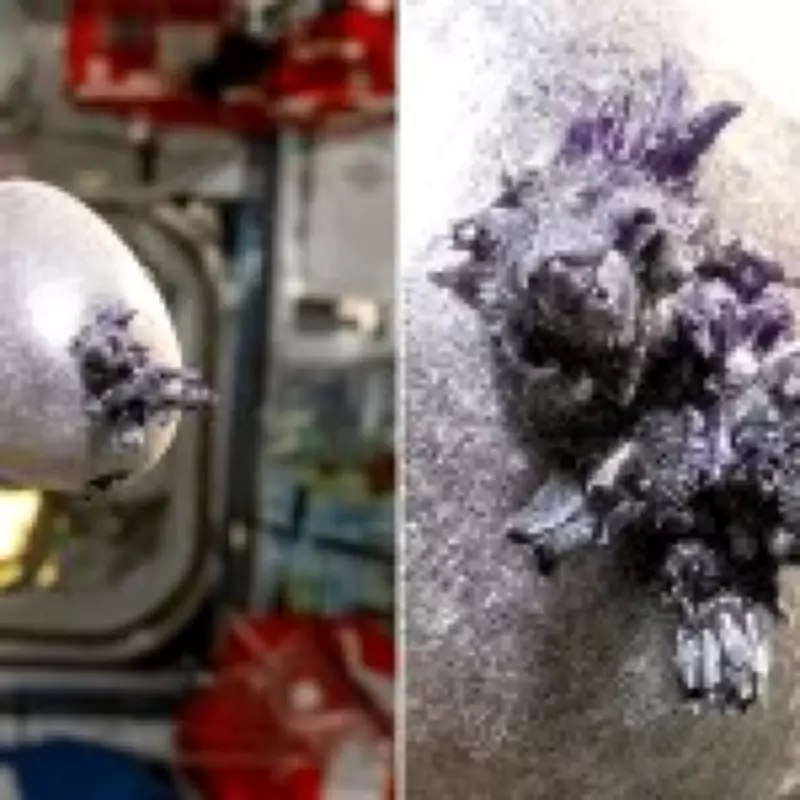
NASA Astronaut's Space Potato Experiment Yields Alien-Looking Growth
An unusual purple growth sprouting from a potato cultivated aboard the International Space Station has ignited widespread fascination online, with many comparing its appearance to something extraterrestrial. NASA astronaut Don Pettit, who conducted the experiment during his off-duty time on Expedition 72, shared a photograph of the peculiar potato, which he affectionately nicknamed 'Spudnik-1'.
Spudnik-1: A Zero-Gravity Agricultural Marvel
Pettit explained that he grew the early purple potato as part of his personal space gardening activities, using a makeshift terrarium equipped with grow lights and hook Velcro to secure the plant. 'Potatoes are one of the most efficient plants based on edible nutrition to total plant mass, including roots,' Pettit noted. He highlighted their potential role in future space exploration, referencing Andy Weir's book and film 'The Martian', which popularized the idea of potato cultivation in space. 'I thought it good to get started now!' he added enthusiastically.
The potato's bizarre appearance, characterized by gross purple tendrils extending in all directions, is a direct result of the microgravity environment on the ISS. 'The roots would grow in all directions absent gravity, and all plants I have ever grown in space have grown far slower than they would have on Earth,' Pettit clarified. This phenomenon has led to mixed reactions from the public, with one observer remarking, 'I genuinely thought this was some kind of egg hatching.'
Historical Context and Broader Implications for Space Agriculture
This experiment is part of a larger NASA initiative to develop sustainable food sources for long-duration space missions. In 2023, tomatoes grown on the ISS were successfully returned to Earth as part of the Veg-05 study, which investigated fresh food supply solutions for astronauts. After splashdown, these scientific samples were transported to NASA's Kennedy Space Center in Florida for further analysis before the full effects of gravity set in.
The Veg-05 experiment focused on cultivating dwarf tomatoes in the station's Veggie facility, examining how light quality and fertilizer impact fruit production, microbial safety, and nutritional value. The Veggie vegetable-production system aims to establish a 'pick-and-eat' fresh vegetable component to complement pre-packaged astronaut diets. This research is crucial for defining best horticultural practices to achieve high yields of safe, nutritious produce in space.
Beyond nutritional benefits, such experiments also assess the psychological impacts of plant cultivation on astronauts, potentially enhancing morale and well-being during extended missions. As humanity looks toward future exploration of Mars and beyond, innovations in space agriculture, like Pettit's potato project, are becoming increasingly vital.
The internet's reaction to Spudnik-1 underscores the public's enduring curiosity about space endeavors and the strange, often unexpected outcomes of scientific experimentation in zero gravity. This incident highlights the ongoing efforts to make space travel more sustainable and self-sufficient, paving the way for future interplanetary colonization.




