
Artemis II Crew Braces for High-Stakes Splashdown After Lunar Mission
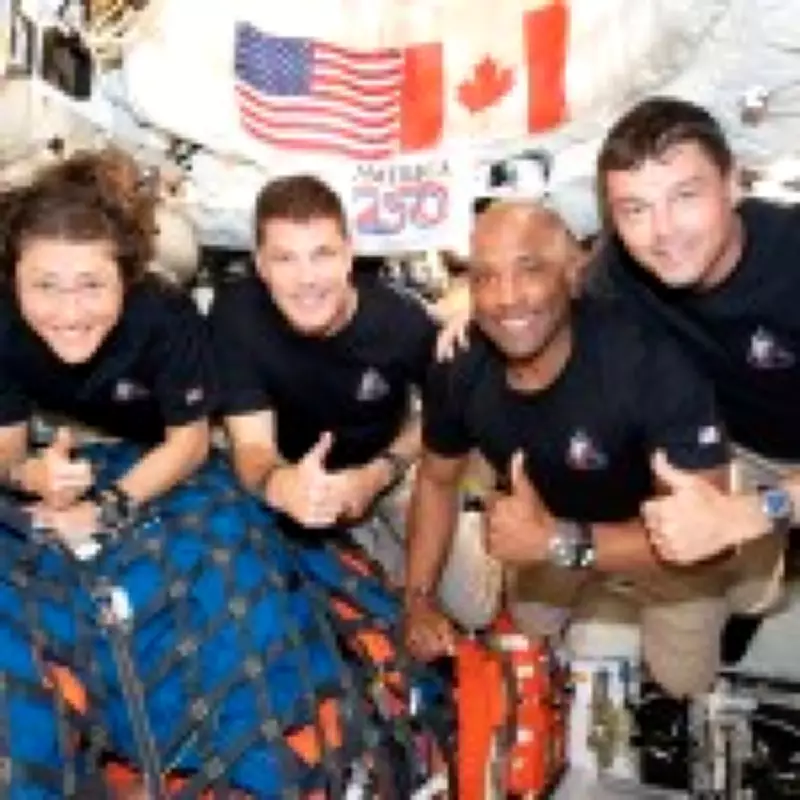
The Artemis II astronauts are on the verge of completing their historic 10-day journey to the moon and back, with a dramatic splashdown scheduled for tonight. Reid Wiseman, Victor Glover, Christina Koch, and Jeremy Hansen, who recently set a record for the farthest human travel from Earth, are now hurtling homeward in the Orion capsule, named Integrity. However, experts warn that the re-entry phase poses significant risks, marking a nail-biting conclusion to their mission.
The Perilous 13-Minute Blackout Period
As the Orion spacecraft smashes into Earth's atmosphere at speeds exceeding 23,000 miles per hour, it will generate intense heat, creating a plasma shield that blocks radio signals. Matthew Cook, head of space exploration at the UK Space Agency, explains that this will result in a 13-minute communication blackout, during which mission control will be unable to confirm the crew's status. "We'll just have to wait," Cook states, highlighting the unprecedented tension of this phase.
Heat Shield: The Only Defense Against Extreme Temperatures
The Orion's heat shield, capable of withstanding nearly 2,700°C, is critical for protecting the astronauts. If it fails, the capsule could melt and disintegrate. Libby Jackson, head of space at the London Science Museum, notes that mission control will be intensely focused but powerless during re-entry, emphasizing that success is only declared once the crew lands safely.
Inside the Capsule: A Roller Coaster Ride Home
During re-entry, the astronauts will lie on their backs to manage the extreme forces, experiencing up to four times Earth's gravity. They will witness plasma out the windows and feel rising temperatures, all while ensuring loose items are secured to avoid injuries. The splashdown is expected in the Pacific Ocean near San Diego, with recovery operations led by the USS John P. Murtha.
Future Implications and Mission Goals
Beyond tonight's splashdown, Artemis II aims to advance human space exploration. Data on radiation exposure could benefit nuclear workers and cancer treatments. NASA plans subsequent Artemis missions, with Artemis III testing lunar rendezvous and Artemis IV and V targeting moon landings by 2028. Cook hopes this mission unites humanity, showcasing our potential in a divided world.




