
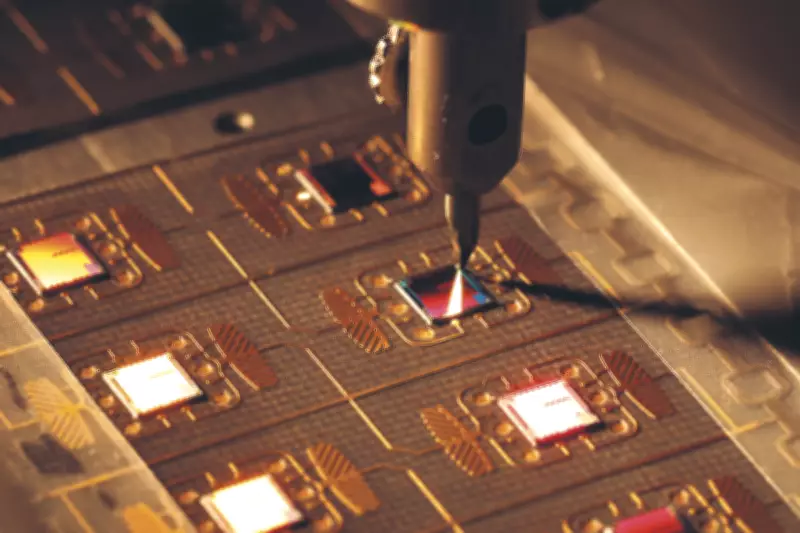
In a landmark announcement on Wednesday, March 25, 2026, Cambridge-based technology firm Arm revealed its first in-house processor, the AGI CPU, signaling a major strategic pivot for the company. CEO Rene Haas declared that Arm will now begin delivering its own silicon, moving beyond its traditional model of licensing chip designs to manufacturers.
Arm's Strategic Shift into Silicon Production
At an event in San Francisco on Tuesday, Arm introduced its new data center processor, designed specifically for artificial intelligence workloads. Haas emphasized that this expansion of the Arm compute platform aims to provide partners with greater choice as they build AI infrastructure at scale. This move positions Arm more directly within the rapidly growing artificial intelligence market, where demand for specialized hardware is surging.
Competition and Market Dynamics
The launch places Arm in direct competition with established chipmakers like Intel and AMD, as well as some of its own customers. Meta has already signed on as an early adopter of the new processor, aligning with its increased spending on AI data centers. The social media giant is investing heavily in infrastructure and has previously secured chips from Nvidia and AMD for its AI initiatives.
Industry analysts note that even a small share of Meta's spending could represent a significant revenue opportunity for Arm, given the vast capital being deployed by large technology firms. This reflects a broader shift in the AI market: while graphics processing units have dominated recent demand, central processing units are increasingly seen as critical for handling general-purpose computing tasks and coordinating complex AI workloads, especially as agentic systems become more prevalent.
Technical Specifications and Partnerships
Arm's AGI CPU has been engineered with these demands in mind, focusing on performance and energy efficiency in power-constrained data centers. The chip is being manufactured by Taiwan Semiconductor Manufacturing Company using advanced 3-nanometer technology and is expected to enter production later this year.
More than 50 partners, including industry giants such as Google, Amazon, Microsoft, Oracle, and Samsung, have expressed support for the platform. Arm has also expanded its chip development efforts, establishing new facilities in Austin, Texas, and growing its engineering team as it delves deeper into hardware production.
Implications for Arm's Business Model
For decades, Arm has built its business by licensing chip designs used in billions of devices worldwide, from smartphones to servers. This move into producing its own processors represents a significant strategic change. Analysts suggest it could open up new revenue streams as demand for AI infrastructure grows, though it may also impact margins compared to its licensing-heavy model.
The new processor is designed to enhance performance while reducing energy consumption—a key consideration as companies globally scale up their AI systems. This development underscores Arm's commitment to innovation and adaptation in a competitive semiconductor landscape.




