The Growing Chasm Between Silicon Valley's AI Dreams and Public Reality
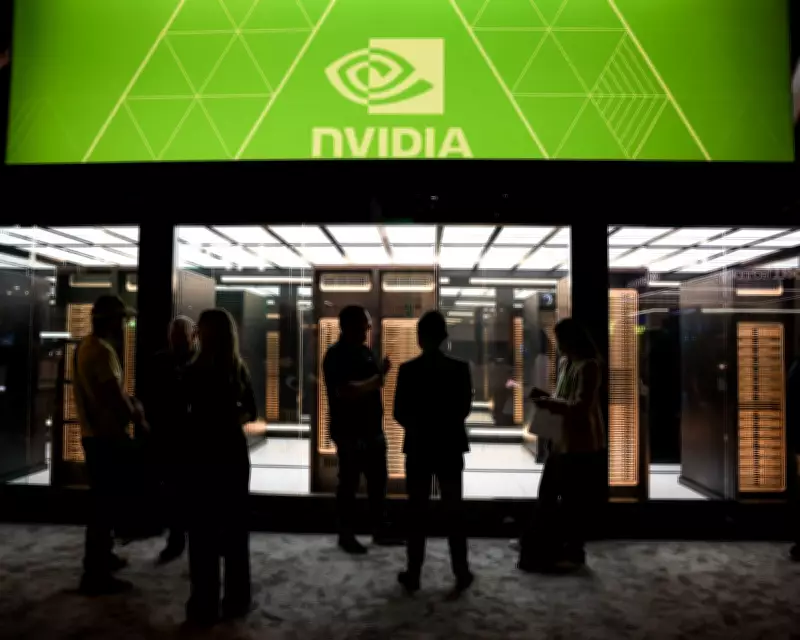
The recent Nvidia GTC global AI conference in San Jose, California, underscored a stark divergence in perspectives between the tech industry and everyday Americans. While Silicon Valley giants like Nvidia champion artificial intelligence as the next frontier, a significant portion of the public remains wary and disconnected from these advancements.
Nvidia's Bold AI Predictions and Public Skepticism
At the conference, Nvidia CEO Jensen Huang projected astronomical growth, forecasting $1 trillion in sales by 2028, equivalent to 3% of the entire US yearly GDP. The company, a leader among the "Magnificent Seven" tech stocks, has seen its value surge nearly four times that of the S&P 500 over the past decade. Nvidia emphasized AI agents—semi-autonomous chatbots capable of performing digital tasks—as a key innovation, introducing tools like NemoClaw for businesses.
However, this optimism contrasts sharply with public sentiment. A Pew Research survey reveals that 65% of Americans do not use AI in their work at all, with widespread skepticism about its regulation and impact. Exclusive polling for the Guardian indicates that twice as many Americans feel their financial security is deteriorating rather than improving, highlighting a disconnect from Huang's bullish forecasts.

Meta's Strategic Shift Towards AI at All Costs
Meta is aggressively reallocating resources to artificial intelligence, signaling a profound transformation within the tech sector. Recent reports suggest the company may lay off up to 20% of its workforce to offset ballooning AI expenditures, including a data center the size of Manhattan. This move comes as Meta scales back its metaverse ambitions, shutting down the virtual reality version of Horizon Worlds and reducing emphasis on virtual reality projects.
Since 2020, Meta's Reality Labs division has recorded losses of $80 billion, prompting a pivot towards AI. The company is hiring AI researchers rapidly while cutting costs elsewhere, reflecting a broader trend where tech giants prioritize hardware and infrastructure over human talent. Notably, CEO Mark Zuckerberg is even developing an AI agent to assist with his executive duties, underscoring the industry's all-in approach to AI integration.
Tesla Cybertruck's Deadly Safety Concerns
Amidst these tech developments, the Tesla Cybertruck faces a severe safety crisis. The Guardian's investigation has tracked five known Cybertruck fires, resulting in four fatalities, including three college students in California. These incidents have sparked four lawsuits against Tesla, with families and safety experts alleging design flaws that trap passengers during fires.
The Cybertruck's unique features, such as high-density laminated windows and the elimination of external door handles, complicate escape and rescue efforts. Built with materials like stainless steel, the vehicle presents challenges for emergency responders. Safety experts warn that these design elements amplify risks, making the Cybertruck disproportionately dangerous compared to other Tesla models.
The Broader Implications of Tech's AI Focus
As Silicon Valley doubles down on AI, the divide with the public grows ever larger. Polling shows global skepticism, with many fearing AI's negative impacts more than embracing its benefits. This sentiment is echoed in media consumption patterns, where stories about AI's failures and costs attract more attention than positive narratives.
The tech industry's shift towards AI-driven investments, exemplified by Meta's restructuring and Nvidia's predictions, may reshape the economic landscape. However, without addressing public concerns and ensuring safety in innovations like the Cybertruck, this divergence could lead to increased distrust and regulatory challenges. The future of technology hinges on bridging this gap, balancing innovation with real-world applicability and safety.