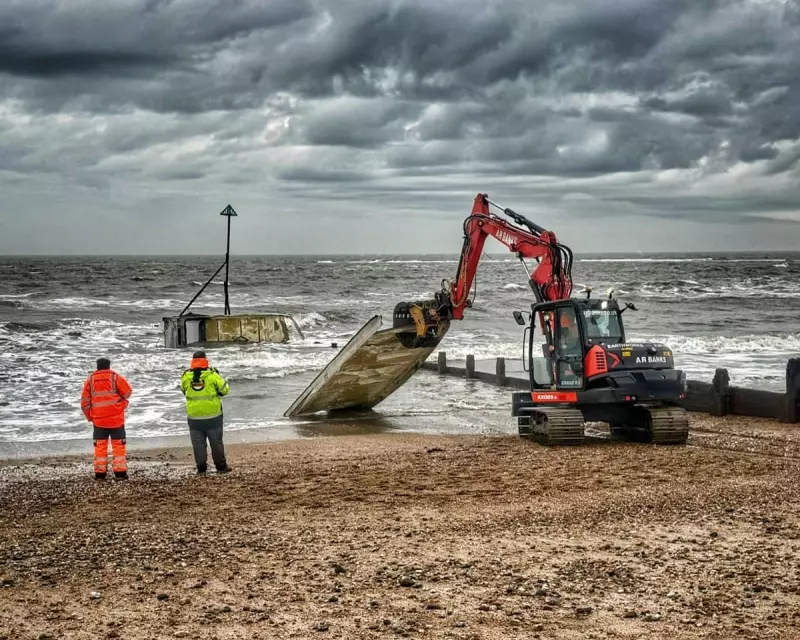
The picturesque coastline of Sussex has been transformed into a bizarre and polluted landscape following a spate of shipping container losses at sea. Over the past six weeks, a minimum of 24 containers have washed ashore, scattering their contents across beaches from Brighton to Selsey.
From Onions to Avocados: A Bizarre Coastal Invasion
The scale of the pollution became starkly clear to Coral Evans, founding director of Leave No Trace Brighton, during walks along Brighton beach. What began with an odd assortment of dust masks, plastic gloves and milk cans escalated dramatically. "There were onions everywhere, hundreds of thousands of onions," Evans reported, alongside sweet potatoes, unopened beer cans and a tide of plastic packaging.
The situation is mirrored along the West Sussex shore. Donna Trethewey of the Selsey Beach Litter Ninjas group stated that after years of calm, three separate incidents in six weeks have seen containers lost. The first, on 6 December 2024, involved 16 containers from the refrigerated cargo ship Baltic Klipper in the Solent. "Whole containers washed up and literally broke up before your eyes," Trethewey described, leading to bananas, avocados and hazardous polystyrene insulation foam littering the shore.

Community Mobilises Against the Tide of Waste
Local authorities have been overwhelmed. Brighton and Hove City Council collected a staggering 1.9 tonnes of waste from its beaches in a single day—nearly four times the normal amount for the season. Both East and West Sussex county councils confirmed they are coordinating with district authorities and contractors for the safe removal of debris, a task complicated by recent storms like Goretti.
In the face of official delays, community spirit has surged. Evans's call to action brought out up to 400 local volunteers in Brighton, who managed to clear the 7.5-mile beach within three days. Similarly, groups like the Selsey Beach Litter Ninjas have worked tirelessly to gather fragmented waste for council contractors to process and recycle.
A Longstanding Global Problem Meets New Law
Dr Simon Boxall, an oceanography expert at the University of Southampton, contextualised the incidents. He noted that an estimated 2,200 containers are lost globally each year, with the busy English Channel and the major port of Southampton making local spills unsurprising. The environmental threat is significant, ranging from plastic pollution to hazards from spilled chemicals and containers floating just below the surface, posing risks to navigation and marine life.
However, a pivotal change took effect on 1 January 2025. The International Maritime Organization, alongside the World Shipping Council, has introduced a new law making it a criminal offence for shipping companies to fail to report lost containers. "The issue is not being treated as a witch-hunt, but rather a way of logging what happens," Dr Boxall explained, offering hope for better accountability.
For now, residents like Coral Evans are left dealing with the consequences. "It's only a few containers to them but it displaces whole communities," she said, highlighting advisories against swimming and the absence of the containers' owners in the clean-up. Yet, with characteristic resilience, she finds a silver lining: the ordeal has galvanised community action. As she wryly observes, "You know what they say: when life gives you onions…"