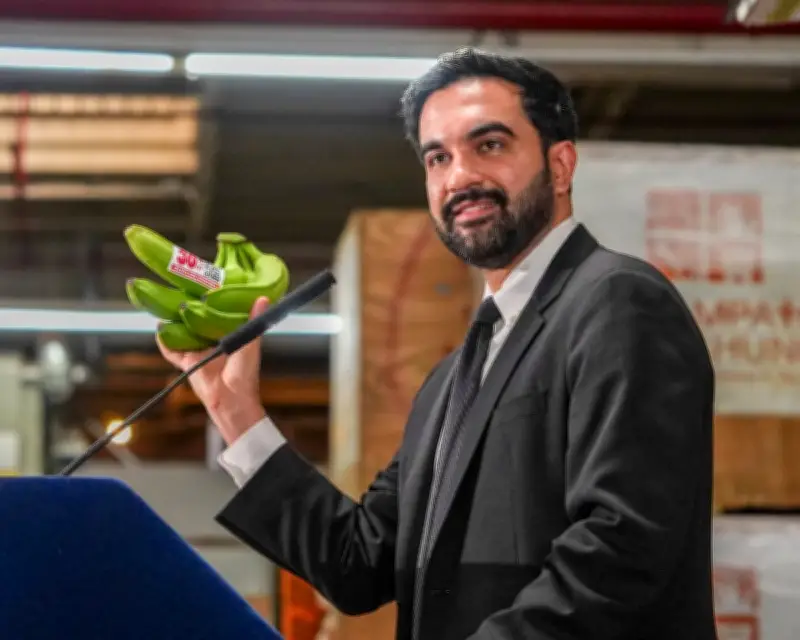
New York City Mayor Zohran Mamdani has announced a $70 million initiative to open five city-owned grocery stores, one in each borough, promising to sell produce, meat, and seafood at 30% below typical retail prices. The plan, detailed at a press conference on Monday, aims to combat soaring food costs that have hit vulnerable families hardest, but it has sparked fierce debate among small business owners, community leaders, and policy experts.
Mayor's Vision and Initial Details
Mamdani, a democratic socialist, has allocated $70 million in the city budget for the project. The first two locations have been revealed: La Marqueta in East Harlem and La Peninsula in the Bronx's Hunts Point neighborhood, with the latter slated to open by the end of 2027. The city has not yet announced where the other three stores will be located. Private operators will manage the ventures, and the city has issued a request for proposals.
"In the wealthiest city, in the wealthiest country in the history of the world, no New Yorker should have to worry about being able to afford to feed their family," Mamdani said at the press conference. The mayor's office emphasized that the initiative is designed to minimize competition with independent grocers and support them, with site selection focused on areas lacking adequate grocery options.
Soaring Food Costs and the Need for Action
The urgency of the plan is underscored by stark statistics. According to the US Bureau of Labor Statistics, the average price of ground chuck beef reached almost $7 a pound in June, an 83% increase from June 2016. In the New York-New Jersey area, the consumer price index for food rose 33% from 2015 to 2024, as reported by the Federal Reserve Bank of St Louis. These increases have made it difficult for many families to afford basic groceries.
Supporters argue that the city-owned stores could bring relief to food deserts. Maria Torres, president and COO of The Point, a community development organization in Hunts Point, called the predominantly Hispanic neighborhood "basically a food desert." She noted that the city grocery will not sell cigarettes, alcohol, lottery tickets, or hot foods, reducing direct competition with bodegas. "I'm excited about it. I think it could be another way for folks to try to cut down on expenses," Torres said. "We have too many folks that are unable to provide all the meals that they need."
Opposition from Small Business Owners
However, existing grocery store owners fear the plan will devastate their livelihoods. Carlos Collado, a Dominican immigrant who owns five independent grocery stores in the Bronx and Manhattan, said he has struggled for three decades against challenges like shoplifting and tax benefits for big corporations. He believes the city-owned stores will make it even harder for him to compete. "It's going to really devastate the economic growth of the small minority ethnic business," said Frank Garcia, chairman of the National Association of Latino State Chambers, who is leading opposition efforts.
Garcia warned that if the mayor does not meet with the newly formed Multicultural Business Coalition, which includes representatives from various ethnic chambers of commerce, they will sue. "He talks about sensitivity with immigrants," Garcia said. "Who do I represent? Immigrants."
Mixed Results from Similar Programs Elsewhere
The success of such ventures is uncertain, as similar programs in other US cities have yielded mixed outcomes. In Baldwin, Florida, the town invested $150,000 in 2019 to open a market with city employees, but it closed in 2024 due to inability to break even, according to the Florida Times Union. In Kansas City, a grocery store and shopping center that received almost $18 million in local government investment closed in 2025 because of crime and slow sales, as reported by the local NPR affiliate.
Conversely, Atlanta opened a grocery in a former Walgreens last year, receiving positive reviews, with Fast Company describing it as "an oasis in its downtown food desert." Stephen Zagor, an adjunct associate professor at Columbia Business School specializing in food businesses, noted that food retail is a "very low-margin business," making success challenging. He suggested that the request for proposals could allow the city to secure favorable pricing from suppliers, but "that gain could easily be offset by the cost of having them operate it."
Challenges Ahead: Labor Costs and Operational Constraints
Labor costs pose another hurdle. Mamdani has appeared with organized labor leaders and promised "union-level standards" for workers. Zagor commented, "These are going to be jobs where people can quote unquote make a living, which is nice to have, but in the reality of the business that he is supporting, it's a big challenge." Additionally, the decision not to offer hot foods may hinder profitability, as prepared foods typically have higher profit margins and have become a significant revenue source for grocers. "They are putting themselves in a box that is going to be very hard to break out of," Zagor said.
Andrew Rein, president of the Citizens Budget Commission, a non-profit watchdog, suggested that the city should instead provide direct support, like an earned income tax credit, to low-income people facing food insecurity, many of whom lost Supplemental Nutrition Assistance Program benefits due to cuts from the Trump administration. "That would likely be more cost effective," Rein said. He also pointed out that even those not experiencing food insecurity might shop at city-owned stores for better prices, potentially drawing customers away from private businesses.
City's Response and Future Steps
A spokesperson for the mayor stated in an email that Mamdani believes "independent grocers and local bodegas are a critical part of the food ecosystem," and the initiative is designed to minimize competition. The city has also arranged roundtables with bodegas, independent grocers, food policy experts, and residents. Regarding past failures, the spokesperson said, "Every approach has had a different design. We feel confident that the design of our program, from our site selection to our operator partnership model, will be successful in delivering fresh, affordable food for New Yorkers with a financially sustainable operating subsidy."
As the plan moves forward, the debate highlights the tension between innovative solutions to food insecurity and the viability of small businesses. The outcome in New York City will be closely watched as a potential model for other urban areas grappling with similar challenges.