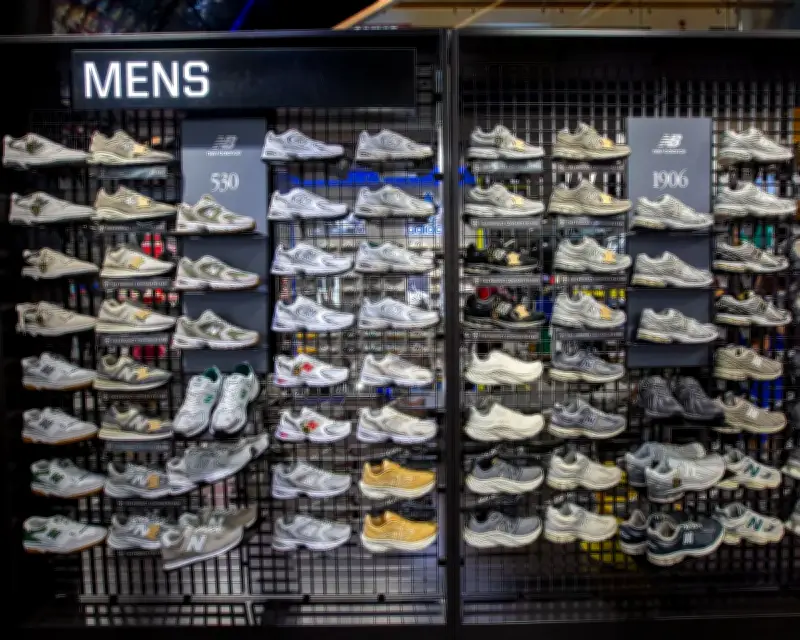
JD Sports has issued its third profit warning since early 2024, cutting its underlying pre-tax profit forecast for the current financial year to between £700m and £800m, down from a previous estimate of £750m-£850m. The warning, which sent shares down 14%, reflects a sluggish global trainer market that the self-styled “king of trainers” retailer blamed on weak new product launches from major brands Nike and Adidas, as well as persistent cost-of-living pressures, particularly in the United States.
Weak Demand from Nike and Adidas
The company described a slower quarter for “high-heat footwear product,” a term referring to the failure of big global trainer brands to deliver exciting new designs. According to City analysts, Nike and Adidas together account for slightly more than half of JD Sports’ sales. When those brands are on tepid form, the retailer typically suffers as well, JD Sports noted.
The warning was the latest in a series of disappointing updates. The company also pointed to “incremental cost of living pressures,” especially in the US, and described the market as “a promotional market,” a phrase that has appeared frequently in JD’s updates over the past two years. The particular disappointment this time, according to Nils Pratley, is that the warning came during a men’s football World Cup year, which should have generated a general sporty buzz for a global business.
Broader Market Weakness
The broader market for trainers is genuinely weak, Pratley noted. Nike’s share price is down a third this year, even after a miserable performance in the last two. Adidas itself recently warned that its big marketing bet on the World Cup did not pay off. Meanwhile, sluggish spending among US consumers in response to higher energy prices has affected other retailers: Walmart, the largest US retailer, this week reported its slowest sales growth in six years.
The deeper worry for JD Sports, according to Pratley, is that the whole “athleisure” trend may not be coming back, or if it does, it will not return to the levels seen during the Covid pandemic. The pandemic created a mini-boom for joggers and trainers, but since then the direction has only been one way. “Did Nike and Adidas push prices too far? Have they been outflanked by the likes of Hoka and On? Or have consumer tastes just changed? Probably all of the above to an extent – and none is good news for JD,” Pratley wrote.
Cashflow and Strategic Tensions
Despite the profit warning, JD Sports’ cashflow forecast remained unchanged at £460m-£520m, which Pratley said is evidence to support the company’s boasts about sharpening internal controls after its previous boom years of successful global expansion in the 2010s. However, waiting for an upturn, counting the cashflow, and buying back a few shares makes for an uninspiring life, Pratley added.
Disagreements about strategy reportedly led to the exit of the chair, Andrew Higginson, last month. Pratley noted that it is easy to see why there would be tension. The share price is back at 2019 levels. If this were a conventionally owned public company, as opposed to one with a 55% shareholder in the form of the Pentland Group, the chief executive Régis Schultz might be under more pressure to generate some trading heat via self-help. Non-Pentland shareholders are surely frustrated, Pratley concluded.