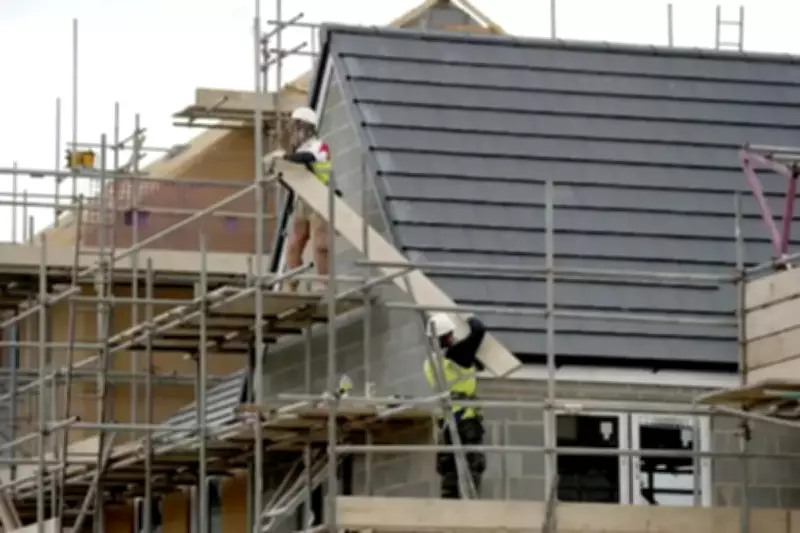
Housebuilding Stocks Stage Surprise Recovery as Sector Hits 'Rock Bottom'
In a surprising turn of events, UK housebuilding stocks have shown unexpected resilience this week, with industry analysts suggesting the beleaguered sector may have finally reached its valuation floor. This development comes despite persistent market uncertainty driven by the ongoing Iran conflict and its ripple effects across the global economy.
Market Uncertainty and Strategic Pullbacks
Leading FTSE 100 housebuilder Barratt Redrow maintained its characteristically cautious outlook while announcing significant strategic adjustments. The company confirmed it would maintain its financial targets but issued warnings about potential building cost escalations in the coming year, directly attributing these concerns to the Strait of Hormuz blockage resulting from Middle Eastern hostilities.
"The ongoing conflict in the Middle East is contributing to increased economic uncertainty, including the potential for a more prolonged higher interest rate environment and renewed cost pressures," Barratt Redrow stated in its market update.

The housebuilding giant revealed it would adopt an "even more selective" approach to land acquisition, reducing its projected spending ceiling on new plots by 11 percent to £800 million. This conservative strategy follows similar moves across the industry, with FTSE 100 competitor Berkeley announcing earlier this month that it would completely halt land purchases to shield itself from what it described as an "unprecedented increase in cost and regulation."
Unexpected Share Price Rebound
Contrary to expectations, housebuilding shares experienced a notable uptick on Wednesday following Barratt Redrow's latest inflation warning. The FTSE 100 firm saw its shares jump as much as 2.4 percent, while FTSE 250 builder Vistry climbed 2.5 percent. Other major players including Berkeley, Bellway, and Persimmon each recorded gains exceeding one percent at market opening.
This recovery is particularly striking given the sector's recent struggles. Vistry's share price had previously plummeted 22 percent following the unexpected departure of CEO Greg Fitzgerald, dropping an additional four percent when Adam Daniels was announced as his internal successor. With most major housebuilders down more than 15 percent year-to-date, some market observers interpret this sudden rebound as evidence that these stocks have finally bottomed out.
Analyst Perspectives on Market Stabilization
Lale Akoner, a global market analyst at eToro, offered insight into the unexpected market movement. "Recent share price jumps in housebuilders likely reflect investors viewing the sector as having reached a valuation floor after a prolonged downturn," Akoner explained.
"Barratt Redrow's update still highlights fragile demand, with rising mortgage rates, living costs, and a softening jobs market weighing on activity. Overall, investors appear to be pricing in stabilization rather than a strong rebound in housing demand."
Richard Hunter, head of markets at Interactive Investor, provided additional context for Wednesday's share price recovery. He noted that the UK's leading housebuilders remain "very well run companies [with] strong balance sheets," pointing to Barratt Redrow's maintained completion and profit targets despite its land buying cutbacks. The firm actually upgraded its year-end net cash forecast by 30 percent to an upper limit of £650 million.
Hunter emphasized the strategic wisdom of these companies' conservative approaches given their exposure to fluctuating demand and supply chain inflation. However, he tempered optimism about broader sector recovery, stating, "[But] those are just the levers within their control. If you look at the macro environment, it's very difficult to see that a rerating of the sector could come along any time soon."
"I certainly can't see that we've necessarily hit a bottom today, with the backdrop remaining so uncertain," Hunter concluded, highlighting the persistent challenges facing the housing market amid geopolitical tensions and economic volatility.