The Anti-Zermatt: A Quiet Alpine Retreat in the Jungfrau Region
Nestled high in the Swiss Alps, the Jungfrau region of Switzerland's Bernese Oberland stands in stark contrast to the glitzy, high-octane ski destinations that dominate the Alpine scene. While other resorts boast fashion parades of vintage furs, nightclub ceilings dripping with Dom Perignon, and truffled pizzas priced at £100 per pie, this area offers a refreshingly different experience. Here, après-ski is defined by a comforting cup of tea, a rejuvenating spa session, and the simple pleasure of relaxing with a good book.
A Legacy of Alpine Seriousness and Pioneering Spirit
The Jungfrau towns of Grindelwald, Lauterbrunnen, Mürren, and Wengen are blissfully free of Cucinelli-clad poseurs and rowdy revelers. Evenings are quiet, and hospitality feels genuinely authentic. This earnest approach to mountain culture is hardly surprising, given the region's location in the shadow of the formidable north face of the Eiger.
The triumvirate of the Eiger, Mönch, and Jungfrau peaks forms one of the most spectacular panoramas not just in the Swiss Alps, but on Earth. The mere mention of the Eiger's sheer north face sends a chill down the spine of any mountaineer. Explorer Heinrich Harrer, who made the first successful ascent in 1938, documented the harrowing ordeal in his book The White Spider, describing it as "the last problem of the Alps." This treacherous face has claimed the lives of more than 70 climbers.
Long before Harrer's historic climb, the slopes below were home to pioneering ski racers. Sir Henry Lunn brought the first adventurous British holidaymakers here over a century ago and founded the famous Downhill Only Ski Club in Wengen in 1925. The inaugural Lauberhorn ski races in 1930 were won overall by British sportsman Bill Bracken. The legacy continues today, with the latest World Cup event hosted in Wengen just before my visit, and local hero Marco Odermatt, the current downhill number one, celebrated in shop windows via cardboard cut-outs.
Grand Hotel Belvedere: A Wes Anderson-Inspired Alpine Gem
Despite the region's serious Alpine sports pedigree, it remains an excellent destination for families. The slopes are as quiet as the nightlife, and Wengen, where I stayed, is entirely car-free. While there are challenging, icy black runs, most trails are picturesque blues and easy reds. Guides from the Swiss Ski School were charming and patient, and the area offers much more than just skiing.
I spent a morning at Grindelwald-First, an adventure park perched 2,166 meters in the sky. There, I nervously inched along a glass-bottomed gangplank over a giant ravine before riding down a zipline. I also experienced the First Glider, an 800-meter cable ride where four people at a time soar backwards and forwards above skiers' heads at speeds up to 52 mph, an attraction especially popular with the million-plus Chinese tourists who visit the Jungfrau annually.
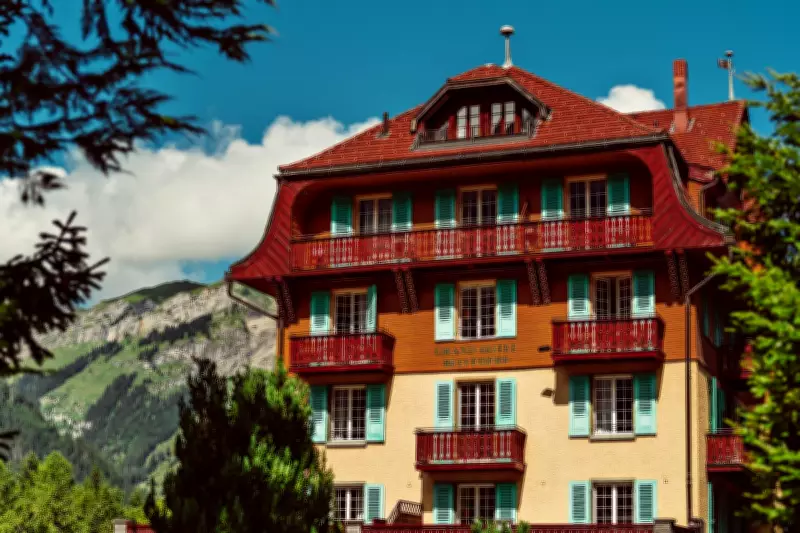
The area caters to all budgets, from cheap accommodations for those needing just a hot radiator to dry thick socks, to old-fashioned auberges with heavy brass keys and starched tablecloths. However, for the discerning traveler, there are now very stylish luxury lodgings available. My base, the Grand Hotel Belvedere in Wengen, is a destination in itself—a little slice of Paris's Marais district, but snow-capped and flanked by fir trees.
The hotel's chic French touches stem from its ownership by Beaumier, a firm that also owns L'Alpaga in Megève, Le Fitz Roy in Val Thorens, and Capelongue in Bonnieux, Provence. Targeting a hip, young clientele of continental tastemakers, Beaumier has achieved a triumph with the Belvedere, its first Swiss property. This century-old Art Nouveau gem has been completely reimagined while retaining all its Wes Anderson warmth. In fact, new staff members are instructed to watch The Grand Budapest Hotel upon joining.
Design, Dining, and Dramatic Views
The hotel's color palette features moss green and creamy white with abundant light, unvarnished wood. From menus to tote bags and hotel-branded beer cans in the minibar, the Belvedere's typography is absolutely on-point, creating nirvana for graphic designers. The 90 rooms and suites blend chic and rustic elements, with bathrooms in serpentine green marble and pine windows that look into the room like those of a workshop's office, all suffused with the scent of larch.
My balcony overlooked the dual-level spa pools and offered panoramic views across the Lauterbrunnen valley. The spa itself is a brutalist underground affair, complete with a sauna, steam room, glacial plunge pool, and angular hot pools that stretch from indoors to outdoors via Bondian tunnels and automatic glass shutters. Inspiration may have been drawn from On Her Majesty's Secret Service, given that Blofeld's Piz Gloria lair was filmed on the nearby Schilthorn, just four miles away.
The Grand Hotel Belvedere has been given such a vibrant new lease on life that it's easy to forget it has stood here since 1904. The hotel boasts a literary connection, as J.R.R. Tolkien stayed here after the war, and it's said this valley inspired his fantastical Middle Earth in The Lord of the Rings.
The hotel's restaurant is presided over by English chef and tattoo enthusiast Will Gordon, who is deeply passionate about plant-based cooking. His obsession with healthy eating stems from caring for his mother during her cancer treatment. While I typically indulge in local cheese and red meat in the mountains, I was blown away by the flavors of his vegetarian dishes. That said, you may wish to dine here and then wander into town for a traditional fondue to ensure you're fully satisfied. The hotel is very proud of Gordon's 'vegan' fondue, though I personally drew the line at that, preferring the real cheese experience.
Carnivores are well catered for, especially with Gordon's beef pithivier—a dish akin to beef Wellington but with puffier pastry packed with a pink chunk of Kobe-tender fillet and generous wild forest mushrooms, which I'd rate a perfect ten out of ten.
Beyond the Hotel: The Jungfraujoch and a Curated Experience
If the chocolate dessert proves insufficient and you need to squirrel some away for later, you'll find the highest Lindt chocolate shop in the world at 3,463 meters atop the Jungfraujoch. This saddle connecting the Mönch and Jungfrau peaks has been accessible since 1912 by a railway that runs underground through the Eiger and Mönch. The construction, which took 16 years and claimed 30 workers' lives—including a catastrophic 30-tonne dynamite explosion—makes Harrer's climb seem like a walk in the park.
The result is Europe's highest railway station and the Sphinx observatory, established in 1937. Beyond its scientific history, the observatory offers phenomenal views across the glacier and also appeared in The Grand Budapest Hotel. Between this white-domed viewpoint, the stylishly minimalist Grand Hotel Belvedere, and the cute trains pulling in and out of Kleine Scheidegg station as snowboarders zoomed around like it was a model railway, the entire trip felt delightfully and accidentally Wes Anderson. Come for the skiing, leave with a beautifully curated Instagram grid.