
UK Food Halls Defy Hospitality Downturn with Double-Digit Growth
While traditional brick-and-mortar restaurants across Britain continue to shutter their doors amid economic pressures, a surprising sector is experiencing unprecedented growth. Food halls are booming throughout the United Kingdom, offering a lower-risk alternative for both operators and diners during challenging times.
Europe's Largest Purpose-Built Food Hall
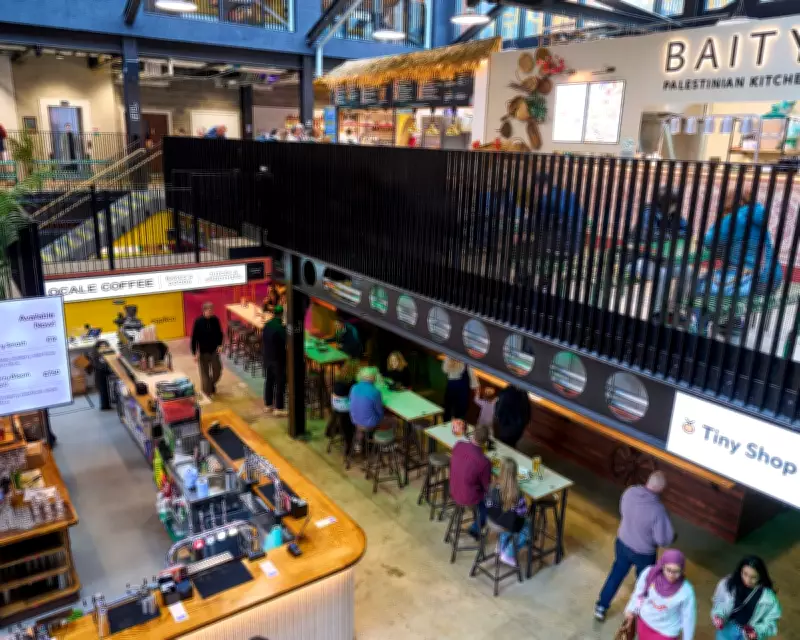
In Sheffield, the Cambridge Street Collective stands as Europe's largest purpose-built food hall, spanning an impressive 20,000 square feet. Opened in 2024 as part of the city's major redevelopment initiative, this cavernous venue buzzes with activity as customers collect diverse offerings from Malaysian rendang curries to Palestinian chicken musakhan and innovative sushi tacos.
The venue represents a significant shift in dining culture, arriving alongside major businesses like HSBC in Sheffield's ongoing transformation. During busy weekdays, electronic buzzers chirp throughout the space, alerting lunch crowds that their globally-inspired meals are ready for collection.
Economic Challenges Driving Change
The hospitality industry faces what many describe as an impossible climate. Soaring energy costs have been exacerbated by geopolitical tensions, while labor expenses have spiraled due to increases in minimum wage and national insurance contributions for employers. Simultaneously, many consumers are opting to dine at home as the cost of living continues to bite household budgets.
Yet against this bleak backdrop, food halls are thriving remarkably. Major UK cities report that these communal dining spaces average £5.6 million in annual revenue, with year-on-year growth reaching an impressive 10.75%. For diners, the experience typically proves substantially cheaper than traditional restaurant meals.
Nationwide Expansion and Development
Across Britain, 65 new food halls are currently in development, signaling strong confidence in this dining model. Newcastle will soon welcome a massive 60,000 square foot venue in the former Debenhams department store, scheduled to open this June. Manchester already boasts seven food halls, including the expansive 55,000 square foot Freight Island complex housed in a converted depot.
Liverpool's scene continues to grow with offerings like Renshaw Street Market serving international dishes, while London sees constant expansion with four venues from the Market Halls company alone. Their first location opened in Victoria in 2018 and now features renowned vendors including Roti King and Le Bab.
Incubators for Culinary Innovation
Matt Farrell, founder of Bold Street Coffee, observes that food halls have become essential incubators for new culinary businesses. Operating a kiosk in Liverpool's Duke Street Market alongside coffee shops in Liverpool and Manchester, Farrell notes that these spaces provide opportunities for operators who cannot afford traditional brick-and-mortar locations.
"We have actually seen restaurants close and become traders, and vice versa," Farrell explains. "In this almost impossible climate they shine some hope for creativity and growth."
Shared Infrastructure and Reduced Risk
The food hall model fundamentally changes the economics of dining establishments. At Sheffield's Cambridge Street Collective, Blend Collective owns the venue and covers energy costs while employing front-of-house staff, supplying plates and crockery, and managing the centralized till system. Vendors simply pay a percentage of their monthly sales to the owners.
James Cowan, finance director at Blend Collective, emphasizes their focus on local businesses. "People want to come and try something new and support local people," Cowan says. "It keeps our offering fresh."
Success Stories from Food Hall to Independence
The warehouse-style Cambridge Street Collective regularly fills with diverse crowds, from parents with children enjoying the top-floor sandpit to remote workers settling in with bubble tea or coffee. The venue's roof terrace becomes particularly popular during warmer months.
At the Little Penang kiosk, chef Jack Yeap prepares Malaysian cuisine after previously working for over a decade at a Cantonese restaurant that closed during the pandemic. "Now I have opened a Malaysian restaurant here, which is much better," Yeap shares. "It's my own place but also it's my own food."
For Yeap, securing funding for a traditional restaurant specializing in less-established Malaysian cuisine might have proven difficult. The food hall kiosk offered a perfect low-risk alternative that has since gained popularity.
From Food Hall Kiosks to Restaurant Chains
Several success stories demonstrate how food halls serve as launching pads for broader culinary ventures. Baity, which debuted in Blend's Manchester food hall and now operates in Sheffield, has become Europe's first multi-city Palestinian chain. The brand will feature among launch restaurants at Blend's newest food hall in Birmingham's trendy Digbeth area, located in the former Bird's custard factory.
Similarly, Bao first traded in Hackney's Netil Market before expanding to multiple critically-acclaimed London locations. Black Bear Burger operated initially at Street Feast food hall before establishing nine London restaurants, while Michelin-recommended Smokestak in Shoreditch also began its journey in a food hall setting.
Creative Freedom for Chefs
Kevin Hong began his career at what he describes as a "standard Japanese ramen restaurant" but longed to experiment with fusion cuisine. After pitching his concept to Blend Collective, he now operates a ramen bar blending Japanese and Korean flavors alongside a recently-opened sushi taco kiosk featuring innovative creations like crunchy fried seaweed shells filled with chicken teriyaki or prawn tempura.
Hong has since expanded to a brick-and-mortar restaurant specializing in Japanese barbecue and sushi. "I am delighted," he expresses regarding his culinary journey from food hall experimentation to independent establishment.
Future Growth Potential
Despite the rapid expansion, Cowan believes the UK has not yet reached peak food hall saturation. "I don't think it has, there is still a lot of growth, and it depends on the area," he observes. While Sheffield may have reached capacity with approximately six venues, other regions across the country show significant growth potential.
Industrial Heritage Transformed
In Sheffield's former industrial stronghold of Kelham, once dominated by steel factories, the Cutlery Works food hall occupies a repurposed cutlery factory. With exposed brickwork, neon lighting, and large windows overlooking a disused steel factory, the venue embodies post-industrial transformation.
"This area is being redeveloped," Cowan notes, pointing to construction visible through the windows. "You can see that big digger out the window, that pile of rubble will be flats."
Not all residents welcome the changes, however. Graffiti scrawled on a nearby derelict building delivers a blunt message: "yuppies go home." Despite such resistance, the food hall revolution continues to reshape Britain's dining landscape, offering hope and opportunity in an otherwise challenging hospitality climate.




