In the world of ultra-rare spirits, a prestigious programme is redefining luxury ownership by prioritising the sensory experience over financial speculation. Diageo's Casks of Distinction initiative, established in 2017, annually curates just twelve exceptional casks from its vast reserves for the world's most devoted collectors, with a firm ethos: these whiskies are for drinking, not investment.
The Art of Selecting "The Twelve"
The task of choosing the dozen standout casks from Diageo's immense portfolio is a monumental one. The drinks giant owns approximately 30 Scotch distilleries, representing around 20 per cent of Scotland's total distilling capacity, and has some 20 million casks maturing across the country. Most of this output fuels the company's blended whiskies, with many distilleries not offering their own single malts commercially.
Dr Craig Wilson, Diageo's Master Blender, dedicates an estimated 4,200 hours each year to the meticulous selection process. The team hunts for "singularities, these moments in time," according to Tod Bradbury, Global Private Client Director at Diageo. The goal is to present each whisky at its absolute peak, honouring both the distillery's legacy and the rarity of the remaining stock.
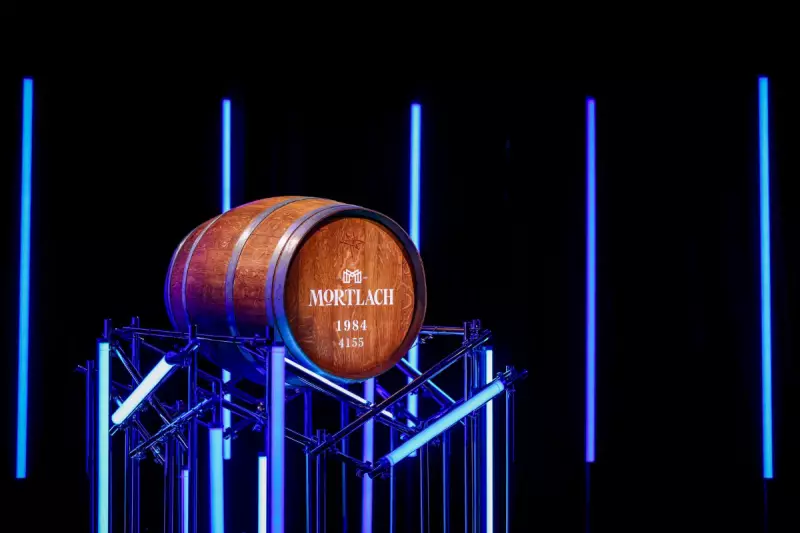
The 2025 collection, known as "The Twelve," perfectly illustrates this curated approach. While it features iconic names like the star cask—a Mortlach 1984—it also highlights hidden gems. A prime example is the Glenlossie 1994 Cask No. 110, a Speyside single malt from a first-fill American oak sherry cask with an estimated yield of 151 bottles. Over 90% of Glenlossie's typically light, floral spirit usually goes into blends, making this a rare find.
A Programme Designed for Connoisseurs, Not Traders
Casks of Distinction is emphatically not a cask investment scheme. Upon purchase, clients can choose to leave their cask to mature for a further five years at the Royal Lochnagar distillery, but that is the limit. The programme's core focus is on the quality of the liquid, its rarity, and the unparalleled experience of ownership, which includes visiting and personally overseeing the bottling.
Rajan Virdee, Private Client Manager at Justerini & Brooks, notes that most clients become "emotionally attached" to their casks, with only one or two ever opting to sell. "I don't know of anyone who's had a hard-nosed commercial attitude to it," he states.
In practice, most owners bottle their whisky well before the five-year deadline. Last year, for instance, a client purchased a 1975 Talisker at 49 years old with the specific intention of bottling it to mark the spirit's 50th birthday, creating the only Talisker of that age in existence. "But it's a private collector, so you can't have it," Rajan notes.
The Ultimate Personalised Bottling Experience
The purchase price includes a bespoke bottling service designed to honour the whisky's quality. Clients receive expert guidance on the optimal moment to bottle if they have no specific date in mind. For some, the bottling day itself is the highlight.
"We've had clients who, for two casks in a row, wanted to attend the bottling instead of visiting the cask," says Rajan Virdee. "We flew them over, handled health and safety, and they watched the cask being bottled. We even arranged for them to handwrite the first 12 labels themselves."
Owners can personalise their bottles with chosen colours, artwork, and the signature of Dr Craig Wilson. Crucially, they gain the right to state the age and distillery name on the label, which is particularly significant for "ghosted" distilleries like Pittyvaich (closed in 1993) or legendary silent sites such as Port Ellen and Brora, which have featured in previous collections.
Yield, which depends on cask type and evaporation (the "angel's share"), is the one variable clients cannot control. A large Sherry butt might yield 450 bottles, while an older hogshead could produce as few as 117. Interestingly, low yields are often seen as adding to a cask's exclusive story and long-term allure rather than diminishing it. As Tod Bradbury explains, the limited yield becomes part of the cask's unique narrative.
Ultimately, Diageo's Casks of Distinction offers a rarefied journey into the heart of Scotch whisky, celebrating singularity, craftsmanship, and personal connection over mere financial return.