A Voyage Through Time on the Canal du Midi
Long before modern trade disputes, the concept of tariffs originated in Spain, named after Tarifa near the Strait of Gibraltar. French monarchs envisioned a waterway connecting the Atlantic Ocean to the Mediterranean Sea, aiming to bypass Spanish levies and avoid perilous voyages around the Iberian Peninsula. While ships could navigate from the Atlantic to Toulouse via the Garonne River, the final 200 kilometers to the Mediterranean remained a challenge until the 1660s.
Pierre-Paul Riquet's Canal du Midi, completed in 1681 and originally named the Canal Royal du Languedoc, stands as one of the 17th century's greatest engineering achievements. This canal revolutionized transport and commerce in southern France, facilitating the movement of goods like wheat and wine, as well as passengers and mail for centuries. In 1996, UNESCO recognized it as a World Heritage site, praising Riquet for transforming a technical marvel into a living work of art.
Today, the Canal du Midi attracts over 70,000 visitors annually, with nearly three-quarters coming from outside France. From Toulouse, known as La Ville Rose, to the coastal town of Sète, this scenic waterway offers a unique journey through history, culture, and natural beauty, accessible by boat, bike, or on foot.
From Toulouse to Carcassonne: A Tranquil Start
The section from Toulouse to Carcassonne is less crowded, featuring serene landscapes of sunflower fields and historic windmills. At the Négra lock, visitors can observe the distinctive oval-shaped basins designed to withstand water pressure. The former inn here now operates as Locaboat, offering barge rentals for groups of two to twelve.
For engineering enthusiasts, the Seuil de Naurouze marks the canal's highest point, where it crosses the watershed between the Atlantic and Mediterranean. This spot commemorates Riquet's innovative water supply system from the Montagne Noire. Nearby, Le Pas de Naurouze serves a hearty set lunch for €23, reflecting the region's culinary traditions.
Eight miles further lies Castelnaudary, famous for its cassoulet, a bean stew invented during a 1355 siege. The canal's Grand Bassin provides expansive waterside terraces, while the restored Cugarel windmill offers panoramic views. Le Grand Bassin offers eco-friendly accommodations, with rooms from €90 in shoulder season, plus amenities like cycle storage and luggage transfers.
Carcassonne and Beyond: Scenic Villages and Historic Sites
While Carcassonne's medieval citadel is popular, the canal becomes more picturesque beyond it, despite rougher towpaths. The village of Trèbes boasts a 13th-century church, marina, and Sunday market. A walk south-east leads to the Domaine des Pères olive oil mill and a three-lock flight where boats descend seven meters toward the Mediterranean.
Paraza, an artistic village 25 miles on, hosts studios and the CLAP gallery. The Château de Paraza winery offers tastings and luxury rooms, while Domaine Méditerranée provides budget-friendly options from €85 with a pool. The canal's meanders add 40 kilometers to the journey, including the 1676 Pont-Canal de Répudre, France's first canal aqueduct.
Detours and Diversions: Exploring the Languedoc Region
After Capestang, the route takes on a holiday vibe with open countryside and numerous attractions. A detour to Saint-Chinian, in Languedoc's oldest winemaking area, offers narrow streets, an abbey, and outdoor activities like rock climbing, kayaking, and cycling on the Oenovélo 1 route.
Puisserguier features a spiral-built village and a 1,000-year-old castle with free entry. Capestang hosts a vibrant market by Saint-Étienne church, with dining options like Le Pourquoi Pas by the canal. La Pause Sous le Pin offers B&B accommodations from €90, complete with a pool and garden.
Approaching the Coast: Béziers and Colombiers
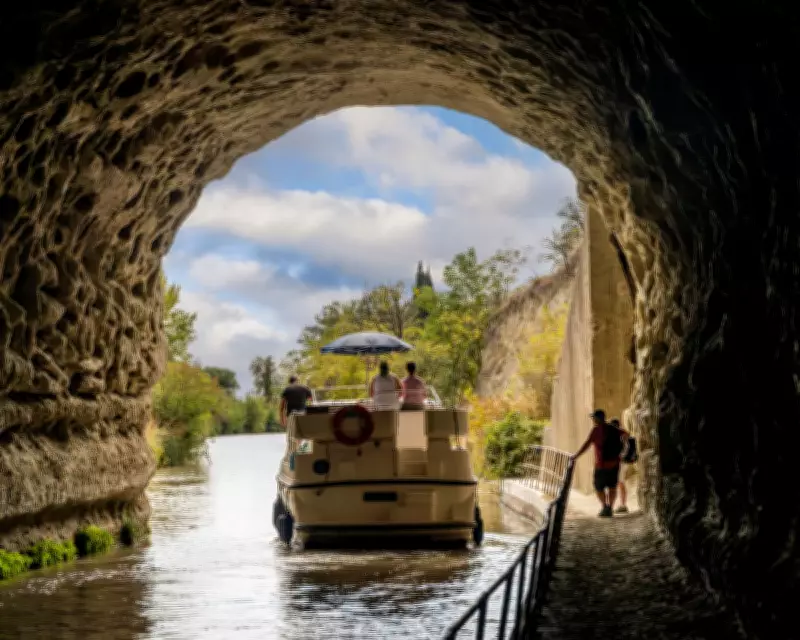
Near Colombiers, the canal once showcased iconic plane tree reflections, though many trees were felled due to canker stain. Replanted trees are now thriving. Key sites include the Oppidum d'Ensérune, a Gallic hill fort from the sixth century BC, and the Malpas tunnel, the world's oldest canal tunnel, completed in 1680.
Colombiers is ideal for water activities, with Sunboat offering day boats from €35 and rentals for kayaks and paddleboards. The village's 12th-century chateau, under restoration, offers guided tours on Wednesdays and features wine cellars with colorful tiles.
Just outside Béziers, the Fonseranes locks allow boats to drop 21 meters, creating a lively spectacle. Although now reduced to six locks, it remains an impressive engineering feat.
Final Destination: Sète and the Mediterranean
The canal empties into the Étang de Thau at Les Onglous, with boats historically proceeding to Sète harbor, also designed by Riquet. Sète is a charming port town with canals, beaches, a covered market, and water jousting tournaments. Les Terrasses de Saint-Clair offers a peaceful B&B from €130, featuring a pool and boules court. After a canal journey, Sète provides a perfect spot to relax and reflect.
For more information on events and travel tips, visit canal-du-midi.com.