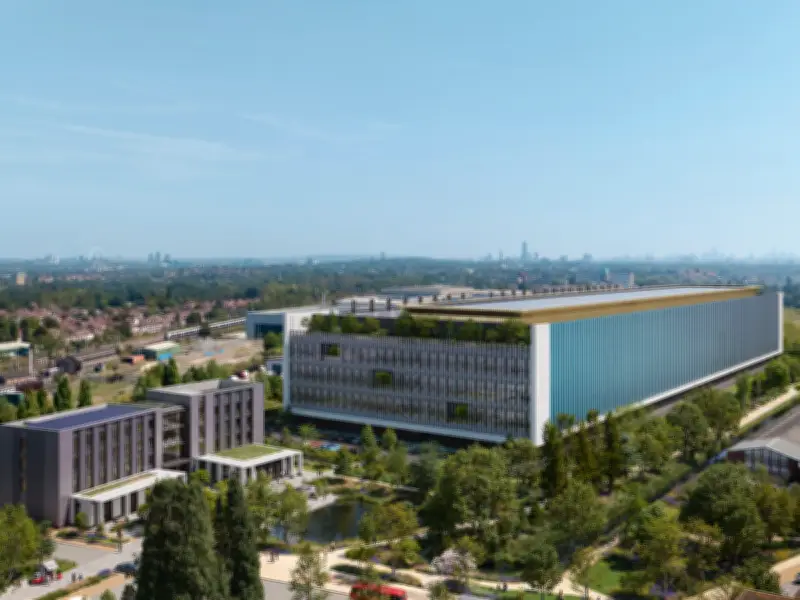
Ealing Council has approved a new data centre on the site of the former Honey Monster Food Factory in Southall, securing nearly £18 million in financial contributions from the developer, Cyrus One. The council insists that the facility's high energy demands will not be met by the existing local electricity grid, addressing concerns about grid capacity in West London.
Approval Timing and Planning Context
The data centre, located on Bridge Road, was approved on Thursday, July 17, 2026, just one day before new draft guidelines on data centres were published in the London Plan. These guidelines aim to balance economic benefits with environmental impacts. However, Ealing Council stated that the application was assessed against policies in place at the time of the decision, noting that the London Plan has not yet been adopted. A council spokesperson said: "Ealing Council supports a coordinated approach to planning for data centres, electricity infrastructure, housing and economic growth, ensuring that development is aligned with wider community, environmental and economic objectives."
Energy and Grid Concerns
The proliferation of data centres across London, particularly in West London, has raised concerns about strain on the electricity grid and water supply. Some housing projects in the area have faced delays due to grid capacity issues partly attributed to the concentration of data centres. The Southall facility will incorporate a 7,000-square-metre photovoltaic facade—a solar panel wall on its southern elevation—to meet some of its energy needs. The council spokesperson added: "Electricity capacity is a recognised issue across West London and was considered through the planning process. Electricity capacity will not be coming from the existing local grid and applicants are required to source and reserve this outside of the existing grid capacity." The Greater London Authority has noted that grid connection requests for data centres already amount to about 10 times the capacity currently used by existing centres, highlighting ongoing concerns.

Economic and Community Benefits
The data centre will replace a factory originally built in 1937, which ceased operations in 2016 and was demolished in 2022. The new four-storey building will encompass over 52,000 square metres of floor space. Construction is expected to create 1,105 full-time jobs, with plans to support apprenticeship opportunities and local spending. Once operational, the centre will generate 647 new jobs with an annual wage bill of £37 million. The developer has committed to funding 25 full apprenticeships and multiple work placements during construction.
Financial Contributions and Infrastructure
The developer has pledged £17.7 million in combined financial contributions. Over £2 million is earmarked for bus service enhancements, road safety, and active travel improvements along Bridge Road. The facility has also safeguarded space to export its waste heat to a future district heating network, potentially heating nearby buildings. More than £5.3 million is allocated for carbon offsetting, along with substantial funds for Ealing's Air Quality Action Plan. The eastern elevation of the building will feature a giant screen for community events.
Traffic and Community Feedback
According to planning documents, the data centre will generate significantly less traffic than the former cereal factory due to strict parking limits, with only 78 car parking spaces and 78 cycle parking spaces. The application received one formal objection, alongside community concerns about construction traffic, parking pressures, and reliance on unapproved transport infrastructure. Some locals also raised fears of exacerbated anti-social behaviour in public spaces.

Next Steps
The approval is subject to standard planning conditions, finalisation of the Section 106 agreement for financial contributions, and a Stage 2 referral to the Mayor of London. An Ealing Council spokesperson concluded: "The planning committee considered a wide range of planning matters... The scheme makes a substantial financial contribution towards infrastructure and community benefits—more than £17 million—which will support transport improvements, active travel measures, air quality initiatives, carbon reduction projects, employment and skills programmes and other infrastructure to support sustainable growth."