
Youth Unemployment Crisis Deepens as Young Britons Face 'Soul-Crushing' Job Hunt
Young people across the United Kingdom are confronting what experts describe as an existential crisis in the labor market, with youth unemployment reaching its highest level in over a decade. Official figures reveal that unemployment among 18 to 24-year-olds climbed to a five-year peak during the final quarter of 2025, marking the most severe situation since the aftermath of the financial crisis.
The Human Cost of Economic Struggle
Poppy Blackman, a 22-year-old London resident, embodies the daily struggle facing countless young job seekers. "Not a day goes by when I don't apply for at least a few jobs," she reveals, describing the process as "soul-crushing." Since becoming unemployed in January 2025, Blackman has submitted approximately 50 applications monthly, utilizing four different CVs tailored to various sectors. Her fashion and art design education from North Kent College has proven insufficient in today's challenging market.
"I can't be picky with what I want to apply for," Blackman admits, highlighting the desperation many young people feel. "It does get pretty miserable after a certain amount of time, always doing the same thing, looking on the same websites, applying for similar jobs."
Alarming Statistical Reality
The numbers paint a grim picture:
- Youth unemployment among 16 to 24-year-olds has surged to 16.1%
- This exceeds the European Union average of 14.9% for the first time
- Excluding the COVID-19 spike in 2020, this represents an 11-year high
- The overall UK unemployment rate stands at 5.2%, highlighting disproportionate youth impact
Alan Milburn, chair of the government's Young People and Work review, warns that the nation risks creating "a generation on the scrap heap." His forthcoming summer report identifies this as a long-term phenomenon rather than temporary fluctuation.
"Forty-five percent of 24-year-olds who are not in education, employment or training have never had a job," Milburn emphasizes. "If you haven't had a job by 24, that entails a long-term scarring effect and you're probably then stuck in a lifetime on benefits."
Economic Factors Driving the Crisis
Multiple economic pressures have converged to create this perfect storm for young job seekers:
- Employer Cost Increases: Since 2024, employment costs have risen dramatically
- 15% increase for workers aged 21 and over (£3,414 additional cost)
- 26% increase for 18 to 20-year-olds (£4,095 additional cost)
- Policy Changes: Chancellor Rachel Reeves' 2024 budget increased employer National Insurance Contributions from 13.8% to 15%
- Minimum Wage Growth: Consistent annual increases since 2019, including 6.7% in 2025 and 4.1% in April 2026
- Employment Rights Expansion: New legislation has added costs for sick pay, parental leave, and zero-hours contract management
Simon French, chief economist at Panmure Liberum, notes that these cumulative costs have created significant burdens for employers. "We've had these incremental costs being burdened on employers as if it is just a free lunch. Well, I think we're finding, it's not a free lunch."
Graduate Struggles and Technological Barriers
Even highly educated young people face unprecedented challenges. Jack, a 21-year-old Oxford history graduate with first-class honors, has submitted over 100 applications since last summer with minimal success.
"You hear back from maybe 10% of applications and usually it's automated, so you don't even know what you're doing wrong," he explains. "I've spoken to one human out of all those applications. I've even been interviewed by chatbots."
Jack describes a frustrating catch-22 situation: "Entry-level roles want you to already have a foot in the door. The roles in which you begin your career require you to have already been in roles in which you begin your career."
Sector-Specific Challenges and Adaptation
Saalim Elhaj, 23, represents those forced to abandon their chosen career paths. After graduating with an architecture degree from Manchester in June 2025, he discovered limited opportunities in his field.
"Even before finishing my course, I was quite disillusioned by the whole profession, but mostly by the economy," Elhaj admits. "I could see it wasn't going to get any better. There weren't many jobs for recent graduates."
He has since shifted focus toward construction, seeking an apprenticeship in traditional timber framing while volunteering in London to gain experience. "It's really bizarre, doing a university degree and now thinking about an apprenticeship, but everything is very uncertain and I really want to learn a skill."
Broader Implications and Expert Warnings
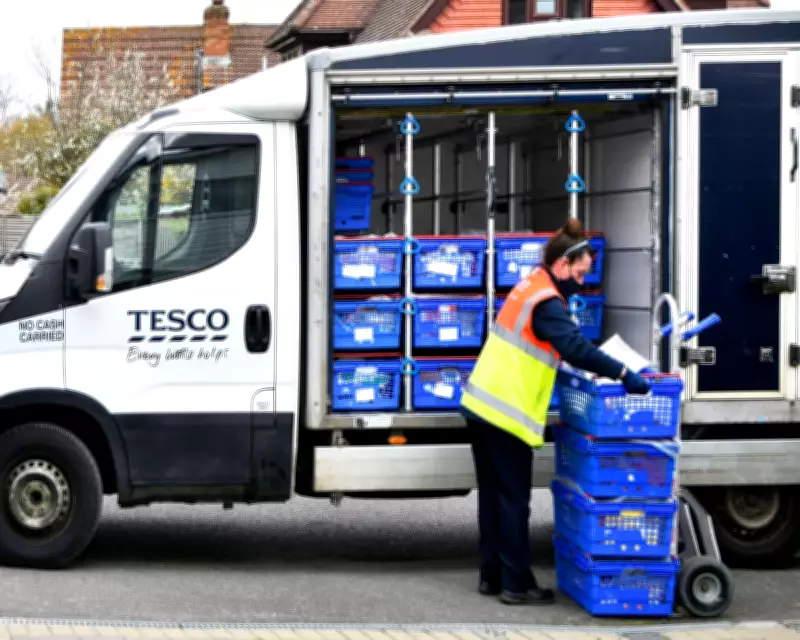
Ashwin Prasad, head of Tesco's UK operations, recently cautioned that Britain is "sleepwalking into a quiet epidemic" of joblessness. Martin Beck, chief economist at WPI Strategy, explains that economic sluggishness disproportionately affects younger workers: "If you're an employer and your demand is weak, you're probably going to freeze recruitment. You're not going to open up as many entry-level roles."
Jonathan Townsend, UK chief executive of The Prince's Trust, observes: "More young people are coming to us eager to work but feeling locked out of opportunities. This generation has faced a uniquely difficult start to working life. Many had their education and early work experiences disrupted by the pandemic, leaving gaps in skills, confidence and networks that are crucial for getting a first job."
Julie Leonard, chief impact officer at national employment charity Shaw Trust, summarizes the situation: "This generation has had a raw deal. They've faced a pandemic during the time when vital skills for the workplace are gained, and are starting their working lives during unprecedented social and technological change."
As the government prepares its summer review, young people continue their daily struggle against what many describe as the most challenging employment landscape in recent memory.




