
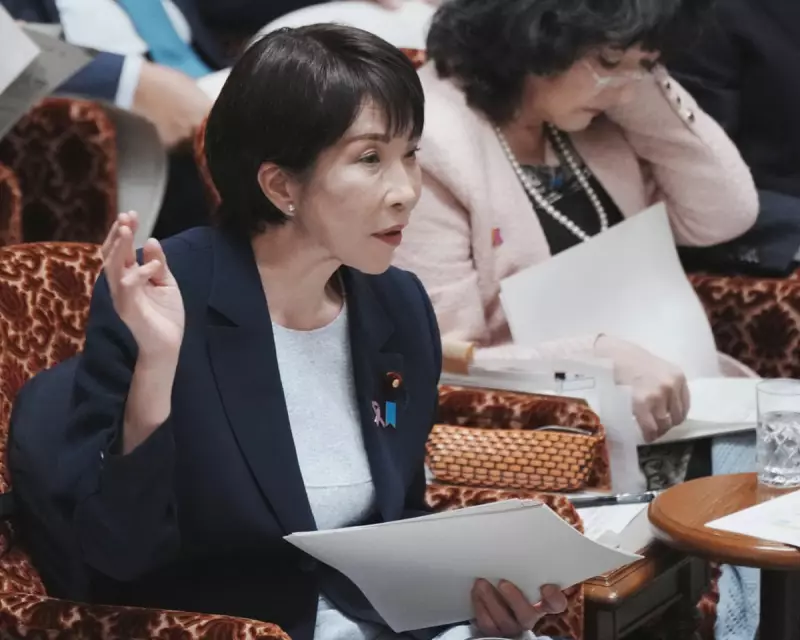
Japan's first female Prime Minister Sanae Takaichi has ignited national concern after revealing she survives on just two to four hours of sleep per night, raising questions about her commitment to improving work-life balance in a country notorious for punishing work schedules.
The Midnight Meeting That Caused a Stir
The controversy intensified last week when Takaichi summoned aides to her office for a 3am meeting to prepare for a budget committee hearing scheduled just six hours later. This extraordinary late-night session occurred weeks after she celebrated her historic appointment by promising to "work, work, work, work and work" - a statement now taking on concerning implications.
During a legislative committee meeting, Takaichi pointed to the bags beneath her eyes while telling MPs: "I sleep about two hours now, four hours at the longest. It's probably bad for my skin." She shares this minimal sleep habit with her political hero, former British Prime Minister Margaret Thatcher.
Japan's Deep-Rooted Work Culture Problem
Japan has long struggled to reform a corporate culture that expects employees to work excessively long hours, often followed by evening socialisation with colleagues. The country's punishing work schedules have been directly blamed for the rise in karoshi - death from overwork - and for making it harder for exhausted couples to contribute to raising the nation's critically low birthrate.
A March study released on World Sleep Day revealed that Japanese people average just seven hours and one minute of sleep on weekdays - 38 minutes less than the international average and below figures recorded in the US, Britain, France, Germany, Italy and Canada.
Balancing Economic Growth and Worker Health
Concerns have mounted that Takaichi expects employees to work longer hours to promote economic growth, particularly as her administration discusses possibly raising the cap on overtime. However, she has insisted that any changes to working conditions would prioritise workers' health.
"If we can create a situation where people can properly balance childcare and caregiving responsibilities according to their wishes, and also being able to work, enjoy leisure time, and relax - that would be ideal," the Prime Minister stated.
Yet after being elected president of the Liberal Democratic Party in early October - a victory that secured her position as Prime Minister - Takaichi declared she would dispense with the idea of "work-life balance for myself" while urging LDP colleagues to "work like a horse."
Her heavy workload has drawn expressions of concern from across the political spectrum. Ken Saito, a former LDP economy minister, said he was "honestly worried" about Takaichi's health, while opposition MP Katsuhito Nakajima urged her to get more sleep, eliciting a nod and smile from the Prime Minister.
Takaichi has had little opportunity to relax since becoming Japan's first female leader at the end of October. Her schedule included an ASEAN summit in Malaysia, welcoming Donald Trump for a state visit, and meeting Xi Jinping at the APEC summit in South Korea - all within her first days in office.
A deepening diplomatic row with China over her recent suggestion that Japan could become militarily involved in a conflict in the Taiwan Strait may ensure the Prime Minister continues to experience many more sleepless nights ahead.




