
AI Job Destruction Accelerates Amid Global Energy Crisis
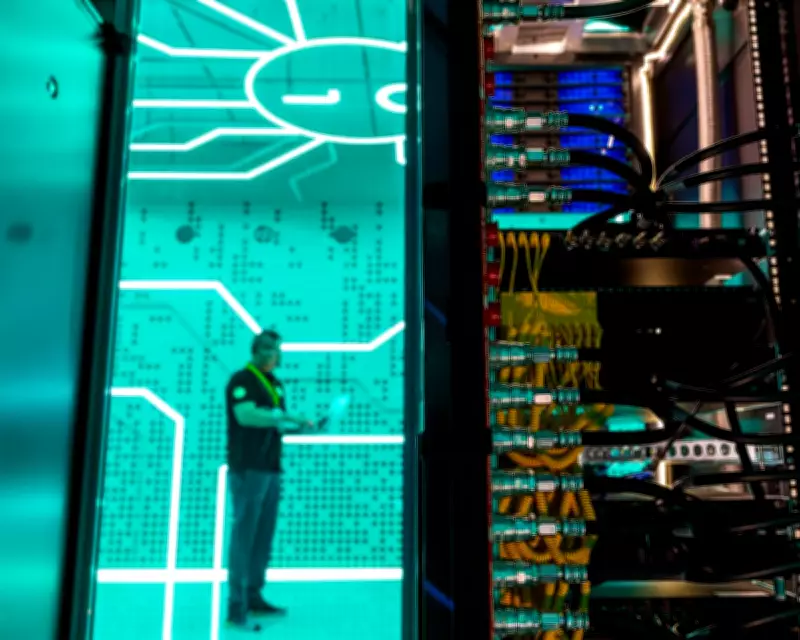
Liquid-cooled servers at the Global Switch Docklands data centre campus in London, photographed on 16 June 2025, symbolize the rapid advancement of artificial intelligence. Every wave of new technology has historically sparked doomsday predictions, but governments are now failing to plan a human response on the necessary scale.
The Brutal Reality of Creative Destruction
The transition to an AI-dominated world has redefined the concept of creative destruction in capitalism, where outdated technologies are replaced by innovative methods, often with harsh consequences. Since the industrial age began in the mid-18th century, this pattern has persisted, but machines now possess cognitive abilities to think and learn, magnifying the potential for economic disruption.
In an ideal scenario, policymakers would have time to adapt, smoothing the transition and minimizing pain. New technologies typically face teething troubles, leading businesses to change practices slowly, which allows governments to invest in skills and develop industrial strategies. Only through such measures can the full benefits of technological progress be realized.
Economic Challenges Exacerbate the Threat
Historically, strong economic growth and plentiful jobs, as seen in the 1950s and 1960s, eased the displacement of workers by automation. However, the current global landscape is starkly different. Even before recent geopolitical conflicts, growth was weak and jobs scarce. The war in the Middle East has further complicated matters, with the closure of the Strait of Hormuz driving up energy prices and causing shortages of industrial and agricultural raw materials.
This combination of rising business costs and readily available labour-saving technology creates a toxic mix that could rapidly destroy jobs on a massive scale. The incentive to choose machines over humans intensifies as the economic outlook deteriorates. The International Monetary Fund has recently cut growth forecasts and warned of a potential global recession, which could lead to sharp rises in unemployment.
The Optimistic View and Its Flaws
AI optimists acknowledge short-term issues but argue that long-term outcomes will be positive, citing past technological waves where doomsday predictions never materialized. In those cases, while some sectors suffered or disappeared, more jobs were ultimately created than lost, as humans used new technology to boost productivity and growth.
However, this analysis faces two critical problems. First, there is no guarantee history will repeat itself; AI's impact may be more transformative and disruptive than previous innovations like the internal combustion engine. Second, the jobs destroyed by AI might be better paid than those created, reversing the historical trend where machines freed humans for more creative tasks.
The Potential for an AI-Driven Crisis
Before the Iran war, research firm Citrini outlined a scenario where AI triggers an economic and financial crisis by 2028. Automation could eliminate well-paid white-collar jobs, reducing consumer spending power. While machines work tirelessly without breaks, they do not contribute to economic demand by purchasing goods or services.
This creates a doom loop: individual companies accelerate AI use to cut costs, but reduced overall demand hits corporate revenues, prompting further cost-cutting and more automation. Eventually, this could lead to a stock-market crash. Previously, Wall Street feared crashes from AI failing to meet hype, but Citrini's report shows the risks if AI succeeds, making early adopters like the US particularly vulnerable.
Urgent Need for Policy Action
The war serves as a wake-up call, highlighting that policymakers have less time than anticipated to prepare economies and societies for AI's challenges. Focus must be on the three Rs: reskilling workers, reindustrializing economies, and redistributing wealth. Without swift action, the benefits of AI will be captured by a tiny minority, while the majority grapples with mass unemployment and its consequences.




