Reports that the United States is preparing to claim a significant stake in Venezuela's vast energy reserves have sparked an outcry, with critics describing the move as "predatory" and "unconstitutional". Several media outlets this week reported that the Trump administration—which captured Venezuela's authoritarian president, Nicolás Maduro, in January and has since steered the South American country—hopes to secure long-term access to its oil and gas fields.
Advanced Talks Over 90bn Barrels
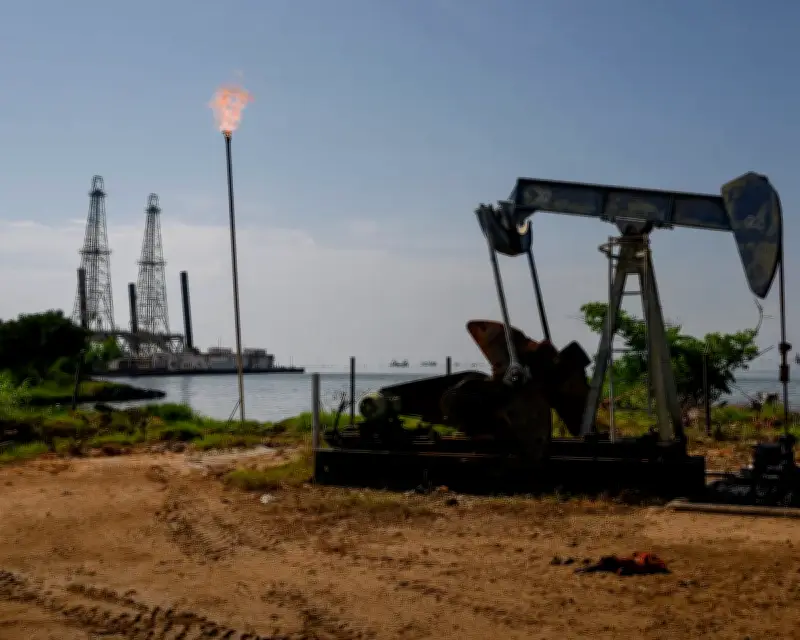
Venezuela holds the world's largest proven crude oil reserves, estimated at 303bn barrels, compared with Saudi Arabia's 268bn and Iran's 208bn. On Thursday, the Wall Street Journal reported that Trump officials were in "advanced talks" with Venezuelan officials to take "a direct stake in more than a dozen oilfields" containing 90bn barrels—nearly a third of Venezuela's energy reserves.
"This is real and being discussed at the highest levels of the US and Venezuelan governments," a source told Reuters, which said the fields under negotiation were located in the Orinoco Belt and Lake Maracaibo regions. Axios claimed the deal would be "a legacy-defining moment for President Trump", with one unnamed official telling the US outlet: "Calling this deal huge would be an understatement … It is massive." Citing sources familiar with the negotiations, Bloomberg reported that one deal under discussion was a 100-year lease on several oilfields.
Opposition Anger and Sidelined Leaders
The reports caused unease and anger among members of Venezuela's opposition, who are already frustrated with Trump's failure to bring about genuine political change after capturing Maduro. Since January's special forces raid on Caracas, Venezuela has been led by interim president Delcy Rodríguez, who was Maduro's vice-president and minister of petroleum. Other key members of Maduro's regime have retained positions of power, including interior minister Diosdado Cabello, who has been collaborating with Trump officials despite having a $25m US bounty on his head for alleged drug trafficking. Meanwhile, exiled opposition leader María Corina Machado, whose movement is believed to have won the 2024 presidential elections, has been sidelined.
Ricardo Hausmann, an exiled former minister and opposition supporter, wrote on X: "An illegitimate interim government with an illegitimate hydrocarbons law has no legitimacy to strike this unconstitutional deal. It will be a fiasco for all involved." Economist Francisco Rodríguez urged Venezuela's national assembly to reject what he called a "predatory deal". "Handing over Venezuela's oil wealth to the US contravenes the constitution and is not in the interest of the Venezuelan people—much more when it is done at gunpoint," Rodríguez said. Luz Mely Reyes, a prominent journalist and government critic, sarcastically called the "surrender" of Venezuela's natural riches "the deal of the century".
Historical Parallels and Strategic Motives
Gregory Brew, an energy historian and Eurasia Group analyst, anticipated "quite a lot of suspicion and rejection of any deal that would hand the United States government effective control over Venezuelan resources". Brew said the reported deal reminded him of how BP, then the Anglo-Persian Oil Company, controlled the oil resources of Iraq and Iran at the start of the last century. "Anglo-Persian was given a concession by the Shah of Iran in 1901 … in exchange for what was essentially a bribe to the Persian government, and it gave the company sweeping rights. The company was essentially in total control of any oil it found and would be able to retain virtually all the profits of any other oil it found and exploited and exported," Brew recalled.
"From Trump's point of view, the control over oil is something of an end in and of itself," Brew added. "But if you do try to rationalise it, I think US dominance over Venezuelan oil reserves allows the US to regard Venezuelan reserves as its own reserves: a source of oil from which the United States can draw and that nobody else has access to. I think that's how the administration is conceiving of this—excluding China, excluding Russia, but I think also excluding other potential customers for Venezuelan oil," he added. "It sounds colonial, because it is."
Broader Regional Strategy and Current Situation
Venezuela's post-Maduro conversion into what many call a US protectorate is the most dramatic play in Trump's push to reassert Washington's influence over Latin America as part of the so-called 'Donroe Doctrine'. That policy is a 21st-century adaptation of the 19th-century Monroe Doctrine by which President James Monroe sought to keep European powers out of the Americas. Trump's version is about countering China's growing footprint in the region and imposing US will through economic and military pressure.
Maduro's downfall has brought some change to Venezuela, with hundreds of political prisoners freed under Rodríguez and talks about reforming the regime-controlled supreme court taking place. But no date has been set for a fresh presidential election, and Machado has been unable to return from exile. "Delcy's been doing a fantastic job," Trump told reporters last month, claiming Venezuela was "not really ready" for a vote.