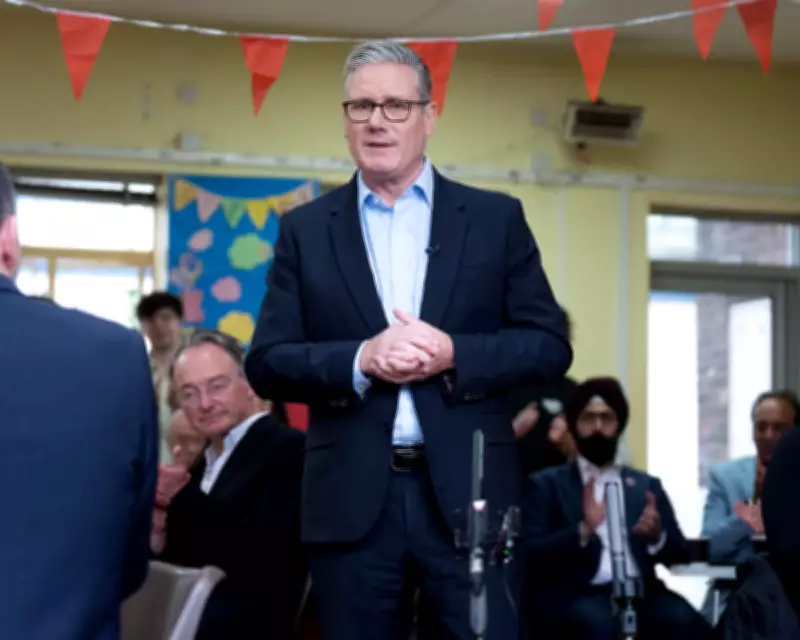
UK government borrowing costs fell and the pound rose on Friday as Keir Starmer vowed to remain as prime minister despite the Labour party losing hundreds of council seats across England.
Market Response to Starmer's Commitment
Investors calculated that some of the intense pressure on Starmer’s leadership had eased, as Labour appeared on track for smaller losses than election experts had predicted. The yield on benchmark UK 10-year gilts was down 5 basis points at 4.89%, outperforming the equivalent US bonds. Thirty-year bond yields, which hit a 28-year high of 5.77% earlier this week, also fell by 7 basis points to 5.56%, their lowest in more than two weeks. The pound gained three-quarters of a cent against the US dollar by mid-afternoon and was also slightly higher against the euro.
Political Stability and Market Sentiment
The yield – effectively the interest rate – had jumped earlier this week amid fears that the prime minister could face a leadership challenge if the results from the local elections and the devolved parliaments in Scotland and Wales were particularly poor. However, after Starmer insisted he would not walk away, market fears subsided.
Matthew Ryan, head of market strategy at Ebury, said markets feared higher government spending if Starmer were replaced by a more leftwing rival, such as Angela Rayner, Ed Miliband or Andy Burnham, funded by more tax hikes and higher borrowing. Neil Wilson, an investor strategist at Saxo UK, noted that “bond vigilantes are lurking”, attuned to the risk of political instability and the possibility that Chancellor Rachel Reeves might lose her job if Starmer departed.
Economic Implications
Wilson added: “Political risks associated with a Starmer/Reeves defenestration are bound up with already rising fiscal and inflationary risks for the UK economy.” City consultancy Capital Economics said any replacement prime minister and chancellor would face the same challenges as the current leadership. “If Starmer/Reeves were ousted in the aftermath of what appears to be a dire performance by the government in yesterday’s local elections, we suspect the result would probably be higher interest rates and higher gilt yields than otherwise. We doubt a new leadership would be any more successful at boosting medium-term economic growth either, not least because the current fiscal constraints would remain.”