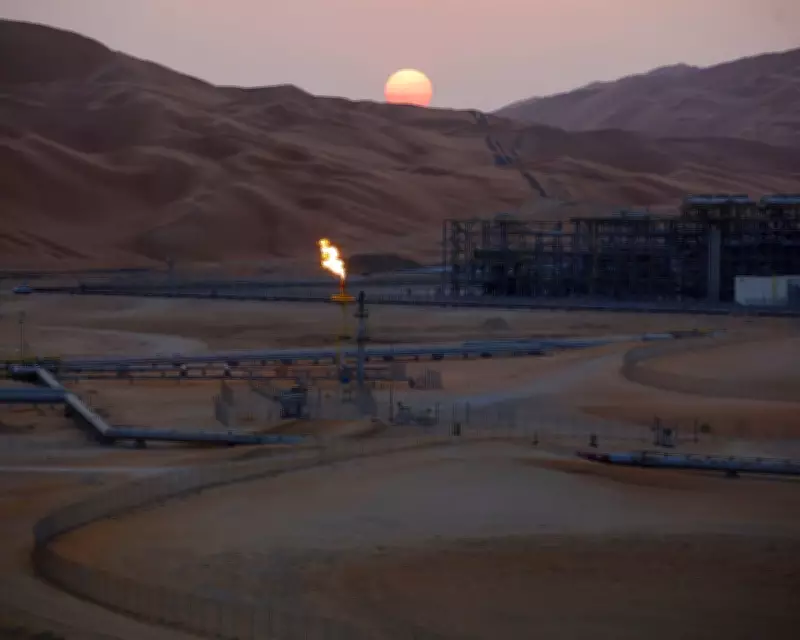
Saudi Aramco, the state-owned oil giant of Saudi Arabia, reported a 26% increase in first-quarter profits, reaching $33.6 billion (£26.9 billion), even as conflict in the Middle East disrupted traditional shipping routes. Revenue rose nearly 7% year-on-year to $115.5 billion, driven by the company's strategic use of its east-west pipeline to bypass the Strait of Hormuz.
Pipeline as a Critical Asset
The east-west pipeline, which runs from Aramco's eastern oil fields to the Red Sea port of Yanbu, operated at its maximum capacity of 7 million barrels per day. This allowed the company to continue exporting oil despite the closure of the Strait of Hormuz since late February, when the US-Iran war began. Amin Nasser, Aramco's president and CEO, emphasized the pipeline's role as a "critical supply artery," mitigating the impact of a global energy shock and providing relief to customers affected by shipping constraints.
Global Energy Market Impact
The disruption in the Strait of Hormuz, through which about a fifth of the world's oil and gas supply normally passes, has caused a spike in global energy prices. Brent crude, the international benchmark, is trading at around $100 per barrel—approximately 40% higher than before the conflict. Nasser warned that even if the strait reopened immediately, it would take months for the oil market to rebalance. He stated, "If trade flows resume immediately or today through the Strait of Hormuz, it will take a few months for the oil market to rebalance. But if trade and shipping remain curtailed by more than a few weeks from today, we anticipate the supply disruption to persist and the market to normalise only in 2027."
Dividends and Government Revenue
Aramco confirmed it would maintain its quarterly dividend at $21.9 billion, following a 3.5% increase at the end of last year. Saudi Arabia relies heavily on these dividends to fund domestic spending. The government directly owns over 80% of Aramco, while the Public Investment Fund holds 16%. The company, headquartered in Dhahran, employs more than 76,000 people globally and is one of the world's largest businesses and oil producers.
The US is awaiting a response from Iran to proposals for an interim deal to end the conflict. Recent fighting near the strait followed former President Donald Trump's announcement and subsequent pause of a naval mission aimed at reopening the waterway.