Australian Inflation Jumps to 3.8%, Rate Hike Likely
Australia's annual inflation rate accelerated to 3.8% in December, driven by soaring housing and electricity costs, increasing pressure on the Reserve Bank to raise interest rates.
The Australian dollar has outperformed all major currencies in 2026, reaching multi-year highs against the US dollar, euro, and yen, benefiting travellers and online shoppers.
New BRC data reveals food price inflation is accelerating, with fresh food up 4.4%, contradicting predictions of easing inflation and adding to cost-of-living pressures.
New research shows Brighton tops UK cities for disposable income growth at 8.1%, while Cambridge experiences a 3% decline. Economic policies on skills and transport are key factors.
New research from Morgan Stanley shows UK businesses report net job losses due to AI, with 8% reduction - the highest among leading economies. Despite productivity gains, job creation lags behind.
A new study reveals 11 UK towns and cities, including Warrington and Barnsley, have doubled disposable income growth compared to national averages through strategic economic policies.
Warrington in Cheshire has seen incomes rise twice as fast as the UK average, driven by transport links and a booming nuclear sector, positioning it as a model for regional devolution.
Leading German economists call for repatriation of €164bn gold reserves from US vaults, citing Trump's unpredictability and shifting transatlantic relations.
Investigative reporter Oliver Bullough exposes how central banks profit from printing cash used in drug trafficking and money laundering, despite declining public use.
Bank of England policymaker Megan Greene warns robust UK wage growth and potential US rate cuts could restrict the central bank's ability to lower interest rates this year, amid persistent inflation pressures.
The World Economic Forum concludes in Davos with global economy discussions featuring Lagarde, Georgieva, and Okonjo-Iweala, amid warnings on trust and tariffs.
GfK survey reveals consumer confidence rose slightly in January, with Britons showing resilience in personal finances but growing concerns about the general economy.
Analysis of Donald Trump's economic proposals during his second term, revealing incoherent policies that have failed to address cost of living concerns despite bold campaign promises.
Japan's government bonds suffer worst sell-off this century as PM Takaichi's unfunded tax cuts spark investor panic, drawing comparisons to UK's Truss-era debt crisis.
Donald Trump claims victory over inflation at Davos while UK rates tick upward. Analysis reveals mixed economic realities and political spin on both sides of the ocean.
The OECD's annual economic survey recommends Australia broaden the GST, increase affordable housing, and reduce emissions to address budget deficits and economic challenges.
Donald Trump's appearance at Davos 2026 underscores the deep crisis facing the liberal international rules-based system, revealing structural flaws that predate his presidency.
UK food inflation hits 4.5% with sugar and coffee prices soaring at nearly 10%, contributing to unexpected overall inflation rise to 3.4% in December.
The IMF's latest World Economic Outlook report uses banal language to describe escalating trade tensions and geopolitical instability driven by Donald Trump's unpredictable policies.
Citadel founder Ken Griffin has condemned Donald Trump's assault on the Federal Reserve, warning it could backfire politically by associating the President with unpopular inflation decisions.
Chancellor Rachel Reeves promotes Britain as a stable haven to global investors at Davos, despite domestic economic challenges and international uncertainty.
UK inflation unexpectedly rose to 3.4% in December, exceeding economist predictions and presenting challenges for Bank of England interest rate decisions amid persistent cost of living pressures.
UK inflation increased to 3.4% in December, the first rise in five months, driven by higher food, tobacco, and airfare costs, with expectations for a slowdown ahead.
One year into Donald Trump's presidency, Australia's economy shows surprising strength despite fears of trade wars and protectionism, with beef and gold exports booming.
Experts warn if Donald Trump gains control of the US Federal Reserve, the RBA might be forced to cut interest rates to counter a stronger Australian dollar, risking inflation.
UK inflation increased to 3.4% in December, driven by air fares and food prices, suggesting the Bank of England will keep interest rates on hold in February.
Analysis of World Bank figures shows global poverty declining sharply as billionaire wealth grows, contradicting Oxfam's annual Davos narrative. Discover the data behind the debate.
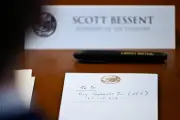
US Treasury Secretary Scott Bessent urges Europe not to retaliate against Trump's Greenland tariffs, calling for calm at Davos. Markets tumble as trade tensions escalate.
The IMF warns Australia faces persistent inflation, with key jobs and CPI data to determine if the RBA hikes rates on 3 February. Global growth upgraded to 3.3%.
UK inflation is forecast to rise to 3.3% for December, driven by higher airfares and tobacco prices, squeezing family budgets and impacting the cost of living. Read the latest analysis.