World's Oldest Living Land Animal Becomes Unwitting Target of Elaborate Cryptocurrency Fraud Scheme
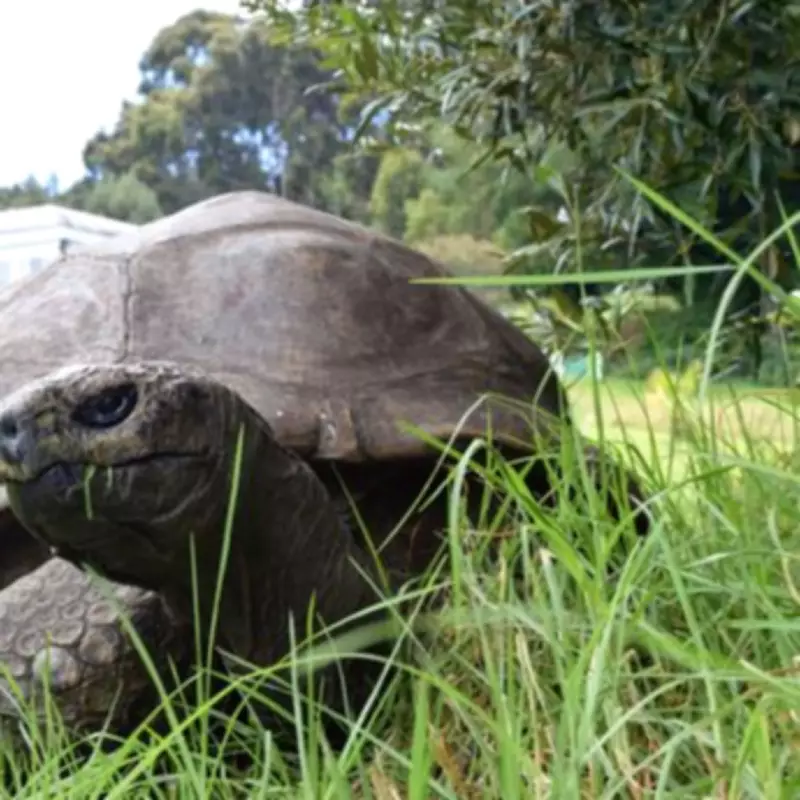
Jonathan, the world's oldest living land animal at 194 years of age, has become the surprising centerpiece of an international cryptocurrency scam that spread rapidly across social media platforms and news organizations. The Seychelles giant tortoise, who has resided on Saint Helena since 1882, found himself at the heart of a sophisticated digital deception that falsely announced his death while soliciting fraudulent cryptocurrency donations.
The Viral Deception That Fooled International Media
Reports began circulating on social media platform X, with accounts impersonating Jonathan's actual veterinarian Joe Hollins, claiming the beloved tortoise had passed away peacefully on Saint Helena. The fraudulent post, which accumulated more than two million views, read: "Heartbroken to share that our beloved Jonathan, the world's oldest living land animal, has passed away today peacefully on Saint Helena. As his vet for many years, it was an honour to care for him – hand-feeding bananas, watching him bask in the sun and marvelling at his quiet wisdom."
What made this deception particularly insidious was the inclusion of cryptocurrency donation requests within the same posts, transforming what might have been a simple hoax into a coordinated financial scam targeting sympathetic animal lovers worldwide.

International Media Falls for the False Narrative
The fabricated story gained such traction that numerous reputable news organizations, including the BBC, Daily Mail, and USA Today, initially reported Jonathan's supposed death as factual news. According to subsequent investigations by The Guardian, the fraudulent social media account originated from Brazil, not Saint Helena where Jonathan actually resides.
The BBC initially published the false report before conducting proper verification, later retracting their story when the truth emerged. This incident highlights the ongoing challenges news organizations face in verifying information in the rapid-fire digital news cycle, particularly when dealing with emotionally compelling stories that generate immediate public interest.
The Real Jonathan: Alive, Well, and Unaware of His Digital Notoriety
The actual Joe Hollins, Jonathan's veterinarian who maintains no presence on social media platforms, was eventually tracked down and confirmed the tortoise's continued good health. "Jonathan the tortoise is very much alive," Hollins stated definitively. "I believe on X the person purporting to be me is asking for crypto donations, so it's not even an April fool joke. It's a con."
Nigel Phillips, the governor of Saint Helena, experienced the viral story's impact firsthand when he received a flood of concerned messages about Jonathan's welfare. "I was going to bed on Wednesday when I was met with a flurry of concerned messages about Jonathan," Phillips recounted. He promptly searched the grounds and found the giant animal "asleep under a tree in the paddock," very much alive and undisturbed by his digital doppelganger's supposed demise.
Jonathan's Actual Life and Historical Significance
Born during the Georgian era, Jonathan has witnessed remarkable historical transformations during his nearly two centuries of life. The tortoise has met members of the British Royal Family, including the late Queen Elizabeth II (then Princess Elizabeth) and the Queen Mother in 1947, and even appears on the reverse of Saint Helena's 5p coin.
Despite being blind from cataracts and having lost his sense of smell, Jonathan reportedly enjoys a healthy, active life with particular fondness for bananas and maintaining what caretakers describe as a healthy libido. His daily routine consists primarily of grazing on grass, with weekly supplements of fruits, vegetables, and salad to ensure proper mineral intake.
"Jonathan's day is mostly spent grazing on grass," Governor Phillips explained. "One day a week he is fed fruit, veg and salad to ensure he gets essential minerals. He has a sweet tooth. Tourists occasionally come to view him, but that is carefully managed to ensure the animals are not stressed. Beyond that, there really is not much more to say about his daily routine. Perhaps the simplicity is the key to his longevity!"

In a humorous response to the false reports, Phillips shared that Jonathan had supposedly issued a press statement referencing Mark Twain's famous quip: "The report of my death was an exaggeration … Mark Twain, not Oscar Wilde. Jonathan would nonetheless have had the chance enjoy both their works in the original first editions."
Broader Implications for Digital Verification and Cryptocurrency Scams
This incident serves as a stark reminder of how easily misinformation can spread in the digital age, particularly when combined with emotional narratives and financial incentives. The cryptocurrency aspect of the scam represents a growing trend of digital fraudsters exploiting public sympathy for financial gain through relatively anonymous cryptocurrency transactions.
As Jonathan continues his peaceful existence on Saint Helena, unaware of his brief notoriety in the digital realm, his story highlights the ongoing challenges of information verification in an interconnected world where false narratives can achieve global reach within hours, while also demonstrating the resilience of proper journalistic verification processes in ultimately uncovering the truth.