
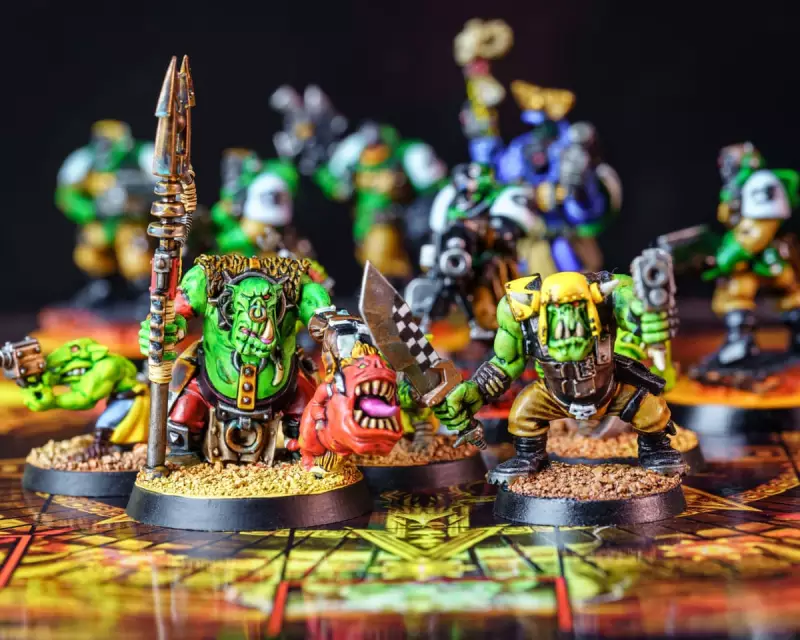
In a remarkable tale of British entrepreneurial spirit, what began as a niche mail-order venture operated by three friends from a London flat has evolved into a FTSE 100 powerhouse valued at an astonishing £6 billion. Games Workshop, the parent company of the Warhammer fantasy game, now stands as a titan on the high street and a global business phenomenon, with recent revenues soaring by 10.9% in just six months.
The Unlikely Ascent of a Tabletop Titan
The journey started in 1975 when founders Ian Livingstone, Steve Jackson, and John Peake launched their board games company. Initially catering to a dedicated community of enthusiasts, the creation of the Warhammer game in 1983 proved to be a masterstroke. It transformed the hobby from requiring a few models to building entire, collectible armies, creating a deeply engaging and ongoing pastime. Sir Ian Livingstone, who sold his shares in 1991, attributes the company's endurance to its foundational principle: it was "founded by gamers for gamers."
Today, the cultural landscape has shifted dramatically. "It is now cool to be a gamer," Livingstone notes, pointing to celebrity advocates like Henry Cavill—set to star in Amazon's upcoming Warhammer adaptations—as well as Ed Sheeran and Vin Diesel. This mainstream acceptance, fuelled by franchises like Lord of the Rings and Marvel, has helped shed the 'geek' stigma and broadened Warhammer's appeal immensely.
More Than a Game: The Pillars of a Global Hobby
Warhammer's success is rooted in it being a multifaceted hobby, not merely a game. It combines detailed miniature painting, strategic gameplay, immersive storytelling, and a strong community ethos. Games Workshop stores are designed as experiences, with expert staff offering advice and hosting painting sessions, fostering a social hub for fans. This has cultivated an exceptionally loyal customer base.
The company's commercial strategy is equally robust. It maintains a vertically integrated business model, controlling its entire supply chain, and fiercely protects its intellectual property. Professor Douglas Brown of Falmouth University calls it "a gaming success story" for its ability to satisfy both shareholders and a passionate fanbase, effectively monetising a dedicated subculture.
Community, Creativity, and Future Frontiers
The social and personal benefits for players are significant. Euan Bennington, treasurer of Derby University's Warhammer Society, highlights the "sense of belonging" it provides, especially for neurodivergent individuals who appreciate its structured, often alcohol-free social spaces. "It settles anxiety when it comes to socialising, because you always have something to fall back on," he explains.
Looking ahead, the future appears even brighter. Plans for a Warhammer World in the US and the high-profile Amazon film and TV series are poised to attract a new wave of fans. Analyst Charles Hall of Peel Hunt observes that, paradoxically, such hobbies are often viewed as "essential spend"—an affordable luxury with high emotional value for its devotees.
From its humble beginnings to its status as the 77th largest company in the UK by market capitalisation—outpacing giants like Burberry and Barratt Homes—Games Workshop's story is a testament to the underestimated economic power of the UK's creative industries. It stands not just as a business triumph, but as a cultural institution that turned a tabletop passion into a global empire.




