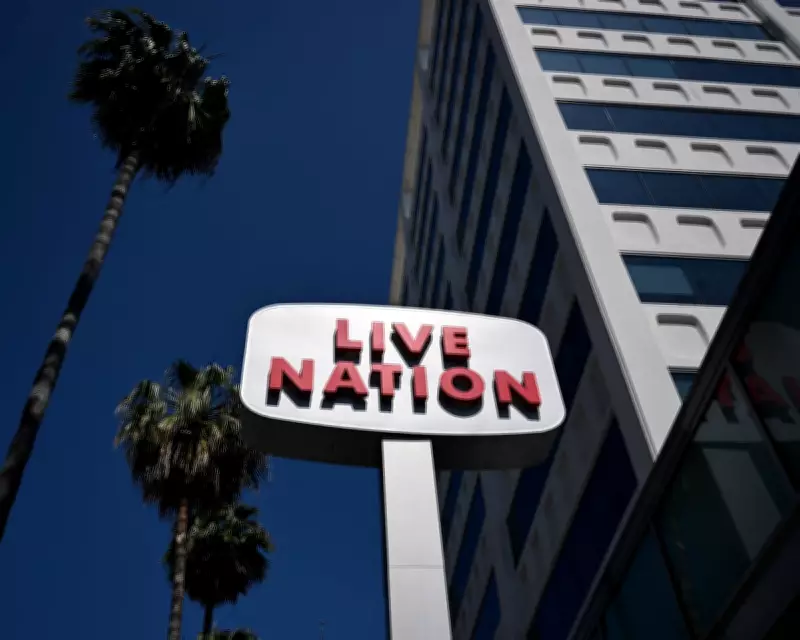
US Jury Finds Live Nation and Ticketmaster Liable for Monopolistic Practices
A New York jury has delivered a landmark verdict, finding global entertainment giant Live Nation Entertainment and its subsidiary Ticketmaster liable for systematically stifling competition to extract excessive profits from concertgoers. The jury identified a baseline overcharge of US$1.72 for every ticket sold by Live Nation since 2010, with projections indicating this could total an additional US$595 million in 2025 alone.
Australian Industry Reacts with Calls for Investigation
The US verdict has triggered renewed and urgent calls in Australia for the Australian Competition and Consumer Commission (ACCC) to intervene. Independent promoter Paul Sloan of Billions Australia estimates that Australian consumers face even higher fees, suggesting ticketing charges could be closer to A$10 per ticket for costs unrelated to any service or benefit offered.
"I would say that the raft of ticketing charges that make up ticketing fees in exclusive ticketing contracts in Australia is closer to A$10 per ticket of costs that do not in any way relate to any service or benefit offered," Sloan stated.
Parliamentary Inquiry Recommendations Remain Unacted Upon
The verdict has intensified pressure on the Australian federal government to act on the recommendations of the March 2025 parliamentary inquiry report titled Am I Ever Gonna See You Live Again?. The report recommended authorizing the ACCC to monitor the Australian music industry for anti-competitive conduct and amending Australian Consumer Law to improve ticket fee transparency and limit price variability.
The Media, Entertainment & Arts Alliance (MEAA) emphasized the urgency, with campaign director Paul Davies stating, "[The monopoly] puts musicians and crew in an invidious position, with less and less power, and they're already suffering low pay and insecure work. We're once more calling for the government and its agencies to look into the extreme concentrated market power in Australia."
Internal Messages Reveal Damaging Corporate Culture
Unsealed internal Slack messages from the US antitrust lawsuit provided a damaging insight into corporate attitudes. Senior ticketing executives mocked fans as being "so stupid" for paying inflated fees, with one director boasting, "Robbing them blind, baby. That's how we do." The executive, Benjamin Baker, later testified that the messages were "very immature and unacceptable."
Longtime Australian artist manager Paul Curtis said these messages exposed a corporate culture that views music merely as "another product to sell" and treats fans as cash cows. Curtis explained that Live Nation's dominance in Australia allows it to inflate artist values, monopolize touring schedules, and leverage control over venues and ticketing outlets, with fans ultimately bearing the burden through escalated ticket prices.
Potential Implications of US Remedy Phase
The US case now moves into its remedy phase, where the presiding judge will decide whether Live Nation should be forced to divest Ticketmaster. Brian Chladil, founder of independent ticketing agency Oztix, noted that such a corporate divorce could have significant implications in Australia.
"If the company was forced to split up, I would expect business operations here would have to follow," Chladil said. "That would mean independent ticketers would finally have access to previously locked-up markets."
Government Response and Regulatory Moves
The Greens' arts spokesperson, Senator Sarah Hanson-Young, argued that too much market power is held by a monopoly of corporations. "If a jury in the United States can take on giants like Live Nation and Ticketmaster, there's no excuse for Australia to sit on its hands," she stated, warning of consequences including venue closures, festival collapses, and fans being priced out.
The Albanese government is moving to tighten regulations, introducing the Competition and Consumer amendment (unfair trading practices) bill 2026 to parliament earlier this month. However, a spokesperson for the ACCC declined to comment on potential investigations, noting that whether conduct substantially lessens competition requires assessment of specific market conditions.
Live Nation, in its defense, maintained it is not a monopoly and that artists, sports teams, and venues decide prices and ticketing practices, with a company lawyer insisting its size reflects excellence and effort. The company plans to appeal the ruling.