
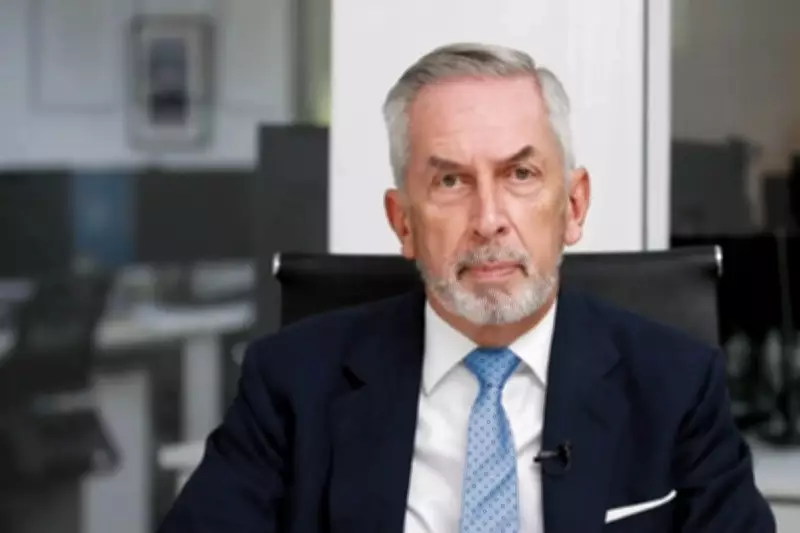
One of Britain’s best-known fund managers has dumped his holding in Unilever worth hundreds of millions of pounds, accusing the consumer goods giant of abandoning its traditional shareholders in favour of activist-driven deals like last month’s McCormick mega-deal.
Fundsmith Exits Unilever After 15 Years
Terry Smith, the star stockpicker behind the £12.5bn Fundsmith Equity Fund, sold out of his position in Unilever last month, City AM can reveal, after the Vaseline and Dove owner inked a $45bn (£33bn) deal to merge its stuttering food business with US spice behemoth McCormick.
“We have sold out of Unilever because the company appears to have abandoned its promised operational focus in favour of activist-driven break-ups,” Smith, whose eponymous fund was one of Unilever’s top 10 largest shareholders for more than 15 years, told City AM. Those included its decision to transfer “its food business to McCormick, whose management and returns we do not rate highly”, he added.
Unilever’s Strategic Shift
Unilever caught many investors off-guard in March when it accepted an offer from New York-listed McCormick, which owns brands like French’s mustard and Frank’s hot sauce, for its food division as part of a wider push to offload under-performing assets. Earlier this year, both Hellman’s and the stock cube company Knorr featured in the company’s list of ‘power brands‘ into which the company said it planned to plough additional resources as part of the latest of several strategic overhauls.
The tie-up, which was reportedly spearheaded by activist investor Nelson Peltz, triggered an immediate sell-off in Unilever shares, with the Anglo-Dutch firm’s stock price falling seven per cent when the deal was confirmed. Investors have since voiced concerns about the amount of debt being loaded onto the merged entity, while others – including Smith – castigated Unilever for using new listing rules in London to push it through, bypassing any shareholder vote.
Shareholder Concerns
Unilever shareholders find food megadeal hard to swallow. Unilever investors will own 65 per cent of the merged company, which will be one of the largest standalone food groups in the world. And other investors have warned the new entity will suffer a sudden sell-off if it opts against listing in London, as many of the FTSE 100 group’s current shareholders have a mandate only to invest in UK-listed companies.
Fundsmith’s decision to exit its Unilever stake ends what has been one of the fund’s longest held investments, whose value has more than doubled since it first invested in the group in 2010. But since the pandemic, the consumer staples giant has consistently dragged on the fund’s performance, and regularly appeared on its list of top detractors in its monthly bulletins to investors.
Smith’s Long-Standing Criticism
Smith, whose decades-long track record of picking affordable, high-quality companies has made him one of Britain’s best known fund managers, was an outspoken critic of the company’s major sustainability push overseen by ousted chief executive Alan Jope. In his annual letter to shareholders in 2022, the investment guru accused Unilever leadership of having “lost the plot”, after it announced plans to define a social or environmental purpose for all flagship brands like Hellmann’s mayonnaise.
But he was encouraged by the appointment of Hein Schumacher, Jope’s replacement as chief executive, in 2023. At Fundsmith’s annual shareholder gathering, Smith said the management team was “actually pretty decent” and hailed Unilever as one of his fund’s most undervalued stocks.
Schumacher was axed after just two years at the helm – amid pressure from activist investor Peltz for failing to turn the group’s fortunes around quickly enough. The Dutch executive was replaced by chief financial officer, Fernando Fernandez, who immediately sought to spin the company’s ice cream division into a separate company, before selling off the rest of its food brands to McCormick.
Unilever Responds
A spokesman for Unilever said: “The transaction was a unanimous decision by the board, which firmly believes it is in the best interests of Unilever’s shareholders. We value open dialogue with our shareholders and will continue our engagement to explain the benefits of the transaction.” “Under the UK rules, it was the board’s responsibility to approve the transaction and conclude that it is in the best interests of the company and its shareholders.”




