
Rolls-Royce has overcome persistent durability issues with its Trent engines, posting a 40% surge in underlying profits to £3.5bn for 2025. The aerospace giant is now seeking UK government backing for its ambitious re-entry into the narrowbody jet engine market, a sector it left in 2011.
Trent engine overhaul and durability fixes
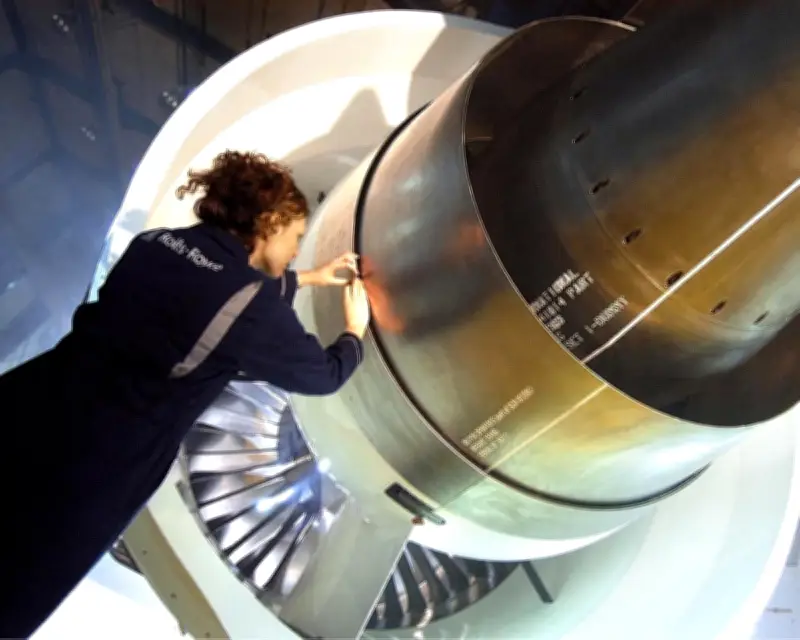
At Rolls-Royce’s Derby factory, technicians in a century-old hangar strip down Trent engines after years of service. The overhaul shop became a frequent destination due to cracking turbine blades, straining relationships with airline customers and depressing the share price. Chief executive Tufan Erginbilgiç, who took over in 2023, allocated £1bn to improve Trent durability and expand maintenance, repair and overhaul (MRO) capacity.
The Trent engines, used on widebody aircraft like the Airbus A350 and Boeing 787, feature 68 blades each about 10cm long. These blades endure forces equivalent to a double-decker bus and temperatures near 1,800°C, above steel’s melting point. Fixes included modifying tiny holes in the blades to boost airflow by 40% and trimming weight to reduce stress. Rachel Walker, Trent 1000 engine programme director, said these changes triple the engine’s time on wing. Nearly half of the Trent 1000 fleet has received new blades, with full replacement on track by June next year.
Certification delays and customer relations
Celine Bouas, senior vice-president for customers, attributed upgrade delays to certification slowdowns following the Boeing 737 Max crises. Although Rolls-Royce doesn’t supply engines for the Max, increased FAA scrutiny affected all certifications. Bouas acknowledged the pain caused to customers but noted the significant investment in fixes and MRO. “It has also cost us a great deal,” she said, citing loss of revenue and product investment.
Rob Watson, president for civil aerospace, stated the company delivered on commitments, outperforming in some areas. A 1% fuel consumption improvement saves airlines $500,000 annually per engine, helping Rolls-Royce win new customers, including one that exclusively used GE engines for decades.
Strategic shift and UltraFan development
Erginbilgiç cut distractions like the electric propulsion arm, though some electrical lessons may apply to hybrid systems. The company continued investing in UltraFan, its next-generation engine technology. Two UltraFan variants are in development: an 80,000-pound thrust widebody version and a 30,000-pound narrowbody concept, with testing targeted by 2028. The widebody version achieved a key milestone last month by linking the power gearbox to the high-pressure core.
Rolls-Royce seeks UK government support for these investments, despite having cash for shareholder payouts. Watson said the company could go it alone but prefers to de-risk through partnerships. Both engines are designed for future, unannounced aircraft, suggesting they won’t fit existing planes. “That step change in technology probably warrants a new aircraft,” Watson noted.
Market context and outlook
The global aviation industry is gathering at the Farnborough airshow, where engine makers benefit from post-pandemic recovery and increased defence spending. Rolls-Royce also sees demand from AI datacentre generators. Shareholders are excited about narrowbody re-entry, but executives insist growth doesn’t depend on it. However, the narrowbody market has driven most recent growth as airlines focus on point-to-point routes.




