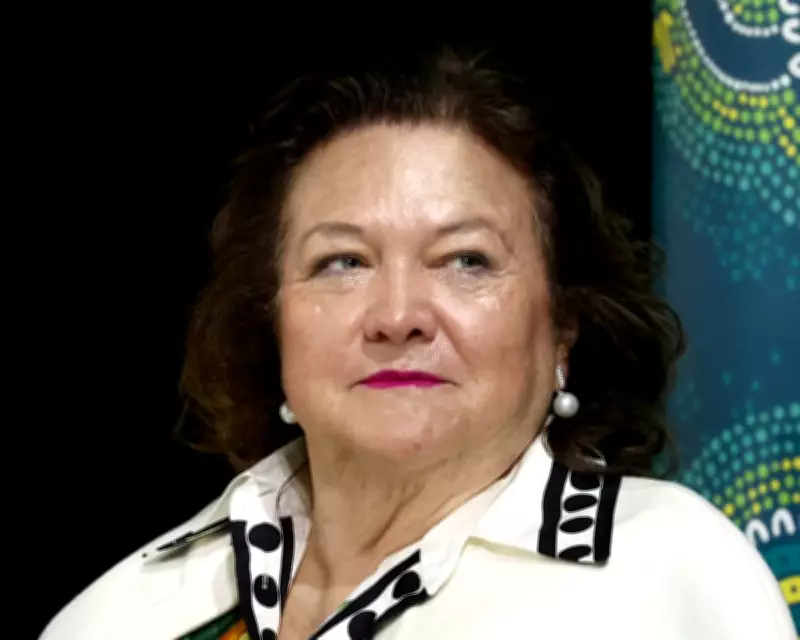
Gina Rinehart and Rival Heirs Await Court Verdict on Billion-Dollar Fortune Claim
Gina Rinehart, Australia's wealthiest individual, confronts a pivotal court decision that could potentially strip her of billions of dollars from her Pilbara iron ore empire and her title as the nation's richest person. The Western Australian supreme court is set to deliver a long-awaited judgment in Perth, ruling on whether Rinehart must share the spoils of some of Hancock Prospecting's most lucrative mining projects with the family of her late father's business partner.
At Stake: Billions in Royalties and Assets
At the heart of this complex legal battle are billions of dollars in royalties and assets stemming from tenements established by mining pioneer Lang Hancock and his business partner Peter Wright through the Hanwright partnership in the 1950s and 1960s. The central claim focuses on the highly profitable Hope Downs mining complex near Newman in north-west Western Australia, a joint venture between Hancock Prospecting and Rio Tinto that generated an $832 million profit for Hancock Prospecting in 2025.
The Wright family heirs, including billionaire Angela Bennett and her nieces Leonie Baldock and Alexandra Burt, assert they are entitled to an equal share of the 2.5% royalties from Hope Downs to Hancock Prospecting. They argue that Wright Prospecting never relinquished the assets held by Hanwright. In contrast, Hancock Prospecting vehemently rejects this claim for both past and future royalties, contending that it undertook all development work, bore the financial risks, and is the legitimate owner of the Hope Downs assets.
Additional Claims and Family Feuds
In another significant aspect of this leviathan case, the family business of late prospector Don Rhodes claims entitlement to a 1.25% share of the contested royalty stream. Moreover, Justice Jennifer Smith will also rule on a claim brought against Rinehart's company by two of her own children, John Hancock and Bianca Rinehart. The children have accused their mother of an "egregious fraud", alleging she transferred assets out of a trust following Lang Hancock's death in 1992, thereby depriving them of valuable tenements they believe they had the right to develop.
After being enjoined to the case by the Wright family in 2016, John and Bianca hope the judgment will affirm their entitlement to royalties and profits from various projects developed by Rinehart post-Hancock's death, including the cornerstone of her empire, the Roy Hill mega mine. Rinehart and Hancock Prospecting have dismissed all claims, with her lawyers arguing that her actions were intended to rectify a historical wrong by her father, who allegedly shuffled company assets to support the lavish lifestyle of her stepmother, Rose Porteous.
Prolonged Legal Battle and Future Implications
The judgment, arriving more than two years after the trial commenced, is anticipated to be appealed regardless of the outcome, extending a bitter dispute that has persisted for nearly two decades. This ruling will also influence a separate federal arbitration process led by former WA chief justice Wayne Martin, which will determine the division of Hancock Prospecting's shares among the family. While John and Bianca initiated the claim, all four of Rinehart's children stand to benefit if the court rules in their favor.
Hancock Prospecting's latest annual report reveals that over $6.4 billion in dividends have been placed in reserve pending the arbitration outcome, underscoring the immense financial stakes involved. This case highlights the intense familial and corporate conflicts surrounding one of Australia's most significant mining fortunes, with far-reaching implications for the industry and wealth distribution.