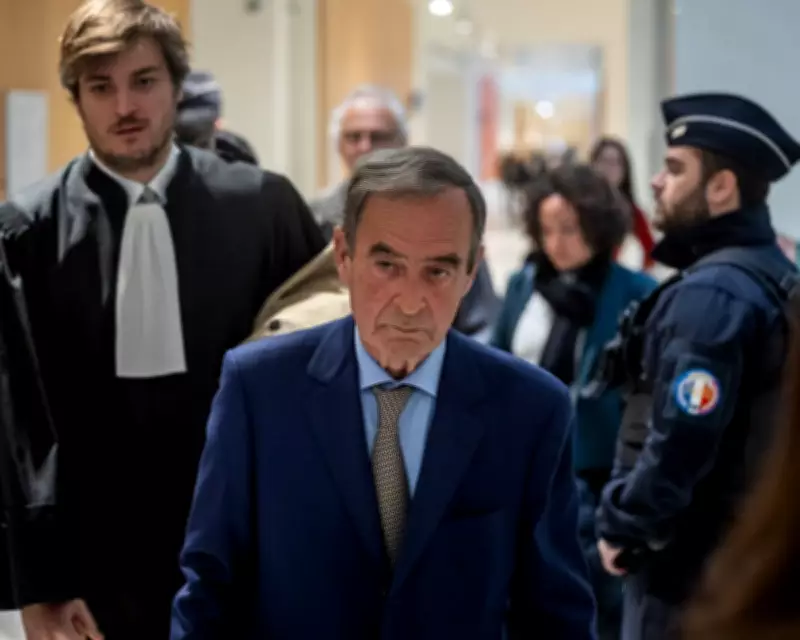
Former Lafarge CEO Sentenced to Six Years in Prison for Financing Terrorism
A French court has delivered a landmark verdict, sentencing Bruno Lafont, the former chief executive of cement giant Lafarge, to six years in prison for financing terrorism. The ruling also imposed a fine of more than €1 million (£870,000) on the company itself. This case centers on payments totaling nearly €5.6 million made to terror groups, including Islamic State, to maintain operations at Lafarge's plant in war-torn Syria from 2013 to 2014.
Details of the Terrorism Financing Charges
The Paris court found that Lafarge, now part of the Swiss conglomerate Holcim, facilitated these payments through its subsidiary, Lafarge Cement Syria (LCS). The funds were directed to intermediaries and terror organizations to ensure access to raw materials and safe passage for employees and trucks. Presiding judge Isabelle Prevost-Desprez described this as a "genuine commercial partnership with IS," emphasizing the extreme gravity of the offences. She noted that such financing enabled terrorist groups to control natural resources and fund acts of terrorism both regionally and in Europe.
Background and Corporate Actions in Syria
Lafarge had invested $680 million in constructing a factory in Jalabiya, completed in 2010, just before Syria's civil war erupted in 2011. While other multinational companies exited Syria in 2012, Lafarge evacuated only its expatriate staff, leaving Syrian employees in place until Islamic State seized the plant in September 2014. During this period, LCS paid groups like Islamic State and Jabhat al-Nusra, al-Qaida's affiliate in Syria, to keep the facility running.
Legal Precedents and Ongoing Investigations
This ruling follows a 2022 case in the United States where Lafarge pleaded guilty to conspiring to provide material support to terrorist organizations, resulting in a $778 million (£580 million) fine—the first such charge against a company. In France, Lafarge remains under investigation for alleged complicity in crimes against humanity. Human rights organizations, including Sherpa and the European Center for Constitutional and Human Rights, hailed the verdict as a major step in corporate accountability but highlighted that former Syrian employees still await compensation.
Statements from Former Employees and Corporate Response
Former Syrian employees testified about daily fears, including bombings, kidnappings, and threats at checkpoints, accusing Lafarge of prioritizing profit over their safety. In a post-verdict statement, they vowed to continue seeking compensation. Holcim, which acquired Lafarge in 2015, has stated it had no knowledge of the Syria dealings. Lafont's lawyer announced plans to appeal the sentence, which a judge ordered to begin immediately.
Broader Implications for Corporate Ethics
The French national counter-terrorism prosecutor's office argued that Lafarge's actions were driven solely by profit, financing terrorist organizations with devastating consequences. This case underscores growing legal pressures on corporations operating in conflict zones, setting a precedent for holding executives accountable for unethical business practices linked to terrorism.