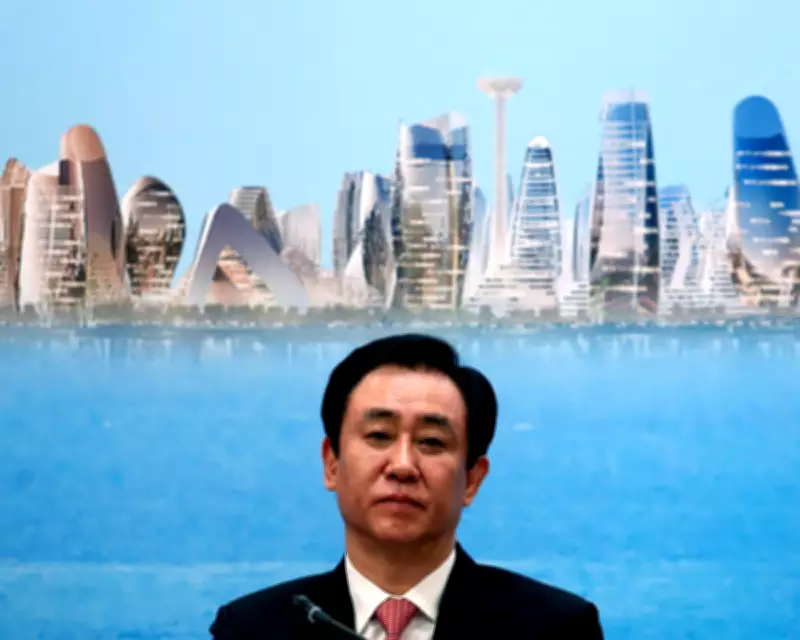
In a stunning legal development, Hui Ka Yan, the billionaire founder of the now-collapsed China Evergrande Group, has formally pleaded guilty to multiple charges of fraud and financial misconduct during trial proceedings in the southern Chinese city of Shenzhen. The court confirmed that Hui expressed remorse for his actions, which have been central to the downfall of what was once the world's most indebted property developer.
The Charges and Court Proceedings
The Shenzhen municipal intermediate people's court announced the guilty pleas via its official WeChat account, detailing that Hui admitted to charges of fundraising fraud, misuse of funds, and illegally taking public deposits. Additionally, both Hui and the Evergrande company face accusations of illegally extending loans, fraudulently issuing securities, and bribery by various corporate units. The court has indicated that verdicts will be delivered at a later, unspecified date.
Potential Severe Penalties
If convicted, Hui could face life imprisonment and confiscation of property for the illegal fundraising charges, with bribery offenses also carrying potential life sentences. This legal action follows a 2024 decision by China's securities regulator to fine Hui $6.6 million and ban him permanently from the securities market after discovering that Evergrande's core business had inflated earnings and committed securities fraud.
The Rise and Catastrophic Fall of Evergrande
Evergrande's default in 2021 on most of its staggering $300 billion in liabilities has become emblematic of the profound crisis within China's property sector, which has significantly hampered the nation's economic growth. The company's inability to repay billions in wealth management products devastated countless lower and middle-class investors, wiping out their savings and sparking widespread protests that threatened social stability.
Hui Ka Yan's Personal Journey
Hui's story is one of dramatic ascent and equally dramatic collapse. Raised by his grandmother in rural Henan province, he graduated from the Wuhan Iron and Steel Institute in 1982 and worked as a steel factory technician for a decade before building his fortune through affordable housing developments. He moved to Shenzhen, a special economic zone, worked in property sales, and founded Evergrande in Guangzhou in 1996.
Through aggressive debt-fueled expansion, Hui grew Evergrande into China's largest property developer by contracted sales, with thousands of projects nationwide. The company went public in 2009, and by 2017, Hui was Asia's richest person with a net worth of $45.3 billion, according to Forbes. However, his wealth plummeted to an estimated $3 billion by early 2023 as Evergrande's financial house of cards collapsed.
Broader Implications and Current Status
Hui, 67, has not been seen publicly since Chinese authorities detained him in 2023 following Evergrande's default. In 2024, a Hong Kong court issued a liquidation order against Evergrande, and the company was delisted from the Hong Kong stock exchange last year, concluding a tumultuous boom-and-bust saga. Outside mainland China, liquidators are engaged in legal battles to freeze offshore assets belonging to Hui and his former spouse in an effort to recover approximately $6 billion in dividends and remuneration paid to Hui and other former executives.
Evergrande's liquidators have declined to comment on the ongoing case. The trial of Hui Ka Yan represents a pivotal moment in China's efforts to address corporate malfeasance within its troubled property sector, signaling a harsh reckoning for one of its most prominent fallen tycoons.