Dolce & Gabbana's New Era: Navigating a Founder's Exit Amid Luxury Sector Struggles
As Stefano Gabbana steps back from his eponymous brand after four decades, the fashion world is left pondering the future of Dolce & Gabbana. This move signals a critical juncture for the iconic Italian label, raising questions about brand identity and stability in an increasingly turbulent luxury market.
The Challenge of Founder-Led Brand Splits
When a business is intrinsically tied to its founders, as with Dolce & Gabbana, a separation can be particularly complex. Brand equity is deeply embedded in personality, making Gabbana's departure a delicate matter from both public perception and commercial standpoints. Unlike brands such as Ben & Jerry's or Hewlett Packard, where names may not directly reflect founders, Dolce & Gabbana's identity is a fusion of both creators, with Gabbana's legacy forever woven into its DNA.
This situation is not unique in its difficulty. Statistics reveal that 65 per cent of startups fail due to co-founder conflicts, underscoring the importance of harmonious partnerships. For Dolce & Gabbana, which thrived on the collaborative vision of Domenico Dolce and Stefano Gabbana, this split necessitates a careful navigation to avoid perceived instability.
Financial Pressures and Market Uncertainties
The timing of Gabbana's exit is particularly poignant, as Dolce & Gabbana faces significant financial headwinds. In March, the company was reported to have appointed a financial adviser to engage with creditors, grappling with approximately £391 million in bank debt following a 2025 refinancing round. This struggle mirrors broader challenges in the luxury sector, where many brands are experiencing declines in value.
According to Interbrand's 2025 Best Global Brands report, luxury giants like Louis Vuitton saw a 4.9 per cent drop in brand value, while Gucci plummeted by 35 per cent. Only a few, such as Hermès with a 17 per cent increase, emerged unscathed. The ongoing war in Iran further clouds the outlook, threatening key Middle Eastern markets for luxury goods.
Charting a Path Forward: Evolution Over Dispute
In response to these challenges, Dolce & Gabbana is attempting a masterclass in managing a founder split. With Domenico Dolce remaining at the helm alongside co-CEOs Stefano Cantino and Alfonso Dolce, the focus is on continuity and evolution. The brand aims to transition smoothly, avoiding the messy breakups that have plagued other companies with public disputes and lawsuits.
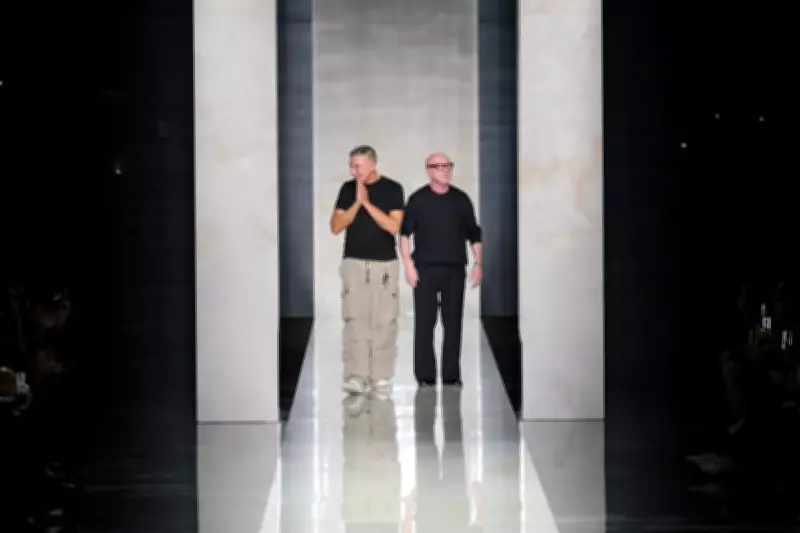
During the Dolce & Gabbana womenswear show in Milan in February, both founders presented a united front, dispelling rumors of behind-the-scenes drama. This strategy emphasizes evolution and transition as core messages, safeguarding the brand's reputation. By codifying the brand's DNA into a meaning system independent of founder personalities, Dolce & Gabbana can embrace this new phase as a natural step toward long-term sustainability.
Strategic Imperatives for Growth
To revive growth, Dolce & Gabbana and the wider luxury market must rethink their approaches. Key areas include sensible pricing, supply-chain discipline, and design-led creativity. Placing customer experience at the heart of business operations and adopting innovative strategic thinking are essential for navigating current uncertainties.
Stefano Gabbana's departure represents a historical milestone for a brand built on the boldness and talent of two Italian design masters. Now, Dolce & Gabbana has the opportunity to translate its Sicilian heritage into a cohesive new vision, stepping up to be loyal to, yet bigger than, the original collaboration. This moment calls for redefining the conversation from 'who' to 'why, what, and how,' ensuring the brand remains relevant in fast-changing markets.
As the luxury sector grapples with volatility, Dolce & Gabbana's journey will serve as a critical case study in resilience and reinvention.