Federal Judge Slams Trump's $400 Million White House Ballroom Plan as 'Brazen'
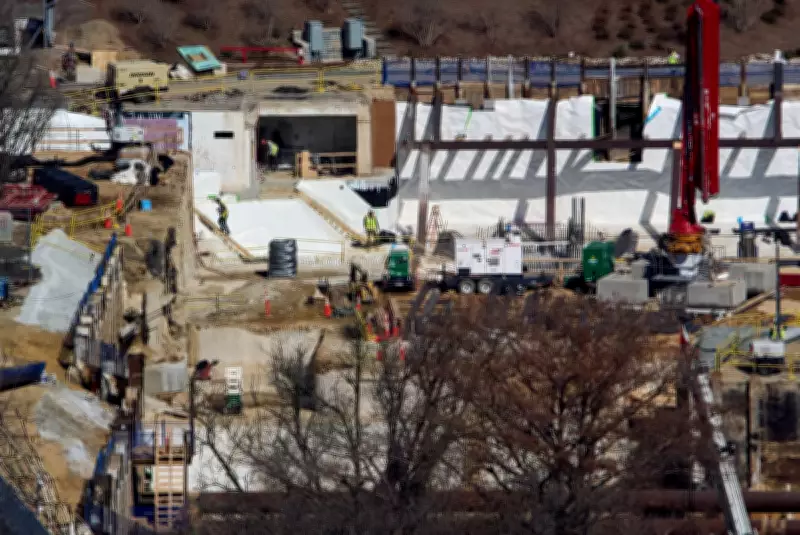
A federal judge has strongly criticized former President Donald Trump's demolition of the White House East Wing and his ambitious plan to construct a $400 million ballroom in its place, labeling the actions as "brazen." Judge Richard Leon indicated during a recent hearing that he might terminate the controversial project by the end of March, pending a lawsuit that seeks to halt construction until congressional approval is secured.
Legal Battle Over Historic Preservation
During a hearing on Tuesday in Washington DC, Judge Leon expressed skepticism about the Trump administration's defense of the 90,000-square-foot ballroom project. "I'm struggling to see this as an 'alteration'," Leon stated, referring to arguments from White House lawyers that Trump does not need external permission for the project, which began with the East Wing's demolition in October 2025 and aims for completion by 2028.
The lawsuit, brought by the National Trust for Historic Preservation, contends that the demolition was illegal and that Trump lacks the legal authority to impose private whims on the historic building. Thaddeus Heuer, attorney for the trust, accused the administration of a "monthslong merry-go-round ride" over responsibility and authority, delaying legal processes until it was too late to stop construction.
Administration's Arguments and Judicial Scrutiny
White House lawyers have advanced several defenses for the ballroom, including claims that it is necessary for "national security," that Congress allocated funds for residence alterations, and that it is exempt from scrutiny due to private funding. However, Judge Leon dismissed these as a "brazen interpretation of the law's vocabulary," emphasizing that the White House is "a special place" and an "iconic symbol of this nation," with Trump serving as a steward, not an owner.
In a contentious move, Trump fired all six members of the independent US Commission of Fine Arts in October 2025, replacing them with handpicked designees who unanimously approved the plan last month. Meanwhile, the National Capital Planning Commission postponed its approval vote to April, citing a need to assess public input.
Historical Context and Future Implications
Judge Leon appeared unconvinced by comparisons to past presidential alterations, such as Gerald Ford's 1975 outdoor swimming pool installation. He noted the administration's "shifting theories" and lack of authentic adherence to traditional approval processes. In a previous ruling, Leon denied an injunction on procedural grounds but allowed an amended complaint, which he is now considering.
Justice Department attorneys urged dismissal, arguing the trust should not get "another try," while Trump falsely claimed on social media that the judge had "completely erased" efforts to halt construction. Leon acknowledged that his decision, expected by late March, will likely be challenged and could reach the Supreme Court, highlighting the case's high stakes in balancing presidential power with historic preservation.