Canada's Arctic Infrastructure Push: Nation-Building in the Far North
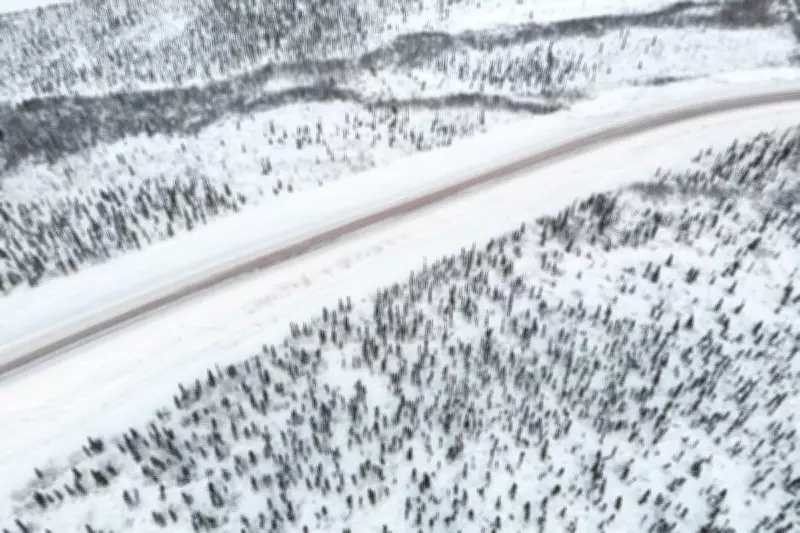
Ottawa is embarking on a major initiative to modernize the Canadian Arctic, a region approximately six times the size of Texas but home to only about 150,000 people. After decades of relative neglect, the federal government is now prioritizing infrastructure development in the north, driven by a combination of economic nationalism, security concerns, and reactions to external pressures.
A Historical Parallel to 19th Century Railway Expansion
Prime Minister Mark Carney's administration recently passed a "nation-building" bill designed to stimulate job creation and investment through accelerated construction projects. This legislative move aims to counteract the economic impacts of foreign trade policies while fostering domestic growth. "We can give ourselves far more than any foreign government can take away," Carney declared, emphasizing self-reliance.
The strategy involves constructing transport corridors—roads, rails, and other critical links—to better integrate the Arctic territories into the national fabric. Natan Obed, president of Inuit Tapiriit Kanatami, which represents Canadian Inuit, drew a historical comparison: "The hope is that [the Arctic territories] will be brought into Canada ... just like in the 1800s, when the federal government decided to build a railway from eastern Canada all the way to British Columbia that opened up trade and commerce."
Strategic Road Projects: Economic and Community Needs
The government has announced it is advancing two significant road projects in the Arctic. The first is the Grays Bay route, also known as the Arctic economic and security corridor. This pathway would connect Yellowknife and southern points to the Arctic Ocean, passing near several mining sites and terminating at a proposed deepwater port. Consultant Kells Boland, who advises both government and private sector entities in the north, noted, "The real incentive of building the [Grays Bay] road and the port is additional GDP" derived from mining activities.
The second project focuses on extending the Mackenzie Valley highway to serve local communities that currently rely on seasonal supply methods. These towns are supplied in summer by barge and in winter via an "ice road" along the frozen Mackenzie River—both of which have become increasingly unreliable due to the climate crisis. Caroline Wawzonek, a minister from the Northwest Territories, highlighted the urgency: "Communities are just struggling to stay alive." While the immediate economic returns may not match those of the Grays Bay area, the Mackenzie Valley region holds substantial untapped gas and tungsten reserves.
Initially, advocates concentrated on a 300-kilometre segment to reach Norman Wells, but Carney has revealed a more expansive vision: an 800-kilometre roadway extending to Inuvik, a major northern hub. Funding details remain unspecified, but construction could potentially commence as early as this summer.
Port Development and Sovereignty Considerations
Experts stress that comprehensive Arctic planning must extend beyond north-south road connections to include east-west linkages and enhanced port facilities. Obed pointed out a stark reality: fisheries along the Arctic coastline exist, but "virtually none of the catch goes to Inuit communities." He elaborated, "It's cheaper to fish for shrimp in the Arctic Ocean and send it to China than it is to send it to a community that's even two or 300km away."
Developing ports could not only address local supply challenges but also strengthen Canada's claim to the Northwest Passage, a waterway contested by the United States. Currently, there is a notable absence of deepwater ports between Iqaluit (north of Montreal) and a station in southwestern Alaska. A port in Tuktoyaktuk is too shallow for most vessels, but proposed facilities at Grays Bay and Qikiqtarjuaq (near Greenland) aim to fill this gap. Additionally, Ottawa has committed $175 million to upgrade the railroad and port in Churchill on Hudson Bay, a crucial supply point for northern towns.
Balancing Immediate Needs with Long-Term Investment
Critics argue that current priorities should focus on maintaining existing infrastructure or addressing more pressing community and security issues rather than investing in future-oriented projects. Heather Exner-Pirot of the Macdonald-Laurier Institute thinktank cautioned, "There are actual Arctic security needs, there are actual community needs, today," questioning the wisdom of allocating "billions of dollars into something that may be useful in 20 years."
This tension between addressing immediate crises and investing in long-term progress is a recurring dilemma for Canadian policymakers. Historically, the high costs associated with major projects for a sparse population have led to hesitation, and some past initiatives have become burdensome due to poor planning or inadequate maintenance.
However, Obed contends that well-planned transport infrastructure can serve both short-term and long-term objectives. "Nation-building isn't cheap at any point in time," he remarked. Matti Siemiatycki, an infrastructure expert at the University of Toronto, observed that current geopolitical dynamics, including actions by the United States, have prompted a reevaluation: "The United States kind of shook up the snow globe and ... made us refocus on these issues of sovereignty, security, and of economic self-sufficiency." He added, "I think people are seeing this as a moment where Canada starts reinvesting in itself."
The challenge, Siemiatycki emphasized, is ensuring that any new construction effectively aligns with overarching goals of sovereignty, security, and sustainable development in the Arctic.