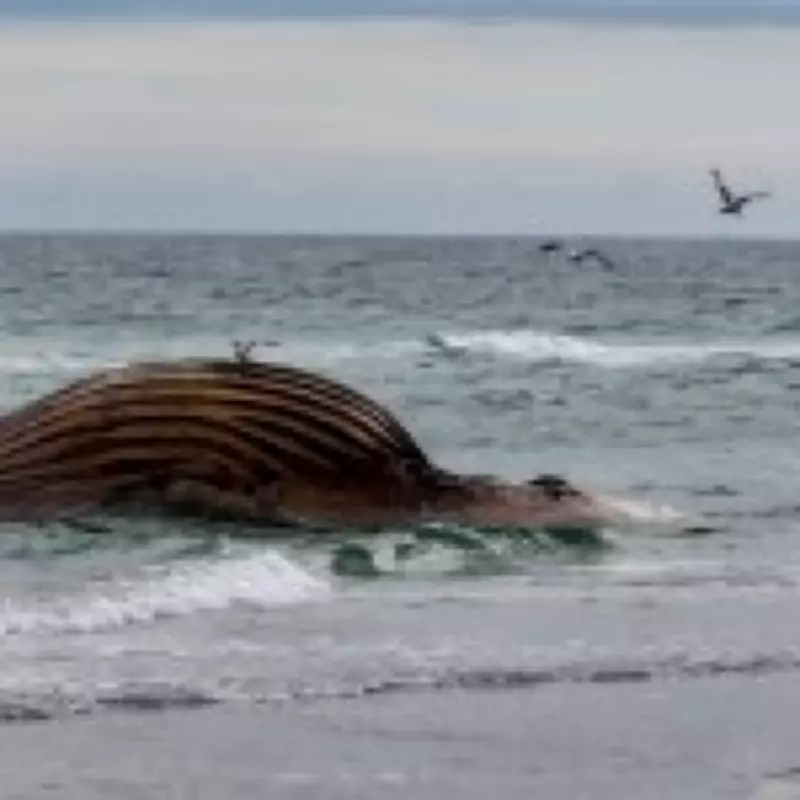
Experts have warned that the carcass of a young humpback whale, affectionately known as Timmy, which washed up on a beach after a failed rescue effort, could explode. The animal gained public attention after becoming stranded in shallow waters off Germany's Baltic Sea coast on March 23.
Failed Rescue Operation
Timmy was initially found trapped on a sandbank in Lübeck Bay, unable to free himself. He eventually managed to escape but then became stranded several more times. After a string of abandoned attempts in late April, two German entrepreneurs funded a major operation to save him, which cost an estimated £1.2 million. Timmy was successfully lured onto a water-filled transport barge before being released into deeper waters.
Tragic Outcome
However, the story ended in tragedy. Timmy was found dead, 20 metres off the coast of the Danish island of Anholt, on May 15. Danish authorities confirmed his identity through a tracking device attached during the earlier rescue attempt.

Risk of Explosion
Locals and tourists have now been warned to stay away from the carcass as gases produced during decomposition have caused the remains to bloat, raising fears it could eventually explode. German whale researcher Fabian Ritter said the situation is almost inevitable. “The pressure inside is building up more and more, and at some point the animal could explode with a huge bang,” he told Deutsche Presse-Agentur (DPA).
Criticism of Rescue
Ritter was among several marine experts who criticised the costly rescue operation that moved Timmy from the Baltic Sea off Germany's coast towards Danish waters in a mission estimated to have cost around £1.2 million. The undertaking involved placing the whale inside a water-filled barge before towing it using a tugboat. He was also fitted with a tracker designed to monitor both his location and vital signs, although it was later revealed the device was faulty.
At the time, many experts argued the sea animal was already too weak to survive, warning before the rescue that moving it could cause further stress and reduce its chances of survival.
Authorities' Response
Danish officials have now urged the public to keep their distance from the carcass due to the risks posed by both a potential explosion and infection. Beaches and coastal areas have also been restricted due to the risk of explosion. Denmark's environmental and nature agency and coastal rescue services are set to carry out an operation to tow the whale further offshore before later transporting it to the port town of Grenaa for scientific analysis. According to authorities, an explosion could be avoided by poking holes into the whale's carcass or cutting it open completely.