LaGuardia Crash: Air Traffic Controller Urged Fire Engine to Stop Before Deadly Collision
Air traffic control recordings have revealed that a controller repeatedly urged a fire engine to stop before it collided with an Air Canada regional jet at New York's LaGuardia Airport, resulting in the deaths of both pilots. The incident occurred on Sunday night, March 22, 2026, when the fire engine was responding to another emergency on the tarmac.
Audio Reveals Panic and Unheeded Warnings
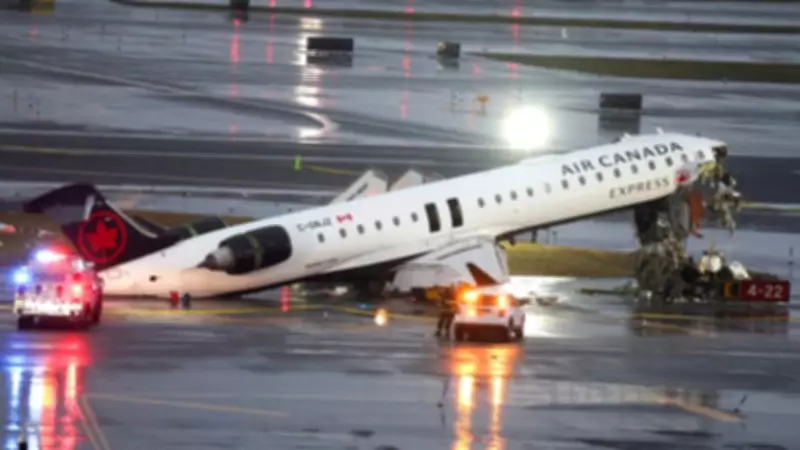
According to the audio, the controller initially gave clearance for the fire engine, referred to as "truck one and company," to cross runway four. However, the situation escalated rapidly as the controller's commands changed to "stop there, please" and then frantic pleas of "stop, stop, stop, truck one, stop." For reasons still under investigation, these warnings were ignored, leading to the aircraft's nose ploughing into the fire engine and rolling it over.
Casualties and Aftermath
The Bombardier CRJ-900, which had just landed from Montreal with approximately 70 passengers and four crew members, struck the vehicle. Both the pilot and co-pilot were killed in the collision. A flight attendant was found outside the plane still strapped into her seat, while two individuals in the fire engine sustained non-life-threatening injuries. Forty-one passengers were transported to hospitals, some with serious wounds.

Images from the scene show the aircraft's nose completely ripped off and the damaged fire engine lying on its side nearby. The emergency vehicle had been en route to investigate reports of a strange odour on another plane at the airport.
Passenger Accounts and Official Responses
Passenger Rebecca Liquori described the moment of impact to local media, stating, "Everybody just jolted out of their seats. People hit their heads. People were bleeding." In the aftermath, audio from about 20 minutes post-crash captured the air traffic controller expressing remorse, saying, "We were dealing with an emergency earlier. I messed up."
Transport Secretary Sean Duffy announced that LaGuardia Airport has since reopened but will operate at reduced capacity for an indefinite period. President Donald Trump commented on the tragedy, calling it a "terrible" situation and acknowledging a "mistake" had occurred.
Broader Context and Safety Measures
The crash has raised questions about aviation safety and staffing. While the U.S. faces a documented shortage of air traffic controllers, experts note that LaGuardia is not typically plagued by such issues. The airport is equipped with an advanced surface surveillance system, one of only 35 in the country, designed to track planes and vehicles on the tarmac to prevent such incidents.
By midday following the crash, over 600 flights to and from LaGuardia had been cancelled, according to FlightAware.com. The service was operated by Jazz Aviation on behalf of Air Canada, with the flight normally taking about 90 minutes. Investigations into the cause of the collision are ongoing, focusing on why the fire engine failed to heed the stop commands.