Florida's Space Coast Cities Abuzz with Anticipation for NASA's Artemis Launch
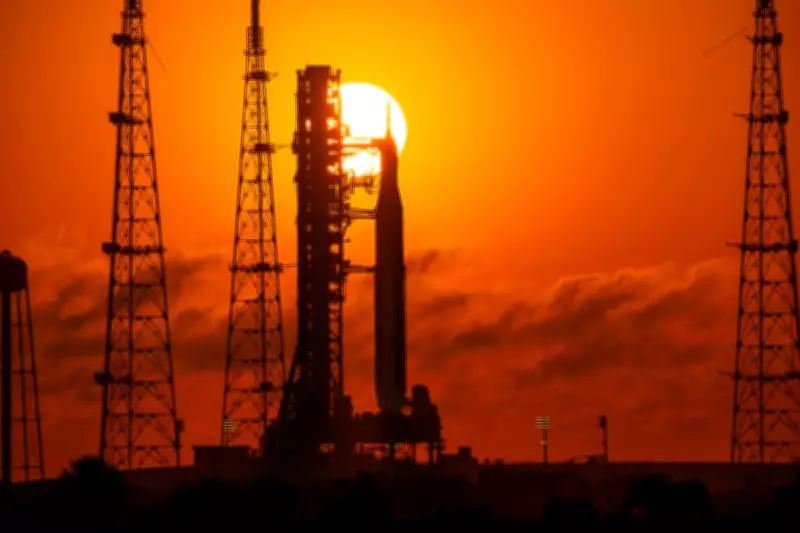
On the beaches and in the cities of Florida's space coast, an atmosphere of anticipation, excitement, and anxiety mirrors the final days of NASA's historic Apollo moon program. Almost six decades later, the region is witnessing a remarkable resurgence as NASA prepares for the Artemis II launch, scheduled for 6:24 PM ET on Wednesday at Cape Canaveral, weather and technical issues permitting.
This mission will send four astronauts—three Americans and one Canadian—on a journey to the moon, marking the first human lunar flight since 1972. It represents a deep symbolic step forward for America's space port and NASA's ambition to establish a permanent lunar base for future Mars missions.
A Local Renaissance Fueled by Space Industry Revival
Beyond the lunar ambitions, the launch celebrates a local renaissance 15 years in the making. In 2011, after NASA ended its 30-year space shuttle program, the space coast faced steep decline. Thousands of workers at the Kennedy Space Center lost jobs, property prices collapsed, and businesses folded, plunging the local economy into a black hole.

NASA's reliance on Russian rides to orbit added to the humiliation, but the tide turned with the 2017 space policy directive under the first Trump administration. Now, private space partners like SpaceX and Blue Origin have constructed massive facilities at Cape Canaveral, employing thousands to build lunar landers for Artemis crews.
Space Florida reports a $6 billion boost to the economy from space business last year, with Artemis accounting for 13,000 new jobs and $3 billion in annual spending. Retired NASA astronaut Don Thomas, who flew on four shuttle missions, has seen the transformation firsthand.
"I'd drive the Beachline Expressway from Orlando airport to here and it used to be no man's land," Thomas said. "Now it's heavy traffic in both directions. People are coming here, moving here, living here, all this construction is going on. It is really a boom, almost like a renaissance in the space business."
Pride and Excitement Return to the Region
Pride has returned to the space coast, with hotel marquees displaying "Go Artemis II astronauts!" messages and NASA logo T-shirts prevalent on beaches. Fast-food restaurants are selling out of moon burgers, and hotel rooms are scarce during launch week.
Officials expect hundreds of thousands of spectators to pack beaches and causeways on launch day, potentially doubling the 200,000 who witnessed the Artemis I test flight in November 2022. Many will gather in Titusville, which offers prime views of the launchpad.
Once styled as "Rocket City USA" in the 1960s, Titusville now bills itself as the "gateway to nature and space," reflecting shifting attitudes and highlighting the region's wildlife habitats. Mayor Andrew Connors emphasized the city's deep ties to the space industry.
"If you look at the history of Titusville, it's risen and fallen around NASA," Connors said. "With Artemis, it's exciting to see how far we've come. Just 15 years ago we had a $140,000-a-year budget to mow the front lawns of abandoned homes. Now we're at the doorstep of Mars and the moon."
From Ghost Town to Thriving Community
Gary Allgire, a retired NASA engineer and Titusville resident, recalls the dark days after the Apollo and shuttle programs ended. "It started going downhill as soon as we landed on the moon. After Apollo 11 they started downsizing," he said.
In 1969, laid-off workers could buy homes for next to nothing, and many simply abandoned their properties, leaving keys on doorsteps. "It was a ghost town in those days," Allgire noted. Now, he works at the American Space Museum, which is busier than ever with questions about Artemis.
Thomas sees Artemis II as a beginning, inspiring a new generation. "The young kids today at the space center, the 10-year-olds, those are our future astronauts, our future Martians," he said. "They see their future instead of assuming it's going to be somebody else."
This revival underscores how NASA's Artemis program has not only reignited lunar exploration but also transformed Florida's space coast into a vibrant hub of innovation and economic growth.