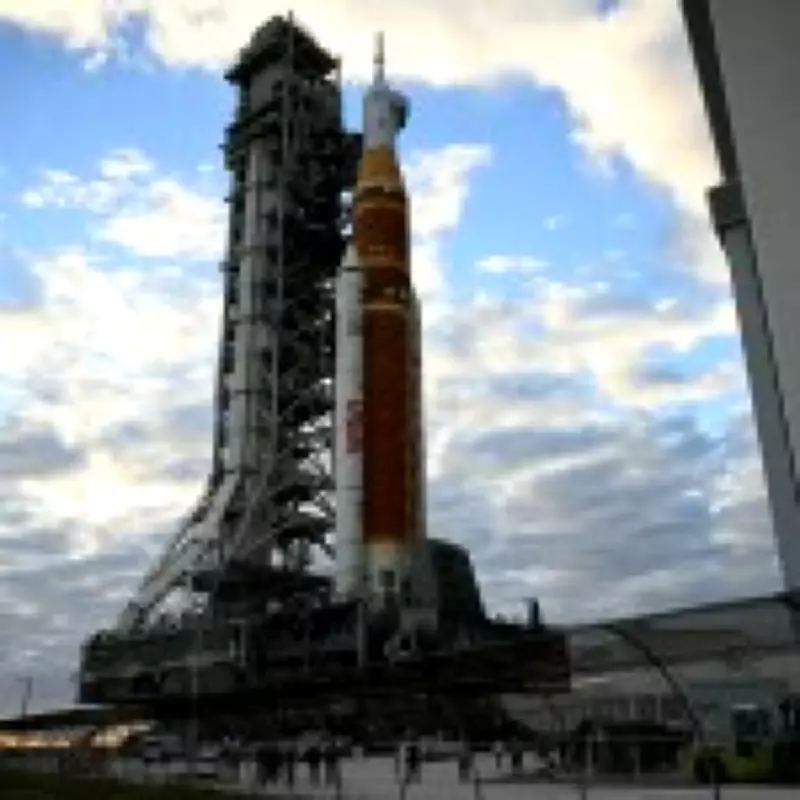
In a historic leap for space exploration, NASA is preparing to reunite humanity with the moon after more than five decades. The Artemis II mission, a pivotal step in the agency's return-to-the-moon program, will send four astronauts on a journey to orbit our cosmic neighbor. This groundbreaking flight marks the first crewed mission to venture beyond Low Earth Orbit since 1972, promising to test critical systems and pave the way for future lunar landings.
Artemis II Launch Timeline and Delays
The highly anticipated launch of Artemis II has faced multiple postponements, underscoring the complexities of space travel. Originally scheduled for February, the mission is now set for no earlier than April 1, following a series of technical challenges. During initial dress rehearsals, a hydrogen leak was detected in the rocket's fuel tanks, prompting a one-month delay. A subsequent test in February revealed issues with the spacecraft's helium flow, used for propellant management.
Libby Jackson, head of space at the London Science Museum and a former Mission Control specialist, emphasizes that such hiccups are expected in test flights. 'NASA is taking their time to ensure everything is perfect,' she explains. 'Until the countdown reaches zero, there's always uncertainty, but these delays are part of the meticulous process to guarantee safety and success.'

Overview of the Artemis Program
Artemis represents NASA's ambitious initiative to return astronauts to the lunar surface, a goal revitalized under the Trump administration in 2017. Despite years of delays, budget constraints, and technical hurdles, the program aims to build on the legacy of the Apollo missions. The first phase, Artemis I, involved an uncrewed Orion capsule completing a 1.3-million-mile orbit around the moon in 2022.
Unlike its predecessors, Artemis II will not land on the moon but will instead conduct a flyby, testing the Space Launch System rocket and Orion crew capsule. This mission is crucial for validating equipment, including life support systems, which have contributed to the over-year-long postponement.
Meet the Artemis II Astronauts
The crew for this historic journey comprises three NASA astronauts—Reid Wiseman, Victor Glover, and Christina Koch—alongside Canadian astronaut Jeremy Hansen. Over a 10-day period, they will be confined to a spacecraft roughly the size of a minivan, where they will evaluate essential systems such as spacesuits and specialized toilet facilities designed for zero-gravity environments.
NASA has highlighted that the mission will focus on 'critical systems and procedures for living and working inside their spacecraft,' ensuring readiness for longer deep-space voyages.
Future Lunar Ambitions: Artemis III and Beyond
Looking ahead, NASA plans to land astronauts on the moon with Artemis III, currently targeted for no earlier than mid-2027. This mission depends on the ongoing development of SpaceX's Starship vehicle. Meanwhile, China has announced its own lunar aspirations, aiming to establish a research outpost powered by a nuclear reactor by 2030, signaling a new era of international space competition.
The Rigors of Astronaut Training
Becoming an astronaut involves far more than submitting a resume. Meganne Christian, a reserve astronaut with the European Space Agency, details the extensive and peculiar training required. 'Astronauts undergo specific programs for sleeping in microgravity, using bags attached to quarters, which can lead to surprisingly restful nights,' she notes.
Additionally, mastering space toilets is a critical skill, as waste management in zero gravity poses unique challenges. 'Training includes maintenance and precise alignment to prevent hygiene issues and protect sensitive equipment,' Christian adds, highlighting the meticulous preparation needed for life beyond Earth.
As NASA finalizes preparations for Artemis II, the world watches with anticipation, eager to witness the next chapter in lunar exploration. This mission not only honors past achievements but also sets the stage for sustained human presence in space, inspiring future generations to reach for the stars.