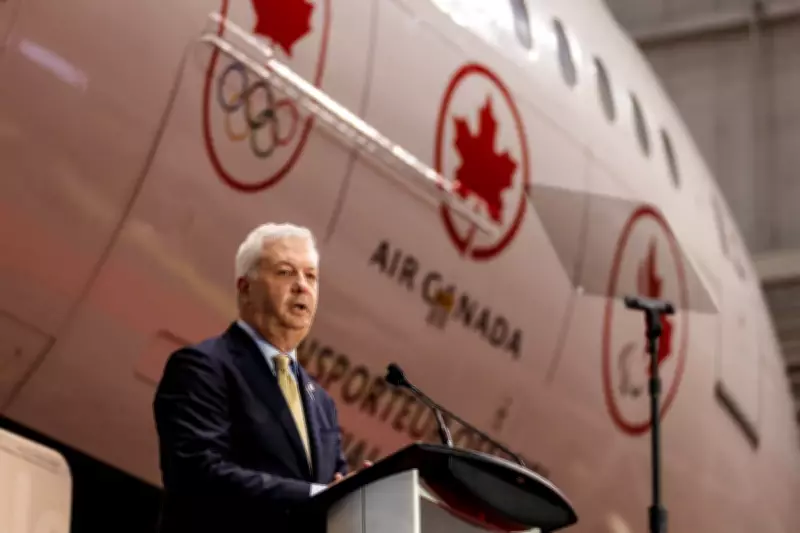
In a significant development, the president and CEO of Air Canada, Michael Rousseau, has issued a formal apology following widespread criticism over his English-only message of condolence after a tragic plane crash. The incident has ignited a fierce debate about language and leadership in Canada, with politicians and public figures demanding accountability.
Controversy Over Language and Leadership
Michael Rousseau faced intense backlash after posting a four-minute condolence video online that included only two French words: "bonjour" and "merci." This move was particularly contentious given that the crash at LaGuardia airport in New York resulted in the deaths of two pilots, including Antoine Forest, a French-speaking Quebecer. The other pilot, Mackenzie Gunther, also perished when their Air Canada Jazz flight collided with a fire truck on the runway.
Rousseau expressed deep regret in a statement, acknowledging that his inability to speak French had overshadowed the profound grief of the victims' families. He stated, "I am deeply saddened that my inability to speak French has diverted attention from the profound grief of the families and the great resilience of Air Canada's employees, who have demonstrated outstanding professionalism despite the events of the past few days." Despite taking French lessons over several years, Rousseau admitted he is still unable to express himself adequately in the language, but vowed to continue his efforts to improve.

Political Reactions and Calls for Resignation
The apology did little to quell the outrage from political leaders. Quebec's premier, François Legault, called for Rousseau's resignation on Wednesday, emphasizing the importance of French in the province where Air Canada is headquartered in Montreal. Prime Minister Mark Carney rebuked Rousseau, stating that the CEO showed a lack of compassion and judgment. Carney highlighted Canada's status as a bilingual country with two official languages and expressed anticipation for further action from Air Canada's board of directors.
This is not the first time Rousseau has faced criticism over language. In November 2021, less than a year after his appointment as CEO, a major speech he delivered almost exclusively in English sparked controversy among Francophones. At that time, Rousseau apologized and pledged to learn French, but the recent incident suggests limited progress. Daniel Béland, a political science professor at McGill University in Montreal, noted, "He did later take French lessons but, as the new controversy suggests, it was probably not very successful to say the least."
Broader Implications and Public Response
The office of the commissioner of official languages has received hundreds of complaints about Rousseau's video, underscoring the sensitivity of language issues in Canada. Quebec, where about 80% of the population speaks French, has a long history of linguistic contention dating back to the British takeover in the 1760s. Legault pointed out that when Rousseau was appointed president in February 2021, he promised to learn French, making the current situation particularly disappointing for many.
However, not all voices have been critical. Jason Kenney, a former conservative cabinet minister, argued that the CEO of Canada's flagship carrier should prioritize safety and reliability over language training, given the scarce time and resources involved. This perspective adds nuance to the debate, balancing practical concerns with cultural expectations.
As Air Canada navigates this crisis, the focus remains on supporting the families affected by the crash and ensuring operational excellence. The airline's employees have been praised for their professionalism during this difficult period, but the leadership's handling of communication has raised questions about corporate responsibility in a multicultural society.