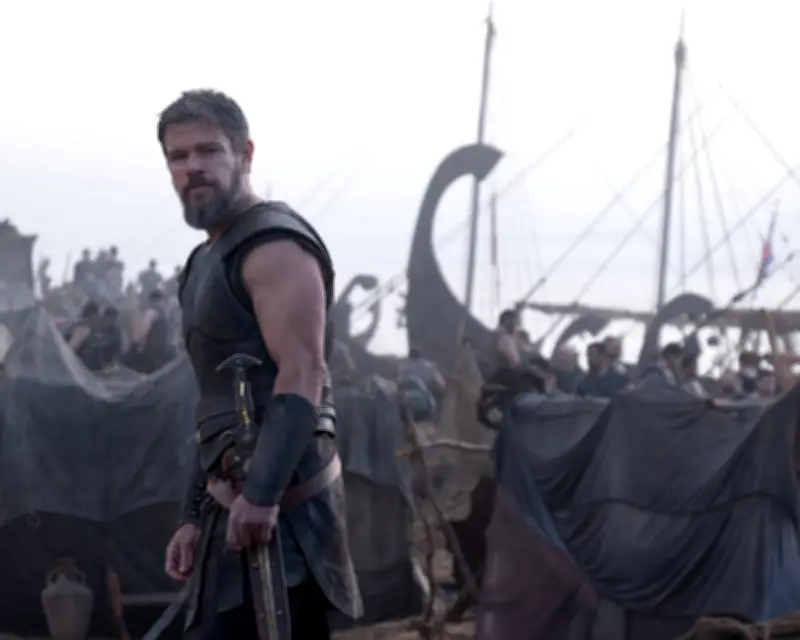
Christopher Nolan's film adaptation of Homer's The Odyssey has removed all sexual content, leaving critics questioning the narrative logic. In a column for the Guardian, Zoe Williams argues that the absence of sex creates a puzzle: without Odysseus's affairs with Calypso and Circe, why does it take him so long to return home?
Missing sexual encounters
Williams notes that in the original poem, Odysseus spends time with the nymph Calypso and the enchantress Circe, both of whom are romantic or sexual partners. In Nolan's film, these relationships are stripped of any sexual chemistry. Williams writes: 'If there was zero sexual chemistry between Odysseus and Circe, who was I to say that's not how it went in the poem?' She suggests that Homer's text implies sexual encounters, even if metaphorically, and that removing them creates a narrative gap.
Trauma as a replacement
Instead of sexual adventures, the film attributes Odysseus's delay to trauma from the Trojan War. In a monologue by Matt Damon, Odysseus explains that the bloodshed made him unable to return home as the same man. Williams finds this understandable but points out a contradiction: if Odysseus is so traumatised, why does he end his journey by killing all the suitors? She calls this 'counter-productive' and 'rum'.

Modernising the classics
Williams concludes that de-sexing the classics is difficult. She writes: 'I understand why Odysseus has to be faithful to Penelope; these are the exigencies of modernity. But de-sexing the classics is harder than it looks.' The article raises questions about how modern adaptations handle ancient texts and the implications for character motivation.