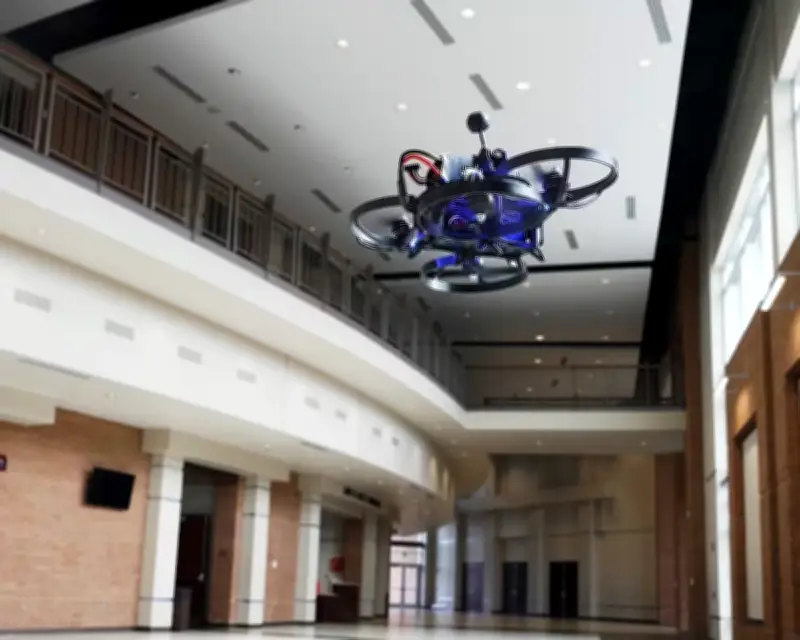
Pepper-Spraying Drones to Be Installed in US Schools
Several schools across the United States are set to install pepper-spraying drones as part of a new initiative to respond to school shooting attacks. The approach, inspired by the Ukraine war, has drawn criticism from advocates who prefer focusing on prevention.
Campus Guardian Angel, based in Austin, Texas, is supplying the drones to multiple schools nationwide, including at least four in Georgia, three in Florida, and one in Colorado. The company manufactures its own aircraft and firmware.
How the Drones Operate
According to the company, the drones launch upon an alert that a school is under attack, after its response team confirms the threat is credible. They can be flown from thousands of miles away and support two-way communication via an embedded speakerphone, allowing the team to engage verbally with a threat or communicate with teachers and staff.

“This allows our team in our ops center to communicate to law enforcement officers verbally with messages such as ‘follow me and I’ll take you to the suspect’ or ‘open the door and we’ll go in to clear the room and tell you what we see,’” the company stated.
The drones can remain airborne for about eight minutes on a single battery charge and operate at 900 MHz. They can fly through windows not coated with ballistic film, using a front lance to break through. They are also equipped with sirens and can drop air poppers that create a loud bang.
Pepper Launcher and Kinetic Strikes
The drones carry a pepper launcher capable of firing pepper balls at a shooter and can deliver kinetic energy strikes against a confirmed attacker to “greatly degrade or incapacitate” them. The company aims to “escalate the effects in waves of 3 or 4 drones, keeping the shooter occupied until he/she can be apprehended by authorized responders.”
Co-founder Bill King, a former senior enlisted leader for Navy SEAL teams with 32 years of experience, told the Washington Post: “Once I get the drones on you, you just can’t escape them.”
Tactical operations director Khristof Oborski, a former SWAT team leader with the Austin police department, said the concept was inspired by small drones used on battlefields in Ukraine after Russia’s invasion in February 2022. Speaking to Barron’s, Oborski said King observed the technology’s effectiveness in Ukraine and “started thinking about how you can introduce this type of system to be able to combat a growing problem in the United States – with school shootings.”
Schools Piloting the Program
In Georgia, pilot schools include Coffee County High School in Douglas, Gainesville High School in Gainesville, River Ridge High School in Woodstock, and Statesboro High School in Statesboro. The state’s legislature allocated $550,000 in its annual budget to fund the program.
In Florida, Deltona High School in Volusia County will install 39 drones for the upcoming school year. Other expected schools include Amos P. Godby High School in Leon County and Boyd H. Anderson High School in Broward County.
John Adams Academy in Douglas County, Colorado, is also preparing to introduce the technology. Head Sarah Kiesewetter told Denver7: “We might be the first school in Colorado looking at [drone technology] but we certainly won’t be the last,” as reported by Axios.
Criticism and Concerns
Not everyone supports the drone approach. Tony Montalto, whose 14-year-old daughter Gina was among 17 people killed in the 2018 mass shooting at Marjory Stoneman Douglas High School in Parkland, Florida, told WPTV: “These drones aren’t patrolling – they just pop up when needed. So that’s part of the problem. We need to focus on the prevention piece rather than the reaction piece.”
Data published by the Washington Post in September show more than 398,000 students have experienced gun violence at school since the 1999 Columbine High School shooting in Colorado that killed 14 people.